What the latest U.S.-Iran strikes mean for oil supplies and maritime safety
For perspective on the latest developments in the war with Iran, Amna Nawaz spoke with retired U.S. Navy Rear Adm. Mark Montgomery and Michelle Wiese Bockmann, an analyst at Windward, a London-based maritime intelligence company.
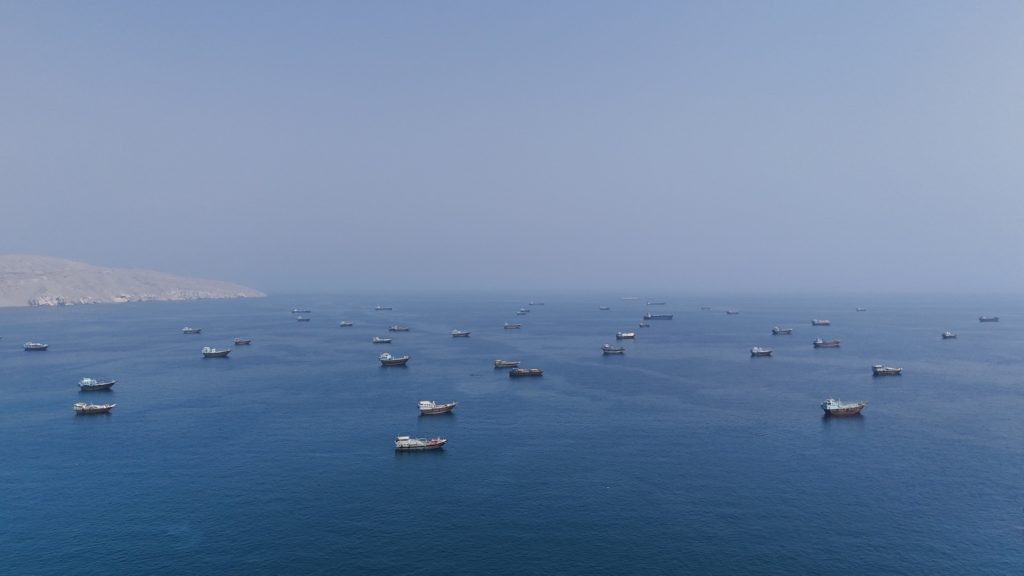
In the ongoing conflict with Iran, two perspectives offer insight into the recent U.S. strikes on Iranian military assets near the Strait of Hormuz. Retired U.S. Navy Rear Adm. Mark Montgomery, now a senior fellow at the Foundation for Defense of Democracies, explains that these strikes have likely weakened Iran's capacity to threaten shipping through the strategic waterway.
By targeting radars and beaconing sensors, the U.S. has made it harder for Iran to accurately target and track ships, particularly those not using automatic indication systems. The strikes also targeted Fajr-5 rocket launchers, which could have been used to deploy floating or submerged mines in the transit lane, posing a significant risk to maritime safety.
Michelle Wiese Bockmann, an analyst at London-based maritime intelligence company Windward, notes that prior to the war, over 20 million barrels of oil were moving through the Gulf of Oman daily via the Strait of Hormuz. Currently, production has dropped to between two-thirds and three-quarters of pre-war levels. However, there is a notable increase in oil being transported through alternative routes, such as the Red Sea via the East-West Pipeline from Saudi Arabia and the Port of Fujairah.
Despite the heightened risk, several ship owners are willing to pay exorbitant rates, up to $650,000 per day, to navigate the Strait of Hormuz and return to their destination ports. This demonstrates that while the risks are significant, the potential profits lure some companies into these high-risk shuttle runs. The U.S. military's presence in the region, comprising 18 to 20 destroyers and two carrier strike groups, has raised concerns among top commanders about the impact on the U.S. military's ability to deter threats from China, as well as the strain on resources for other global commitments.
Written by urgent.news from PBS NewsHour's reporting — not their text. Machine-written — may contain errors; check the original before relying on it.
This story
This is one outlet's version. Read the fullest account.
- Trump rejects munitions fears as Iran clashes resume thearabianpost.com
- US senator calls Trump’s war on Iran a 'complete failure' middleeasteye.net
- Iran retaliates, condemns US strikes on Larak Island dw.com
- ‘We’re going to hit them hard’: Trump threatens fresh strikes on Iran after first clashes in weeks malaymail.com
- Trump promises retribution for Iranian strikes against Jordan torontosun.com
- G20 meetings, strikes on Iran, the 'alphabet soup' economy and more in Morning Squawk cnbc.com