Ukraine and Iran Wars Expose the Flaws in Nuclear Deterrence
By Melissa Parke (*) In recent weeks, Ukraine has been striking targets deep inside Russia with large-scale drone attacks and long-range missiles. Some commentators in Western media have hailed Ukraine for beginning to turn the tide. Whether that turns out to be correct, we can only wait and see. The momentum in wars can swing back and forth.
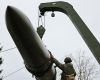
Recent conflicts in the Ukraine and Iran showcase the shortcomings of nuclear deterrence as a measure of security. Ukrainian forces have been engaging in aggressive strikes across Russian territory using drones and long-range missiles, including targeting Russian aircraft and early warning systems. Despite these actions, Moscow has refrained from retaliating with nuclear weapons, a development that has left some analysts questioning the effectiveness of deterrence doctrine.
Former U.S. and NATO official Rose Gottemoeller argues in Foreign Affairs that the notion of nuclear weapons as a guarantee of security has proven misguided. She cites historical examples like Egypt and Syria attacking Israel in 1973, Argentina seizing the Falkland Islands from the U.K. in 1982, and the Vietnam War, where the U.S. nuclear arsenal failed to deter aggression.
The Cuban Missile Crisis of 1962, which came closest to a nuclear war, serves as a reminder that luck, rather than deterrence, prevented a global catastrophe. Iran's recent attacks on Israel and U.S. bases in the Gulf, as well as its use of conventional forces against shipping in the Strait of Hormuz, further demonstrate that nuclear deterrence does not deter aggression.
Israel, too, has relied on missile defense rather than nuclear threats to counter Iran's actions. The behavior of Russia, the U.S., and Israel suggests that nuclear-armed nations are feeling emboldened to violate international law and launch aggressive conventional attacks. While proponents of deterrence argue it enhances global stability, the current events suggest the opposite.
Economic disruption, political instability, and increased aggression from other states are consequences of Russia's invasion of Ukraine and the U.S./Israel war on Iran. Some governments are considering changes to their nuclear strategies to incorporate tactical weapons, while others are increasing reliance on nuclear deterrence.
However, this approach is misguided. The United Nations Treaty on the Prohibition of Nuclear Weapons (TPNW), which has 100 countries as members, offers a viable path to nuclear disarmament by placing humanitarian concerns at the forefront. The TPNW challenges the notion of deterrence as a threat to humanity and emphasizes the need for multilateral dialogue and diplomacy to prevent global destruction.
Written by urgent.news from MercoPress's reporting — not their text. Machine-written — may contain errors; check the original before relying on it.