The need for political unity in Kashmir
While Kashmir’s right to dignity and respectable federal arrangement is non-negotiable, the way to realising it cannot be the daily whipping of a rather disempowered local government for not being combative enough
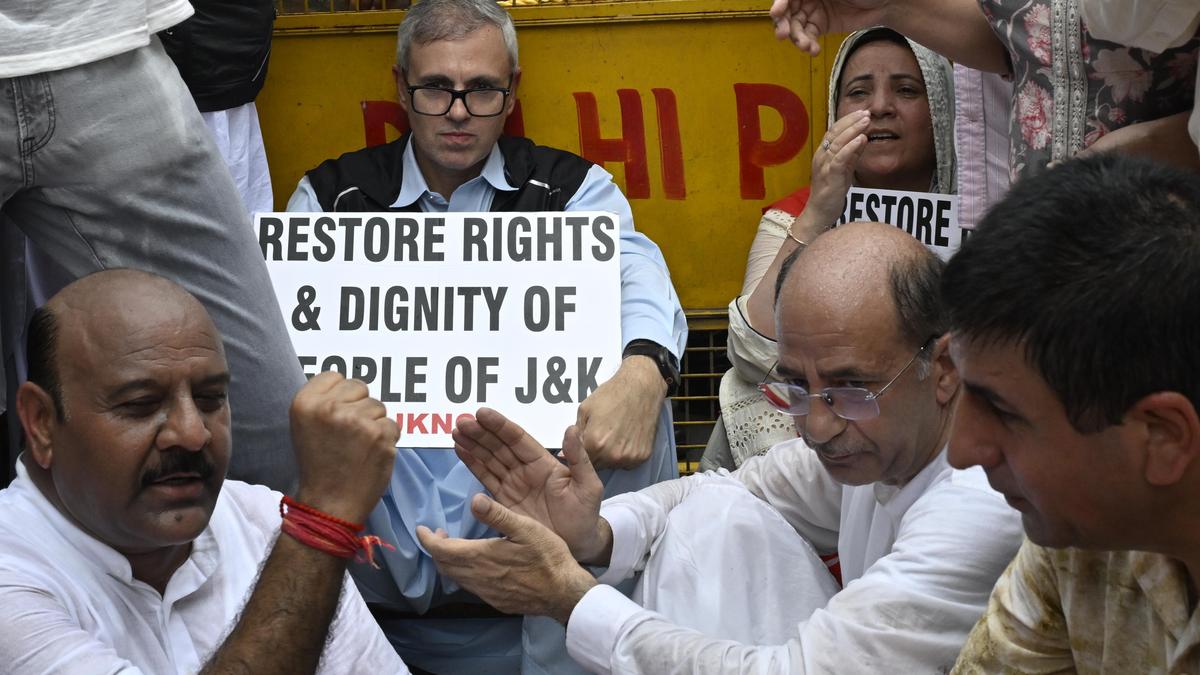
In July, Jammu and Kashmir's Chief Minister Omar Abdullah and his Cabinet arrived in New Delhi to advocate for the restoration of J&K's federal guarantees. However, their attempts to protest at Jantar Mantar were denied. Mehbooba Mufti and Srinagar MP Ruhullah Mehdi organized separate events in Delhi. While this display of Kashmiri leadership in the capital seemed to reclaim democratic space for dissent, it revealed deep divisions within the leadership.
Upon taking office in October 2024, Omar Abdullah prioritized repairing ties with New Delhi, hoping a calibrated approach would secure a respectable arrangement for J&K. However, his political opponents in Srinagar labeled his attempts to find common ground with New Delhi as "pusillanimous," arguing that reversing the August 5, 2019 laws that stripped J&K of semi-autonomous status was the minimum political goal.
While the right to dignity and a respectable federal arrangement is non-negotiable, resorting to constant criticism of a seemingly weak local government does not serve any purpose other than creating a false sense of ideological supremacy. To address Kashmir's challenges, all Gupkar politicians must now focus on achieving political unity, even in the face of significant disagreements.
The need for political unity is crucial amid India's Opposition's reluctance to engage with the Kashmir issue. The Lieutenant Governor continues to hold significant power, leading to confusion in a region prone to violence. The bureaucratic apparatus has created a vacuum that local legislators often fill, providing political and legal support to the electorate.
However, this dependence on local leaders may undermine the federal structure and erode the ground connect essential for Kashmir's participatory democracy. The importance of transferring full executive powers to J&K's elected government is evident, particularly in law and order decision-making, especially in a volatile security situation.
The National Conference should have recognized early on that New Delhi was unlikely to cede full executive powers. Now, they contemplate various resistance activities, though street protests are no longer on the table. Despite the struggle for dignity and rights, Kashmiris' path to achieving their goals must be navigated with political ingenuity and collective effort.
Written by urgent.news from The Hindu's reporting — not their text. Machine-written — may contain errors; check the original before relying on it.