The Model Is the Easy Part: What Actually Breaks When AI Goes to Production
What really breaks when AI goes to production? CTO Dmytro Voroshylov explains model routing, memory, latency, evaluation, and infrastructure costs.
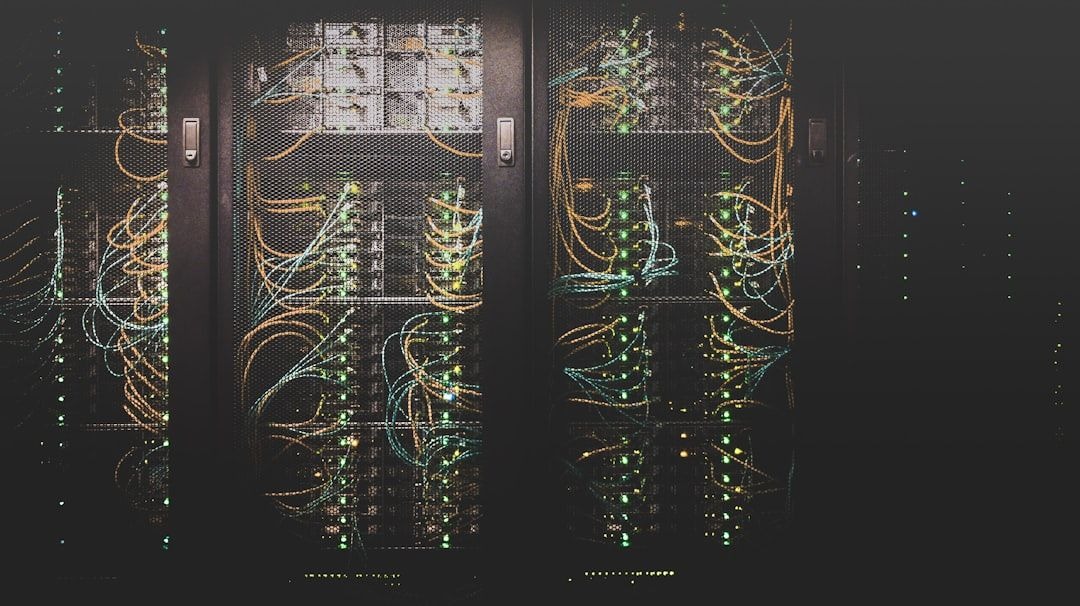
Building AI systems for real-world use is far more complex than creating impressive demos. While it's easy to construct a capable model with the right prompt and API call, production environments expose a host of less glamorous issues that demand attention. These include latency, inconsistent outputs, context management, moderation, observability, infrastructure costs, and handling failures that demos rarely reveal.
Dmytro Voroshylov, a seasoned software engineer with experience in building consumer and production AI systems, highlights the crucial distinction between the easy-to-replace model and the intricate system that surrounds it. For Voroshylov, the model is often the simplest component to swap out, but the real challenge lies in integrating memory, personalization, model orchestration, latency, moderation, and inference economics into a seamless experience.
When an AI prototype is subjected to real users, the conversation pivots from benchmark performance to addressing practical concerns. Teams frequently spend time comparing models, overlooking the architectural decisions that profoundly impact user experience. A model may excel in benchmark tests but prove unsuitable for production if it's too slow, costly, unstable, or difficult to moderate at scale.
Voroshylov emphasizes that the difference between a captivating AI demo and a robust production product lies in what happens outside the idealized scenario. While a prototype may tolerate occasional delays or minor inconsistencies, these issues become critical when the system is exposed to real-world usage. Latency can transform into a user-experience problem, rare failures can escalate into widespread issues, and inefficient context handling can lead to unexpected infrastructure costs. Edge cases, once discovered, can disrupt the entire user experience.
The author points out that simply adding production requirements to the architecture of a demo often leads to inadequate solutions. Instead, the architecture itself must be re-evaluated to accommodate production realities. This includes implementing timeouts, retries, fallback mechanisms, observability, quality checks, and version control for prompts and models. Moreover, understanding which aspects of the experience must remain deterministic and which can tolerate probabilistic behavior is essential.
While a single powerful LLM might seem like a straightforward architecture, it often proves inefficient and unpredictable for diverse tasks. In conversational systems, for instance, it's common to need a classifier to determine whether the user is continuing a conversation, seeking specific content, invoking external tools, or triggering specialized workflows. A smaller, more focused classifier can often achieve this more consistently and cost-effectively than a large, general-purpose model.
The same principle applies throughout the system. Separate components for tasks like intent classification, moderation, memory extraction, summarization, conversation generation, and routing can yield better results than relying solely on a single model. In some cases, traditional coding techniques may outperform models altogether.
Ultimately, the objective in production AI is not merely to minimize model size or maximize benchmark quality. Instead, it's about crafting a system that remains functional and reliable when faced with unpredictable user behavior, ensuring a seamless and consistent experience even as the system scales.
Written by urgent.news from HackerNoon's reporting — not their text. Machine-written — may contain errors; check the original before relying on it.