Synthetically Engineered Marine Bacteria Could Play Key Role in Decarbonizing the Atmosphere at Industrial Scales
A group of academic researchers genetically engineered Alteromonas macleodii , a widespread marine bacterium, to produce more siderophores, accelerating olivine weathering 2.6-fold in seawater bioreactors and enhancing atmospheric CO₂ removal. The post Synthetically Engineered Marine Bacteria Could Play Key Role in Decarbonizing the Atmosphere at Industrial Scales appeared first on GEN - Genetic…
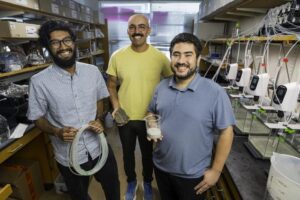
A collaborative team from the Wyss Institute at Harvard University, Harvard Medical School's department of systems biology, and Stanford Doerr School of Sustainability has engineered a potential solution to speed up rock weathering for carbon removal at industrial scales. Rock weathering is a natural process that regulates Earth's atmospheric CO2 levels, but it is too slow to be of practical use for decarbonizing the atmosphere at industrial scales.
The researchers genetically engineered Alteromonas macleodii, a marine bacterium, to produce high amounts of siderophores, molecules that extract iron from silicate minerals. In customized bioreactors, the engineered bacterium sped up the weathering of olivine by 2.6 times, boosting the amount of CO2 removed from the air. The team used small-scale and pilot-scale bioreactors to determine when bacterial siderophore production occurs and to show that the engineered microbes always produce siderophores.
They measured the actual uptake of 0.5 g of atmospheric CO2 into the reactors each day, demonstrating the potential for enhanced rock weathering at industrial scales. The study, published in Nature Biotechnology, highlights the potential of biologically inspired engineering and synthetic biology to enhance natural climate-regulating processes for positive environmental outcomes.
Written by urgent.news from GEN Biotechnology's reporting — not their text. Machine-written — may contain errors; check the original before relying on it.