Sánchez insiste en el extravagante relato sobre la invasión de Ceuta
Lo ha vuelto a hacer. Pedro Sánchez se presentó ayer ante la opinión pública, después de un mes desaparecido (incluidas tres semanas de vacaciones), en una entrevista radiofónica en la que insistió en el extravagante relato lanzado en días pasados sobre la invasión de entre 80.000 y 100.000 personas de la ciudad autónoma de Ceuta. Leer
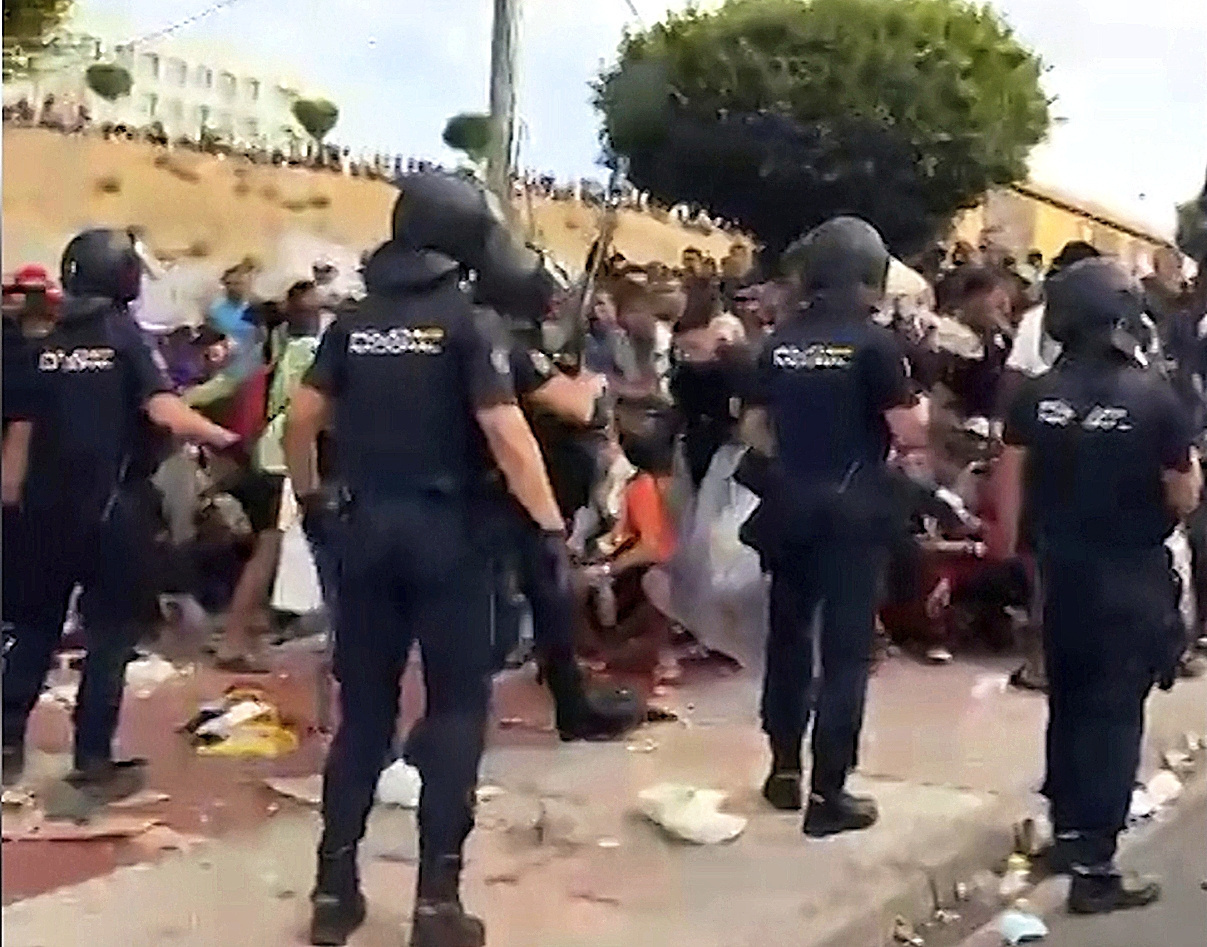
Once again, Pedro Sánchez has taken the stage in a public address, following a month-long absence, during which he confidently reiterated his claims about the alleged invasion of Ceuta, numbering between 80,000 and 100,000 individuals. According to the Socialist Party leader, this invasion was orchestrated by a conspiracy involving Russia, Israel, and an ultra-right international group to destabilize Spain's pro-Progressive government.
Any rational person who listened to Sánchez's reasoning, as he did the previous week, would readily conclude that he has either lost his judgment or is a compulsive liar. Following a few other assertions made during the interview—such as claiming King Felipe has ruled Spain for twenty years (when he has only been on the throne for twelve)—the logical conclusion is that he is indeed the second option.
Sánchez has a history of lying to his constituents, PSOE affiliates, parliamentary partners, and the general public, and he has done so again with the same tone of insincerity, attempting to regain credibility that he had lost long ago. His public appearance, just days before appearing before Parliament to explain the national security crisis, is merely a repetition of his previous responses to conflicts.
He offered no hint of autocracy, no empathy for the Ceutans, and an ironclad defense of Morocco. Sánchez did not display any indignation over the sluggish response or lack of coordination, either within his own government or with Ceuta's government. Yesterday, he failed to clarify any of the lingering mysteries that had persisted for a month.
He sought to bury the subject with a ridiculous tale fitting for radical deniers. Not even his allies in the Council of Ministers found his claims credible. Ernest Urtasun, the Culture Minister from the Sumar party, quickly refuted Sánchez and openly accused Morocco of planning or condoning the assault on Spain's national integrity (a statement Sánchez himself made a day earlier, claiming to have visited Ceuta four times).
Other allies of the executive also joined the criticism of the president. There can be no doubt that in a dictatorship like Morocco, nothing occurs behind the king's back. When faced with any situation, one must always ask, "Qui prodest?" In this case, it is evident that the invasion of Ceuta is benefiting Morocco. Despite Sánchez's insistence that there is no information on Morocco's involvement, the facts clearly show that several ministers of King Mohamed VI rushed to defend Morocco's sovereignty over Ceuta and Melilla within a week of the crisis.
The staunch defense of Pedro Sánchez and his ministers regarding Morocco's collaboration from the very beginning of the crisis is as implausible as the very narrative of an international conspiracy against the pro-Progressive government coalition. From Rabat, Morocco continues to deny receiving minors who have settled in Ceuta and imposes numerous obstacles to the repatriation of the thousands of invaders still languishing on the streets of the city.
Sánchez's relentless defense of Morocco's alleged complicity in the crisis is as absurd as his own invasion story. Rabat continues to deny accepting the minors who have arrived in Ceuta and creates numerous barriers to repatriating the thousands of invaders who are still struggling to survive in the city's streets. The yesterday's interview revealed a defeated Sánchez, unable to confront the security crisis facing Spain and provide solutions to the grievances of the Ceutans, who have been left to wonder if normalcy will ever return to their city a month after the invasion.
The mayor of Ceuta, Juan Jesús Vivas, provided the most telling example of the government's flawed handling of the crisis. Vivas explained that days before the invasion, he had called La Moncloa (the official residence of the Spanish Prime Minister) for no response and received a calm call from someone on his team, despite receiving an alert.
The same happened the following day with the Minister of the Interior, Fernando Grande-Marlaska, who was preoccupied with fires and showed no concern for Vivas' information. When the crisis erupted on July 30th and 31st, Sánchez and Grande-Marlaska traveled to Ceuta and promised to solve the problem quickly. However, the following day, Sánchez went on vacation, and days and weeks passed while the situation worsened.
Sánchez said he deserves a break when asked if his absence at La Mareta was a mistake. This is his style, like when he appeared before the press after the incidents in Paiporta and the first thing he said was "I'm fine" or when he explained in another public appearance that it was five o'clock and he hadn't eaten yet. He is so attached to his chair that he is unaware he is president 24 hours a day, 365 days a year.
He took the opportunity to defend the innocence of his wife, brother, and former President José Luis Rodríguez Zapatero, as well as attack the People Party and especially Isabel Díaz Ayuso, who he accused of buying a flat with Madrid's funds. The war between them continues to rage. However, during his statement, he made two particularly worrisome statements that reveal his level of nervousness.
First, when discussing the upcoming elections and the possibility of a political shift, Sánchez dismissed Alberto Núñez Feijóo's proposal for an alternative, degrading a democratic leader. He also took the opportunity to criticize the king with a fabricated lie. He boasts of having visited Ceuta four times during the crisis.
Written by urgent.news from Expansion ES's reporting — not their text. Machine-written — may contain errors; check the original before relying on it.
This story
This is one outlet's version. Read the fullest account.