Pakistani climber Asma Mushtaq's body recovered on GB's Spantik Peak nearly 10 days after her death
GILGIT: A ground team recovered the body of deceased Pakistani climber Asma Mushtaq from Gilgit-Baltistan’s Spantik Peak on Monday, almost 10 days after her death on the 7,027-metre-tall mountain. The 34-year-old climber died on Aug 20 while descending from the mountain after suffering from high-altitude sickness. Alpine Club of Pakistan (ACP) Secretary General Ayaz Shigri told Dawn that a…
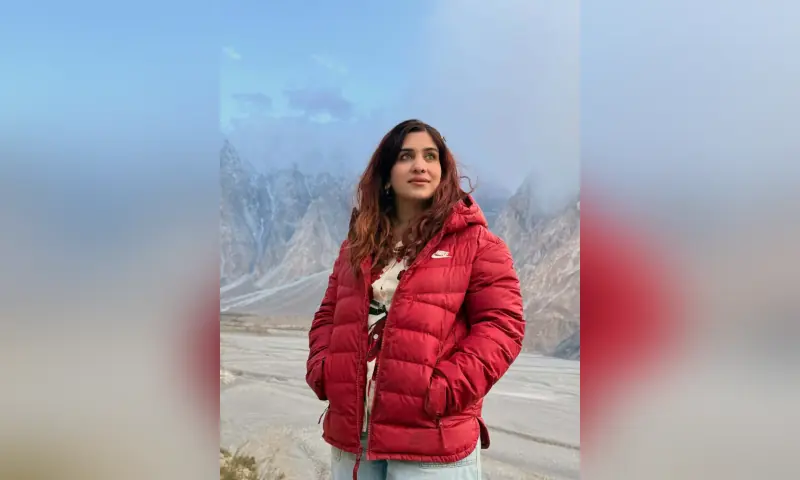
GILGIT: The body of deceased Pakistani climber Asma Mushtaq has been recovered from Spantik Peak in Gilgit-Baltistan, nearly 10 days after her untimely death. Mushtaq, 34, succumbed to high-altitude sickness while descending from the 7,027-meter peak on August 20. The Alpine Club of Pakistan (ACP) Secretary General Ayaz Shigri revealed that a five-member team, consisting of high-altitude mountaineers from Shigar, initiated a new recovery attempt on Friday after prior efforts were thwarted by heavy snowfall.
The team, led by Mehboob, Hussain Ali, Mazahir Hussain, Mehboob Ali, Muhammad Abidin, and Abbas Ali, began their operation at 3 am and located Mushtaq's body after approximately eight hours of searching near Camp 3, which sits at an elevation of about 6,250 meters. The body will be transported to Camp 2 and then airlifted to Skardu by Pakistan Army helicopters.
Mushtaq was part of a five-member women's expedition team that successfully reached the summit of Spantik, including climbers Zoni Aslam, Zaba Shigri, Shama, and Sohana. Unfortunately, she experienced a severe high-altitude medical emergency at an altitude of around 6,400 meters during her descent. High-altitude sickness, caused by hypoxia due to rapid ascent and insufficient acclimatization to high altitudes, has become increasingly dangerous in the Karakoram Range due to climate change.
In some instances, bodies at such extreme altitudes are left to decompose under the snow rather than being retrieved.
Written by urgent.news from Dawn's reporting — not their text. Machine-written — may contain errors; check the original before relying on it.
This story
This is one outlet's version. Read the fullest account.