Nikkei, Yen, Hang Seng: Zinssorgen und Nahost-Konflikt: Asiatische Börsen schließen im Minus
Die Angst vor einer Zinswende und der erneut eskalierende Militärkonflikt im Nahen Osten haben die asiatischen Börsen zum Wochenauftakt belastet.
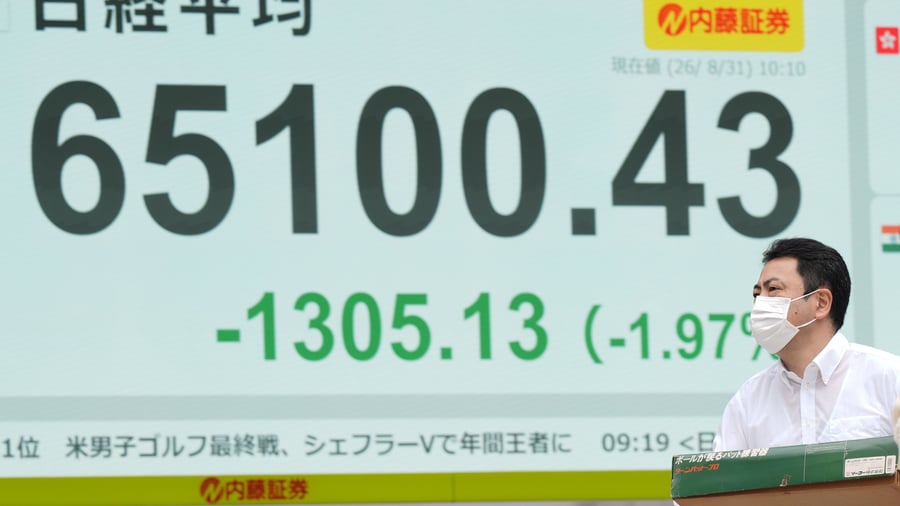
The fear of rising interest rates and military escalation in the Middle East has weighed on Asian stock markets at the opening of the week on Monday. The Nikkei Index fell 0.4% to 66,155 points. The broader Topix index gained 0.2% to 4,156 points. In Hong Kong, the courses also followed the same trend. Meanwhile, the Shanghai stock exchange managed to recover its recent losses and gained 0.9%.
The CSI-300 index with the 300 largest Chinese companies on mainland exchanges rose by 0.35% to 4,625 points. In Japan, comments from US Federal Reserve Chairman Kevin Warsh added to the mood, as he focused on combating inflation and thereby encouraged expectations of an early interest rate hike. The markets also anticipate a probable interest rate increase by the Bank of Japan (BOJ) in the coming month, with the probability currently estimated at just under 70%.
"The growing expectations of US interest rate hikes are likely to burden investor sentiment," explained Takayuki Miyajima, Chief Economist at Sony Financial Group. Among the biggest losers in the Nikkei were Advantest, down 4.5%, Japan Steel Works, down 5.6%, and Mitsubishi Materials, down 6.6%. In China, mixed economic data came to the fore.
Industry activity improved slightly in August to 49.8, but remained in the contraction zone for the second month in a row. "It is too early to conclude an economic recovery," said Zhiwei Zhang, Chief Economist at Pinpoint Asset Management.
Written by urgent.news from Handelsblatt's reporting — not their text. Machine-written — may contain errors; check the original before relying on it.
This story
This is one outlet's version. Read the fullest account.