Nepal floods destroy more than 2,500 buildings in Trishuli valley
PARIS: More than 2,500 buildings were destroyed in Nepal’s Trishuli valley in tsunami-like glacial floods on August 26, according to an AFP computation of data from Europe’s Copernicus observatory.
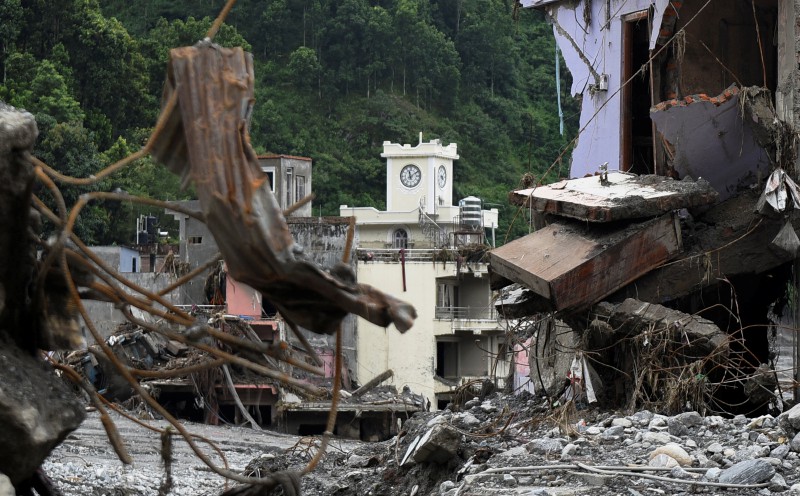
On August 26, a torrent of glacial meltwater swept through Nepal's Trishuli valley, obliterating more than 2,500 homes, reports the AFP. This represents roughly two-thirds of all buildings in the three zones most impacted by the disaster, according to the European Union's Copernicus emergency management service. When taking into account partially damaged structures, the proportion of affected buildings surged past 70 percent, highlighting the flood's overwhelming force as it ravaged the region.
The areas affected span Timure, Syabrubesi, and Bidur, towns situated north of Kathmandu, the Nepalese capital, and were once home to approximately 6,000 residents prior to the calamity. On Monday morning, investigators were still assessing imagery of the area surrounding Bharatpur, Nepal's third-largest city. Scientists have pinpointed the cause of the catastrophic flood to the collapse of a massive glacier in the Himalayas.
This icy mass surged down the valley, passing the Gyirong border post straddling the Nepal-Tibet border, a Chinese autonomous region, after racing approximately 20 kilometers from the glacier. The small border town of Timure and the surrounding areas suffered a staggering 80 percent loss of buildings. Ten kilometers downstream, the disaster-stricken locale of Syabrubesi saw nearly three-quarters of its structures reduced to rubble.
This village acts as the launchpad for the renowned Langtang trek and is a popular route for Hindu pilgrims. As the riverbanks receded further south, around Bidur – the administrative hub of the Nuwakot district and the base for rescue operations – more than 1,800 buildings were destroyed, accounting for three out of every five structures.
The disaster not only obliterated homes but also devastated roads and bridges, complicating efforts to deliver aid and locate the missing. AFP emphasized, "As well as homes, the disaster destroyed roads and bridges, making it more difficult to deliver aid and search for the missing."
Written by urgent.news from New Straits Times's reporting — not their text. Machine-written — may contain errors; check the original before relying on it.