NASA Welcomes Türkiye as Newest Artemis Accords Signatory
During a ceremony hosted by NASA Administrator Jared Isaacman at the agency’s headquarters in Washington on Monday, the Republic of Türkiye signed the Artemis Accords, joining the growing international coalition of like-minded nations dedicated to peaceful, transparent space exploration. “It is my privilege to welcome the Republic of Türkiye as the 71st signatory of the […] The post NASA Welcomes…
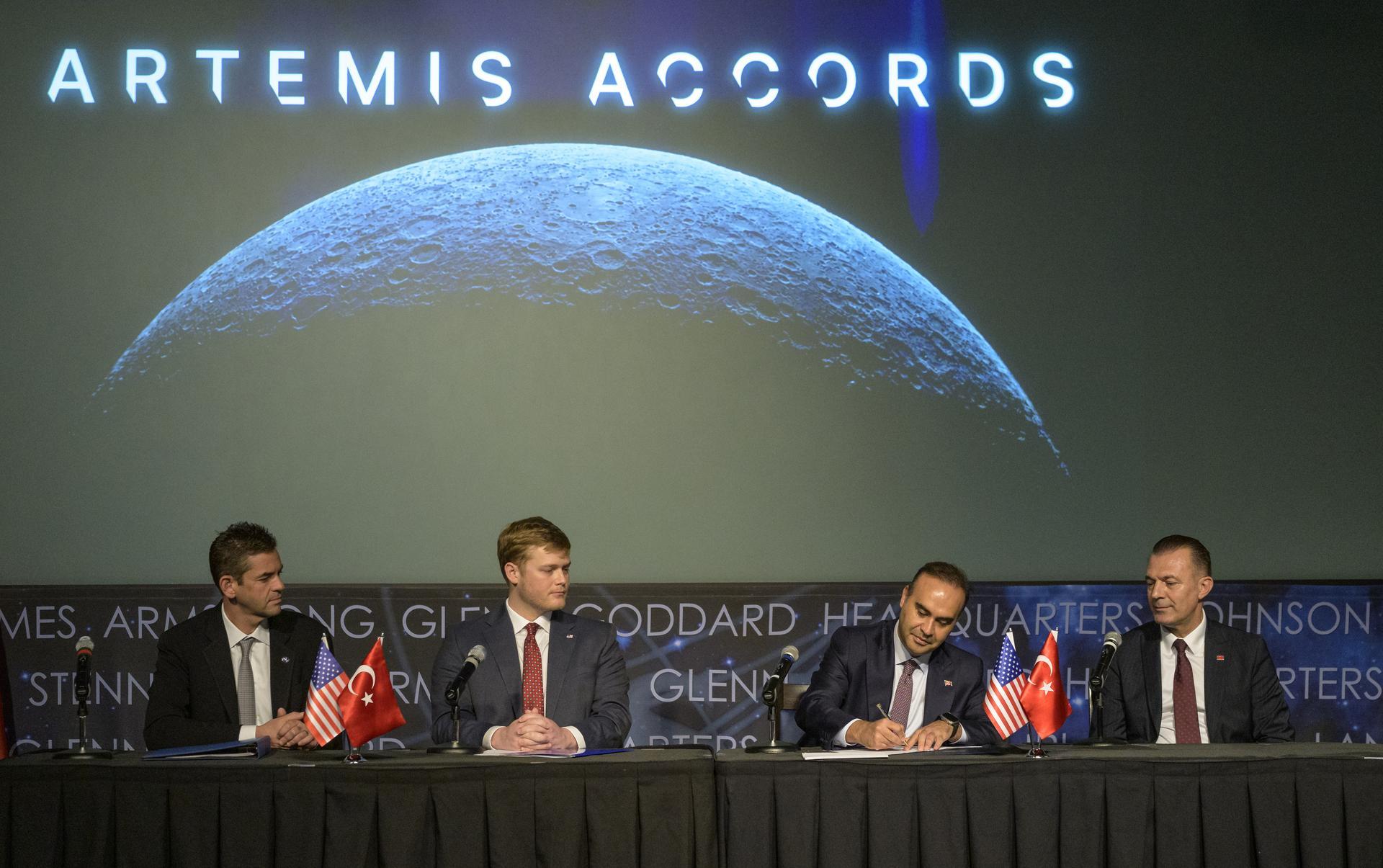
On Monday, August 31, 2026, NASA Administrator Jared Isaacman welcomed Türkiye as the 71st signatory to the Artemis Accords during a ceremony at the agency's headquarters in Washington, D.C. The signing ceremony took place in the presence of Turkish Minister of Industry and Technology Mehmet Fatih Kacır, Turkish Space Agency President Yusuf Kıraç, and U.S. Deputy Assistant Secretary of State for Space and Environment Connor Tomlinson.
NASA Administrator Isaacman noted that the signing of the Artemis Accords marked a significant step in NASA's return to the lunar surface and the establishment of humanity's first enduring presence on another world. He emphasized that the Artemis Accords principles would be put into practice on the lunar surface, inviting every signatory to contribute to future Artemis missions through hardware, scientific payloads, technology demonstrations, CubeSats, and other capabilities.
Türkiye's recent advancements in human spaceflight, including the 2024 flight of its first astronaut Alper Gezergyaci to the International Space Station and the 2024 suborbital flight of second astronaut Tuva Atasever on Virgin Galactic 07, showcased the nation's commitment to space exploration. Türkiye is set to launch its first lunar mission, AYAP-1, joining a growing list of countries developing and launching satellites to the Moon.
The signing of the Artemis Accords by Türkiye aligns with the country's preparations to host the International Astronautical Congress in Antalya this October. The event will see dozens of Artemis Accords signatories attending to discuss the future of peaceful and transparent space exploration.
Written by urgent.news from NASA Science's reporting — not their text. Machine-written — may contain errors; check the original before relying on it.
This story
This is one outlet's version. Read the fullest account.