Motorless solid-state cooler uses heat to cool itself; could recycle processor heat into cooling — shape-memory alloy films could turn data center exhaust into refrigeration
German and Japanese researchers demonstrate a heat-driven elastocaloric cooler that uses shape-memory alloys to turn waste heat into cooling.
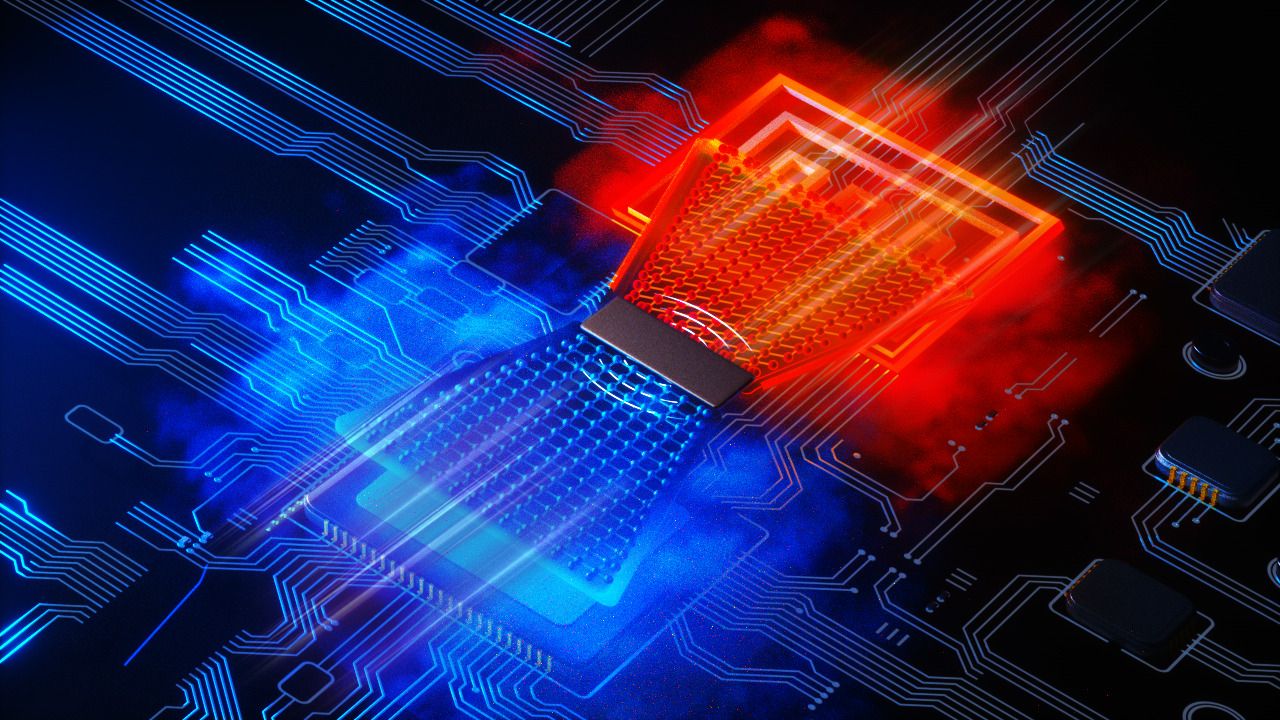
Scientists in Germany and Japan have created a solid-state cooling system that harnesses heat to drive mechanical work for refrigeration. This innovation, detailed in Nature Energy, could allow processors and data centers to recycle their own waste heat for cooling purposes. Unlike traditional cooling systems, this new technology replaces the electrically powered actuator in elastocaloric cooling with a heat-responsive shape-memory alloy.
The key to this system is a combination of two ultra-thin metal films, one acting as a shape-memory alloy (TiNi) and the other as a refrigerant (TiNiFe). When the TiNi film is heated, it contracts, stretching the TiNiFe film and triggering a reversible phase transition that leads to cooling. This process operates independently of an electric motor, utilizing an external heat source to drive the cooling cycle.
In laboratory tests, the system successfully maintained a temperature span of 2.2 K when driven by an external heat source of 130°C, demonstrating its potential to recycle waste heat. While current applications are limited due to low cooling power and scalability issues, the researchers are working on parallel film connections to boost cooling capacity. This breakthrough offers a promising avenue for reducing energy consumption in data centers by utilizing the processors' own heat for cooling.
Written by urgent.news from Tom's Hardware's reporting — not their text. Machine-written — may contain errors; check the original before relying on it.