Martian Astronomy: Percy Sees a ‘Phobos Eclipse’ From Mars
Sure. It’s just another image of Phobos crossing the disk of the Sun, as seen from the surface of Mars. Like so much of the modern space era, these images, once amazing, are now almost routine. But there’s some real science behind tasking the Mars rovers to conduct a little ‘Martian astronomy.’
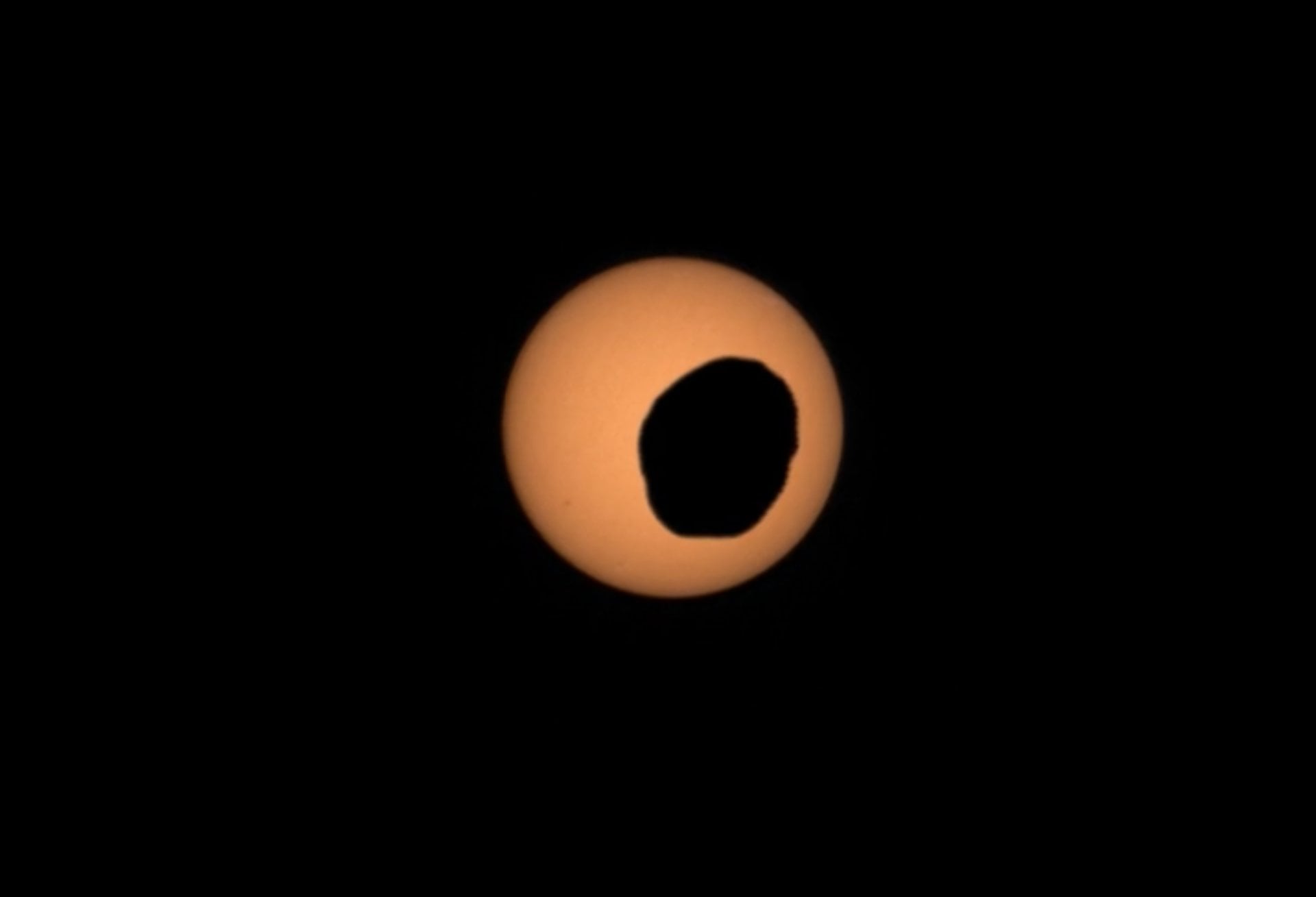
When Percival Lowell’s Mars rovers spy Phobos crossing in front of the Sun, it may appear as a peculiar eclipse. The innermost moon of Mars, Phobos, orbits at just under 6,000 kilometers above the planet’s surface. It completes an orbit around Mars in 7 hours and 39 minutes, faster than Mars rotates. In transit, the potato-shaped satellite obscures only a quarter of the Sun’s apparent disk, taking less than a minute to cross it.
Despite its odd appearance, the event is scientifically significant, providing precise measurements of Phobos' location to refine its orbital position. This helps researchers understand more about Mars' interior structure through tidal effects induced by Phobos’ gravitational pull on the planet. With missions like Mars Moons Explorer (MMX) planned for the future, the study of Phobos and its transits will continue to shed light on the Red Planet's enigmatic moons.
Written by urgent.news from Universe Today's reporting — not their text. Machine-written — may contain errors; check the original before relying on it.