JP Morgan traders back down bullishness on US stocks after Fed chair Warsh's Jackson Hole speech
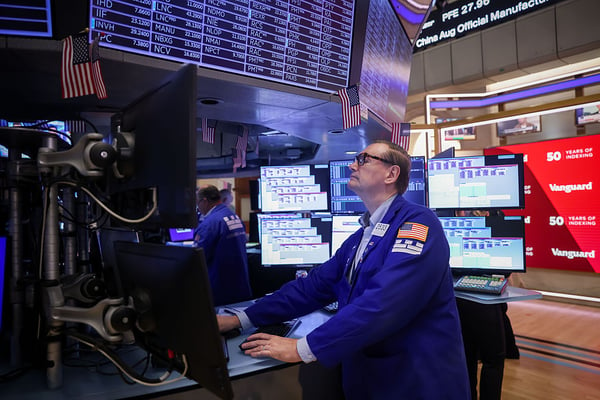
JPMorgan Chase traders are now tactically cautious on US stocks for upcoming weeks. This shift follows Federal Reserve Chairman Kevin Warsh's hawkish comments on interest rates. Traders cite uncertainty over rate outlook and potential AI stock unwinding as key risks. Despite near-term caution, the broader market backdrop is expected to remain supportive. Economic data and corporate earnings will…
JPMorgan Chase & Co.’s trading desk has switched to a "tactically cautious" stance on US stocks for the coming weeks following remarks by Federal Reserve Chair Kevin Warsh, according to Bloomberg. This shift comes as traders become more cautious amid expectations of interest-rate hikes this year. Andrew Tyler, head of US market intelligence, led the move away from the bullish outlook that JPMorgan had been advocating ahead of the Fed's policy decision on September 16.
Despite near-term risks, JPMorgan still expects the broader market backdrop to stay supportive, bolstered by economic data and corporate earnings. Tyler wrote that the equity-market fundamentals remain strong but that near-term variables are likely to keep markets "chop sideways," moving to a tactically cautious/neutral view.
Tyler highlighted rate uncertainty, seasonal weakness, and potential volatility in AI stocks as significant near-term risks. He noted that overall equity positioning remains largely neutral. September is traditionally a weak month for US stocks, adding to concerns about the sustainability of the AI rally and persistent inflation.
The August jobs report, due Friday, and consumer-price data set for September 11 will be crucial in shaping the Fed's decision. Tyler maintained that a recession is unlikely in the next few quarters, but emphasized that the Fed's meeting on September 16 is a "live meeting" given the current inflation concerns. He concluded that, traditionally, equity bull markets tend to end with either a hiking cycle or a recession, but currently, a recession is highly unlikely for the coming quarters.
Written by urgent.news from The Economic Times - Top News's reporting — not their text. Machine-written — may contain errors; check the original before relying on it.
This story
This is one outlet's version. Read the fullest account.