Jennifer Higgie’s Empathetic Elegy for Richard Dadd
In “Bedlam,” the author and art critic does not describe the English painter’s often-sensationalized mental deterioration. Instead, she writes the novel in his voice.
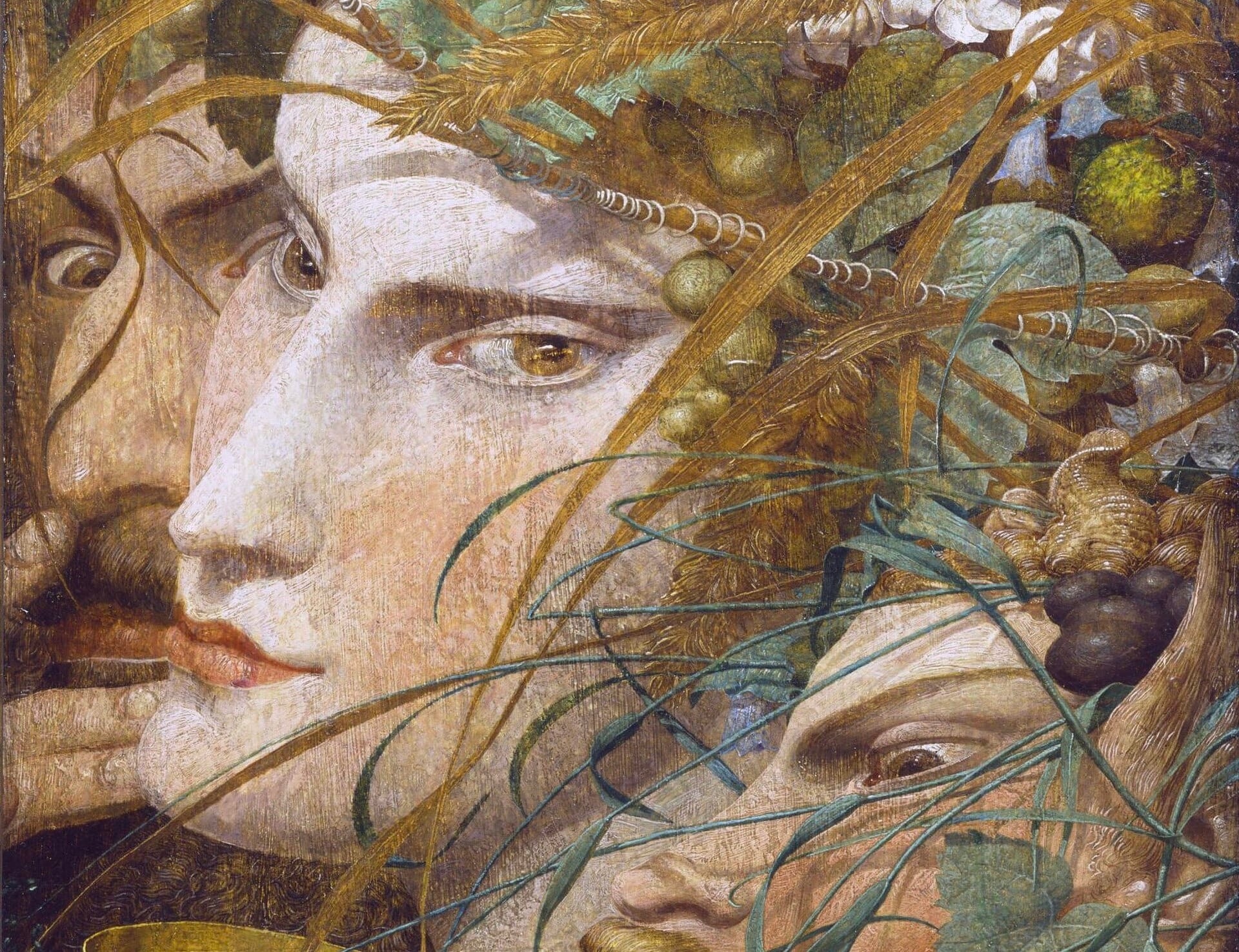
Richard Dadd, the English painter, created "The Fairy Feller's Master-Stroke" (1855-64), which depicts ghostly, gray-faced Victorians mingling with oversized dandelions and shrubs, partially obscuring a figure holding an axe. This eerie work was produced at Broadmoor Hospital, a high-security psychiatric facility where Dadd was confined after working at Bethlem Royal Hospital, also known as "Bedlam."
Jennifer Higgie, a writer and art critic, has penned a novel titled "Bedlam," inspired by Dadd's life. Originally published in 2006 by Sternberg Press and re-released in July by Verso, the book reimagines Dadd's journey through Europe, Southwest Asia, and North Africa as a draughtsman for a British nobleman. This trip triggered a period of psychosis, culminating in Dadd killing his father at the age of 26.
Higgie's novel features a first-person, fragmented account that translates Dadd's unsettling paintings and drawings into his own writing. By employing diaristic, idiosyncratic snapshots, Higgie captures the uncanny nature of Dadd's work and explores the boundaries between historically marginalized minds and those who seldom interact with psychiatrists.
As Dadd expresses in the opening lines of "Bedlam," "Perhaps it is the story that chooses the man … I did not write my life." However, Higgie has done so. In her rendition, Dadd's psychosis stems from his increasingly distorted perception of the relationship between reality and its representations.
Dadd's task while on his international journey for Sir Thomas Phillips was to sketch his experiences. During this process, he questions why he should bother recreating the Alps in front of him if his drawings would inevitably end up inferior to the original. He consoles himself by believing that "a drawing is simply another mountain."
As he travels across the Gulf of Corinth, Dadd grapples with the differences between what he draws and what he observes: "In every wave a picture hides from me, but none I can mention or describe to my companion." Near En Gedi, a desert near the Dead Sea and present-day Occupied West Bank, metaphors gradually dissolve into hallucinations.
Dadd claims to see scorpions the size of men lurking in ruins and crashes into walls that he cannot see.
Written by urgent.news from Hyperallergic's reporting — not their text. Machine-written — may contain errors; check the original before relying on it.