Invasive Jorō Spiders Have Made a Home in Georgia, but They May Not Threaten Native Spiders
Despite their scary looks and giant webs, Jorō spiders appear to peacefully coexist with local spiders, developing a taste for pesky insects native arachnoids won’t touch.
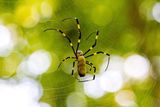
Jorō spiders, invasive arachnids from East Asia, have established themselves in Georgia and the Southeastern United States, but may not pose a threat to native spiders. Despite their fearsome appearance and enormous webs, these spiders seem to peacefully coexist with local spiders, consuming a different set of prey that often goes untouched by native spiders.
Researchers from the University of Georgia collected and analyzed over 200 Jorō spiders' stomach contents, comparing them to those of around 140 local spiders. They found that Jorōs consumed 26 species of insects that local spiders typically avoid. The presence of Jorō spiders does not appear to introduce noticeable competition for food, as native spiders continue to maintain their diets.
Their large, sticky webs might have initially raised concerns about potential threats to monarch butterflies, but observations did not support this hypothesis. Instead, Jorōs seem to be beneficial, feeding on pest insects such as flies. The spiders spread rapidly across the state due to their ballooning behavior, where hatchlings use silk to ride the wind to new locations.
Jorōs are known for their distinct yellow webs, often tangled with other webs, and are frequently spotted near human-made features, including roads. Though not aggressive towards humans or pets, researchers stress the importance of avoiding broad-spectrum insecticides, as these could harm beneficial insects that help control pest populations.
Further research is needed to fully assess any potential negative impacts Jorōs may have on the environment, but for now, experts advise remaining cautious with pesticides.
Written by urgent.news from Discover Magazine's reporting — not their text. Machine-written — may contain errors; check the original before relying on it.