Indigenous rangers pull killer ‘ghost nets’ from Australia’s northern coast
On a remote beach on Groote Eylandt, a large island in Australia’s Gulf of Carpentaria, Kirsten Eden and her colleagues found a fishing net that someone had tried to make disappear. It had been burned and melted into a lump while at sea, and thrown overboard. It didn’t sink, but floated to shore as a […]
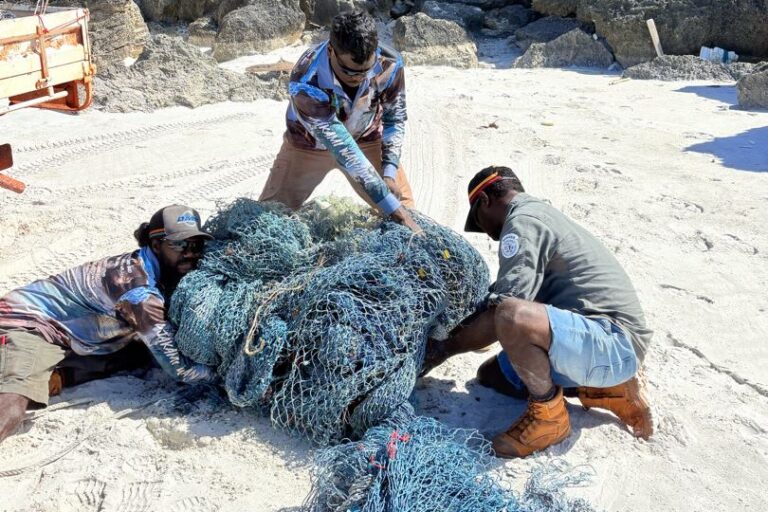
Indigenous rangers on Australia's northern coast are tirelessly removing "ghost nets" that pose a grave threat to marine life. On Groote Eylandt, a remote island in the Gulf of Carpentaria, Kirsten Eden and her colleagues discovered a net that had been burned and melted into a hard plastic lump. Despite its size, the net now contributes to the growing problem of microplastics that will persist long after humans are gone.
Eden, who manages the Anindilyakwa Land and Sea rangers, emphasized the cultural significance of these beaches to the Indigenous Australians, who consider them sacred. The team's mission extends beyond general cleanup to specifically targeting ghost nets—discarded fishing gear that endures in the environment, entangling marine life and accumulating debris.
Across northern Australia, Indigenous rangers are taking the lead in retrieving lost and abandoned fishing gear that continues to cause harm even after it has been retired. Removing a ghost net is a slow, labor-intensive process, often involving years of physical work to dislodge the nets, which are sometimes buried deep or entangled around driftwood and rock. One net can take hours to extract.
Written by urgent.news from Mongabay's reporting — not their text. Machine-written — may contain errors; check the original before relying on it.