India’s aviation boom faces turbulence amid safety concerns
A series of crises at India's two main carriers, Air India and IndiGo, has exposed safety and regulatory shortcomings in the world's third-largest domestic aviation market.
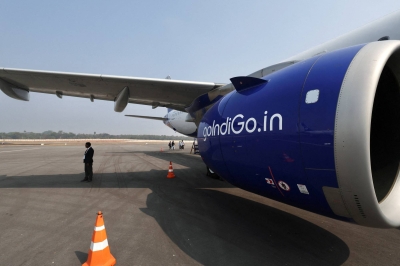
India's aviation industry, once hailed as a symbol of the country's rising stature, now faces mounting safety and regulatory challenges. Prime Minister Narendra Modi once proclaimed the airline sector as a beacon of India's soaring potential, but recent events suggest a less rosy picture. Both Air India and IndiGo, the nation's two dominant carriers, have been embroiled in crises that have exposed systemic weaknesses in the world's third-largest domestic aviation market.
The turbulence has been exacerbated by geopolitical shocks, which have squeezed airlines' profits and forced them to reconsider expansion plans. Mark Martin of Martin Consulting notes that the past two years have been particularly grim for India in terms of its global reputation and credibility. The latest setback occurred when an Air India flight from Thailand to New Delhi experienced a mid-air plummet of 300 feet, injuring 24 passengers.
This incident followed a previous crash of a London-bound Boeing 787 Dreamliner in 2020 that claimed 241 lives, prompting ongoing scrutiny of Air India's safety practices.
An audit of Air India revealed around 100 safety lapses, including seven violations demanding immediate corrective action. Former airline operations chief Shakti Lumba has criticized the airline's lax safety culture, stating that lip service is being paid to safety without fostering a genuine safety culture. Former Air India executive director Jitender Bhargava questioned the management's oversight, suggesting that the pilot community would likely have noticed if a colleague was using drugs. However, Air India and IndiGo have not commented on the allegations.
The safety concerns coincide with financial pressures faced by airlines. Indian carriers have had to extend routes due to the closure of Pakistani airspace, which has led to longer and more expensive journeys. The surge in jet fuel prices, driven by the Middle East war, has further strained the industry. Ratings agency ICRA predicts that Indian airlines will incur losses of nearly $4 billion this fiscal year.
Air India's losses alone more than doubled to $2.3 billion in the last fiscal year, while IndiGo has reported losses for two consecutive quarters.
This safety and financial strain is also affecting expansion plans. IndiGo recently suspended its wide-body operations, and Air India is reportedly considering delaying the delivery of up to 500 aircraft. This marks a reversal for a sector that has been celebrated as one of India's biggest success stories. In the past decade, Indian airlines carried about 167 million passengers, more than double the figure a decade earlier.
Over 70 airports have been added, and carriers have ordered more than 1,500 aircraft. However, Harsh Vardhan, chairman of Starair Consulting, argues that the problems stem from a lack of ability to manage growth effectively, not a lack of growth itself.
Written by urgent.news from Qatar Tribune Business's reporting — not their text. Machine-written — may contain errors; check the original before relying on it.
This story
This is one outlet's version. Read the fullest account.
- India's aviation boom faces turbulence amid safety concerns dawn.com
- India’s aviation boom faces new turbulence amid safety concerns qatar-tribune.com
- India's aviation boom faces turbulence amid safety concerns channelnewsasia.com
- India’s aviation boom faces turbulence amid safety concerns malaymail.com