India needs to make up its mind about economic ties with China
As India prepares for the Brics summit less than two weeks away, relations with China are warming up. On July 22, Indian External Affairs Minister Subrahmanyam Jaishankar met his Chinese counterpart Wang Yi during the East Asia Summit; five days later, Foreign Secretary Vikram Misri visited China. Last week, Indian National Security Adviser Ajit Doval also visited Beijing, for border talks. But…
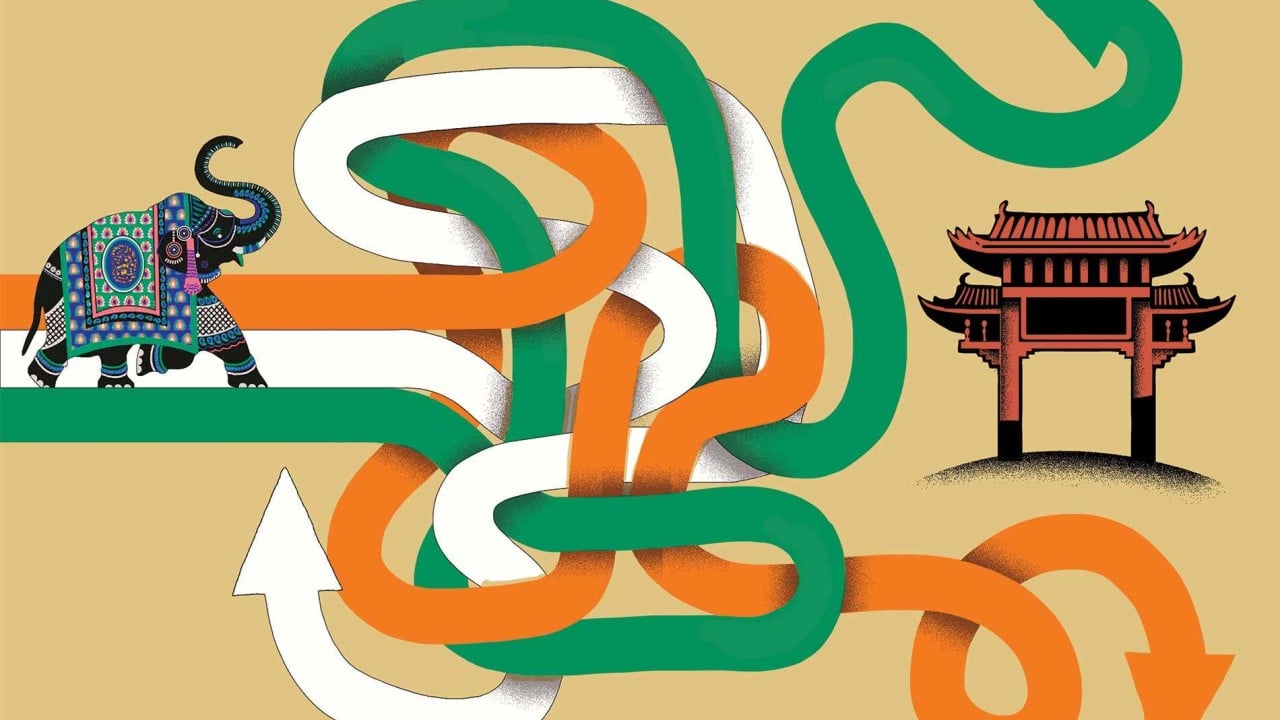
As India prepares for the upcoming Brics summit, relations with China are becoming increasingly cordial. In recent meetings, Indian External Affairs Minister Subrahmanyam Jaishankar and his Chinese counterpart Wang Yi held talks, followed by Foreign Secretary Vikram Misri's visit. National Security Adviser Ajit Doval also recently met his Chinese counterpart in Beijing.
However, India remains uncertain about economic engagement with China. While seeking Chinese capital, technology, and expertise, India is wary of potential disruptions. External Affairs Minister Jaishankar explained that India's long-term goal is to compete with China in manufacturing. Despite six years of stringent controls on Chinese investment, bilateral trade surged to US$151.1 billion in the financial year ending March 31.
China has since become India's largest import source, replacing the United States as its top trading partner. India's approach to China has shifted from welcoming participation to containment after 2020, and more recently, to a measured reopening. During PM Narendra Modi's first term and the beginning of his second term, India adopted a broadly open stance towards China.
The "Make in India" campaign, initiated in 2014, aimed to reduce bureaucratic hurdles and attract foreign investment. This strategy was successful, with China signing a five-year economic cooperation plan with India in 2015 and making significant commercial deals. Even after the 2017 Doklam standoff, both countries maintained economic dialogue and planned connectivity projects.
In 2019, China proposed a manufacturing partnership. Early in 2020, China's investment in India was estimated to exceed US$26 billion. However, the turning point came in April 2020 when India introduced prior government approval for foreign direct investment (FDI) from neighboring countries, primarily to deter "opportunistic takeovers."
Following the Galwan Valley clash, restrictions against Chinese businesses intensified, leading to visa delays, regulatory raids, and other hardships. In 2024, a cautious reopening began, with the government suggesting that improved border conditions could facilitate an easing of investment scrutiny, while the Economic Survey 2023-24 argued that full decoupling from Chinese supply chains is unrealistic.
Finance Minister Nirmala Sitharaman publicly advocated for better economic ties, and a 250 billion rupee (US$2.6 billion) Production-Linked Incentive (PLI) scheme was launched in March to boost manufacturing of electrical components. In March, investment curbs were relaxed, and import duties on certain electronics components were reduced in July, potentially benefiting companies like Xiaomi.
Despite India's need for capital, technology, and talent inflows, it has been systematically limiting Chinese sources best positioned to provide these. This reflects a paradox between economic rationality and political logic, with nationalist sentiment playing a significant role. The 2020 FDI decision was a turning point, but it is part of a larger picture.
The PLI scheme offers manufacturing subsidies even as tariffs on inputs rise under the "Atmanirbhar Bharat" (self-reliant India) policy. India claims to join global value chains while excluding Chinese supply chains and expertise. The 2020 border crisis accelerated the politicization of economic ties between the two nations. Security agencies, economic hawks, and protectionist business lobbies supported the restrictions.
Doval raised concerns about Chinese tech dominance, and several ministers backed the FDI curbs. The Confederation of All India Traders launched a "China Quit India" campaign. A reassessment only occurred in 2024, spurred by slowing FDI, macroeconomic challenges, and the realization that India could not capitalize on the "China India Plus One" approach while excluding Chinese input sources.
Despite years of frozen Chinese FDI, India's Chinese imports have not decreased. Manufacturing output, particularly in the smartphone sector, has expanded, but often results in "Assemble in India" rather than developing genuine industrial capacity and supply chains. Import dependence on Chinese components, machinery, and intermediates has grown, widening the bilateral trade deficit from US$44 billion in the 2020-2021 financial year to US$112.1 billion in the year ending March 31.
The Modi administration's industrial policies, infrastructure investments, and selective incentives aim to replicate China's manufacturing growth but have largely overlooked the need to build supplier ecosystems, skilled labor pools, logistics networks, and scale economies, which take decades to establish. Consequently, India has neither reduced its reliance on Chinese supply chains nor achieved the self-sufficient industrial base it has long sought.
The latest easing in key sectors only replaces blanket restrictions with controlled access, allowing China to continue its dominance in India's economic landscape.
Written by urgent.news from Reuters Business via SCMP's reporting — not their text. Machine-written — may contain errors; check the original before relying on it.
This story
This is one outlet's version. Read the fullest account.
- India needs to make up its mind about economic ties with China scmp.com
- India's factory growth at five-year low in August on weakening demand, PMI shows brecorder.com
- India's factory growth at five-year low in August on weakening demand, PMI shows economictimes.indiatimes.com
- PM Modi lauds India's 7.8% real GDP growth in Q1FY27; asks citizens to avoid foreign trips, buying gold livemint.com
- India’s factory growth at five-year low in August on weakening demand, PMI shows investing.com
- India's GDP records surprise growth of 7.8% amid Iran war asia.nikkei.com