How a “Psychic” Horse Named Clever Hans Changed the Way We Do Science
His tutor Wilhelm von Osten was convinced that animals possessed an intelligence equal to humans The post How a “Psychic” Horse Named Clever Hans Changed the Way We Do Science appeared first on Nautilus .
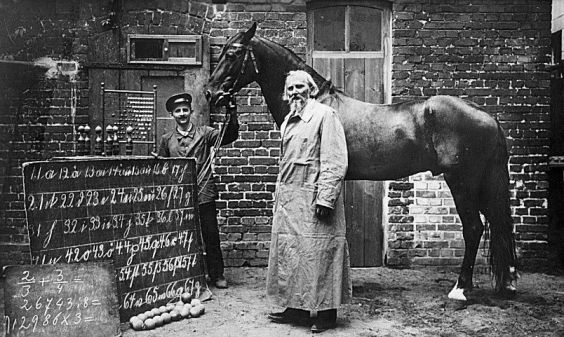
In the early 20th century, the scientific community was captivated by the notion of psychic phenomena, such as telepathy and clairvoyance. Among the many researchers pursuing these ideas, Wilhelm von Osten, a tutor in Germany, became particularly interested in whether animals, like horses and dogs, possessed such abilities. Von Osten believed that animals could be just as intelligent as humans, if not more so.
One of the most famous cases studied by von Osten was that of Clever Hans, a horse who seemed to have an uncanny ability to perform mathematical calculations. Clever Hans attracted a great deal of attention from both the scientific community and the public, with many eager to witness his mathematical prowess. Psychical researchers, such as Joseph Banks Rhine, were drawn to Clever Hans's case in hopes of uncovering evidence of supernatural abilities in animals.
However, it was the work of Oskar Pfungst, a research assistant to psychologist Carl Stumpf, that ultimately shed light on the true nature of Clever Hans's abilities. Pfungst discovered that the horse could only provide accurate answers to mathematical questions when his owner was present and could see him. Pfungst concluded that Clever Hans was responding to involuntary signals from his owner, which the horse could interpret.
This phenomenon, now known as the Clever Hans effect, demonstrated that the horse's remarkable abilities were not due to supernatural powers, but rather the result of a flawed experimental setup.
Written by urgent.news from Nautilus's reporting — not their text. Machine-written — may contain errors; check the original before relying on it.