Gov’t challenges ABL’s claim that beer tax changes threaten 2,000 jobs
The government has rejected Accra Brewery PLC’s claim that changes to Ghana’s beer excise duty regime could put up to 2,000 jobs at risk, saying the company has not provided sufficient evidence to support the estimate.
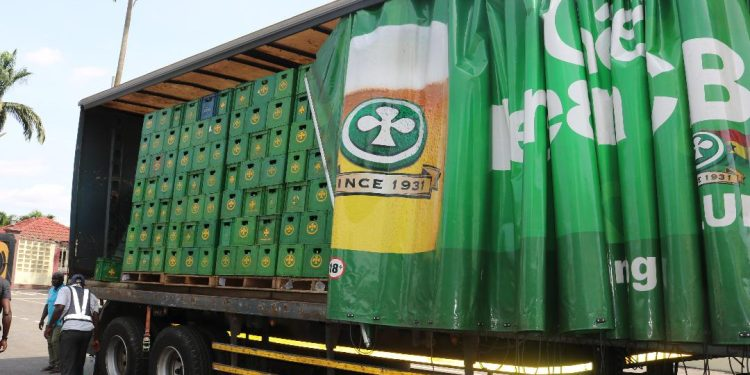
The government has dismissed Accra Brewery PLC's assertion that recent alterations to Ghana's beer excise duty structure could jeopardize up to 2,000 positions, citing a lack of substantiating data. The brewery had previously warned that the enhanced tax rates may elevate the tax burden on domestically produced beer, hinder investment, and place imported beer at an advantage.
It projected the modifications could augment costs by US$7.5 million and advocated for the retention of the present tiered rates for the fiscal years 2026 and 2027. In a response published on August 31, 2026, the Ministry of Finance contended that the crux of the matter lies in determining whether the existing tax incentive is still fulfilling its intended objective.
According to statistics from the Ghana Revenue Authority, roughly 85% of eligible production by Accra Brewery and other domestic manufacturers was already subject to the highest concessionary rate. The ministry elucidated that a graduated tax incentive functions by providing a marginal benefit for transitioning between bands; however, with 85% of output already in the highest band, there are no additional bands to access and no further incentive to offer.
Under the revised Excise Act, the three-tiered system persists, but the rate for beer and stout exceeding 70% local raw material content has been raised from 10% to 25%. Additionally, the rate for products containing 50%-70% local raw materials has increased from 32.5% to 40%, while the standard rate remains at 47.5%. The ministry emphasized that the modifications consequently diminish the size of the tax preference instead of eliminating it entirely.
The producers in the highest band will still enjoy a 22.5 percentage-point tax advantage over imported beer, which remains subject to the 47.5% standard rate. The government also contested Accra Brewery's estimation that as many as 2,000 jobs might be lost. It argued that the company had not furnished the methodology, base year, price elasticity, or definition utilized to ascertain the number of jobs deemed "at risk."
The ministry further disputed the utilization of an Oxford Economics estimate, which the beer industry was said to have supported 52,000 jobs in 2023, asserting that this figure represented the sector's broader economic impact rather than jobs specifically reliant on the excise concession. The ministry questioned Accra Brewery's US$7.5 million estimate of the additional expense resulting from the tax adjustments, noting that the company had not disclosed production volumes, ex-factory prices, product mix, applicable tax bands, exchange rate, or assumptions regarding whether the higher duty would be borne by consumers.
Consequently, the ministry has requested Accra Brewery to submit the calculation in Ghana cedis and reconcile the figure with its audited financial statements.
Written by urgent.news from MyJoyOnline Ghana's reporting — not their text. Machine-written — may contain errors; check the original before relying on it.
This story
This is one outlet's version. Read the fullest account.