DJI Osmo Pocket 4P vs Insta360 Luna Ultra – Which twin-lens pocket gimbal camera is the best?
How do these dual-lens, pocket gimbal cameras compare? We pit the DJI Osmo Pocket 4P vs Insta360 Luna Ultra to see which is the right choice for you
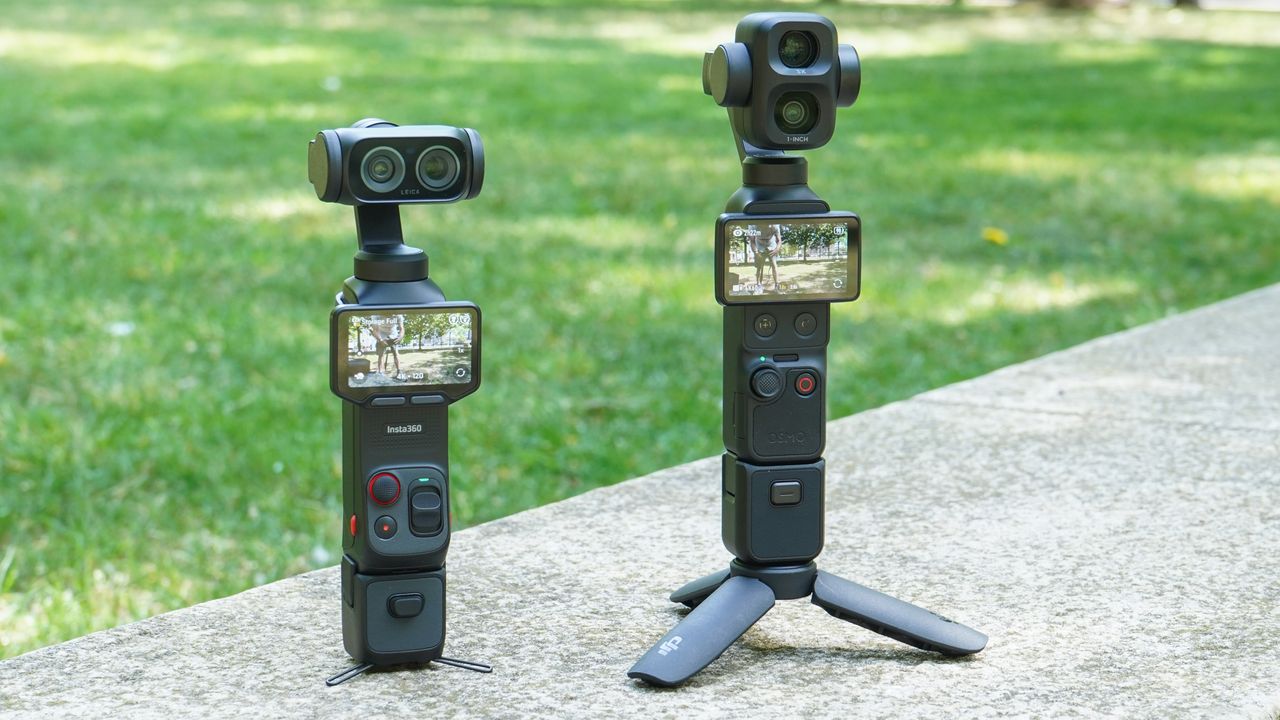
The pocket gimbal camera market saw a new player with the launch of the Insta360 Luna Ultra, which directly competes with the long-standing DJI Osmo Pocket line. Both devices feature a 1-inch wide-angle lens alongside a telephoto lens and offer a portable, gimbal-stabilized camera capable of producing professional-looking footage without the need for a crew.
DJI has kept the Pocket design tradition alive with the Osmo Pocket 4P, by adding a second 60mm lens and maintaining a familiar body layout similar to past models. On the other hand, Insta360 has opted for a more feature-rich approach, incorporating a detachable remote control with its own screen and microphone, built-in fold-out tripod legs, and an 8K video mode that outperforms the capabilities of the Osmo Pocket 4P.
When comparing the specifications of these two cameras, the Insta360 Luna Ultra stands out with its 8K 30fps video resolution, a 10-bit I-Log color profile across both lenses, and a 200MP stitched panorama mode. Meanwhile, the DJI Osmo Pocket 4P delivers a more conventional 4K video at up to 240fps for slow-motion, but boasts a 10-bit D-Log 2 color profile for the wide-angle lens.
In terms of design and handling, both cameras employ a similar wand-and-rotating-screen setup, although the Insta360 Luna Ultra offers a detachable remote control that allows for remote framing and monitoring from a distance. The Luna Ultra also includes fold-out tripod legs and a built-in microphone, features not present on the Osmo Pocket 4P. The Pocket 4P, however, has the advantage of being more familiar and has a well-established accessory ecosystem.
Battery life is another point of difference, with both cameras claiming up to four hours of usage. However, the Insta360 Luna Ultra tends to last closer to 120 minutes, while the Osmo Pocket 4P typically provides around 210 minutes. The Osmo Pocket 4P also offers faster charging via USB 3.1 and a more consistent battery performance in real-world usage.
Price-wise, the DJI Osmo Pocket 4P is the more affordable option at $710, while the Insta360 Luna Ultra starts at $769.99 for its Standard Bundle. If flexibility, remote shooting capabilities, and built-in tripod features are important to you, the Insta360 Luna Ultra may be the better choice. However, for those seeking a familiar, feature-rich, and cost-effective pocket gimbal camera, the DJI Osmo Pocket 4P remains a solid option.
Written by urgent.news from Digital Camera World's reporting — not their text. Machine-written — may contain errors; check the original before relying on it.