Divided Supreme Court rules White House ballroom construction may proceed
The Supreme Court ruled 5-4 on Monday that White House ballroom construction can continue, lifting a block on above-ground work as President Trump asserts the project is necessary for national security. It halts a lower court ruling that would’ve restricted construction until Congress provided additional approvals. Five conservative justices, including all three of Trump’s appointees, sided with…
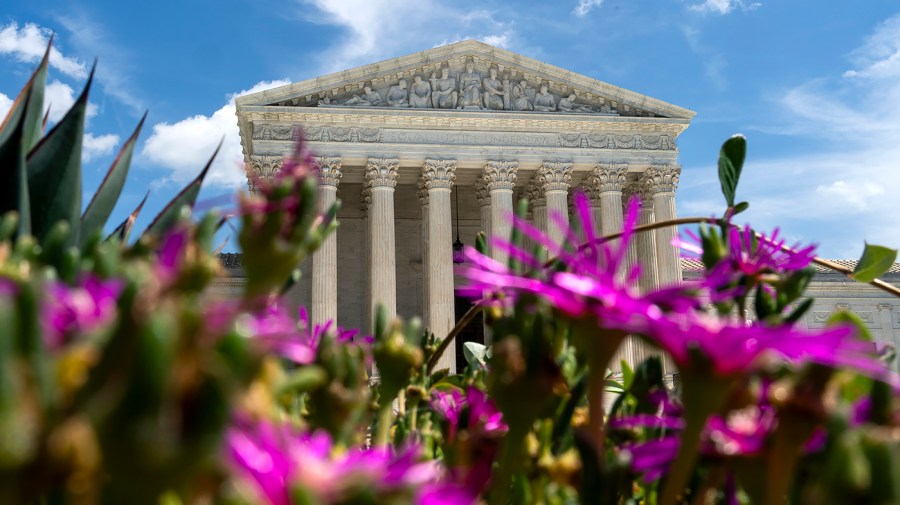
The Supreme Court on Monday permitted the White House to proceed with construction of a $400 million ballroom project, despite ongoing lawsuits. President Donald Trump views this as a win, as it demonstrates his ability to exert executive power and reshape the capital according to his vision. The 5-4 decision replaces a temporary order issued earlier in the month, which would have halted construction.
Chief Justice John Roberts, who signed the temporary order, publicly disagreed with the latest ruling, stating that the project likely lacks congressional approval and is therefore unlawful. The majority of the court, however, found that the National Trust for Historic Preservation, the group challenging the project, did not have the legal right to do so.
The majority argued that the ballroom's construction would address national security concerns by providing a more secure structure for large events and by shielding an underground military installation. Trump praised the decision on social media, noting that the project will be completed in time for the Summer of 2028. The National Trust for Historic Preservation expressed disappointment with the ruling but commended Chief Justice Roberts' dissent, which emphasized that each president is a temporary steward of the People's House and does not have unilateral authority to demolish and redesign it without congressional approval.
The lawsuit argues that the White House has no unilateral authority to undertake the work, which includes demolishing the East Wing. Federal law prohibits the construction of any structure on federal parks or public grounds in Washington D.C. without express congressional authority. The trust and its members are committed to preserving historic American buildings, which strengthens their legal position in the case.
The administration maintains that the president has the authority to renovate federal buildings and is working around the clock on the project, with the framework expected to be completed by November and much of the facade done by April, with full completion slated for August 2028.
Written by urgent.news from Winnipeg Free Press's reporting — not their text. Machine-written — may contain errors; check the original before relying on it.
This story
This is one outlet's version. Read the fullest account.
- US supreme court allows Trump to keep building $400m White House ballroom theguardian.com
- White House asked DPAA what it could do should Trump enter into deal with Kim: DPAA director koreatimes.co.kr
- Supreme Court lets White House continue construction on Trump’s $400 million ballroom apnews.com
- Supreme Court lets White House continue construction on Trump’s $400 million ballroom toronto.citynews.ca
- Supreme Court Allows Trump To Continue White House Ballroom Construction ndtv.com
- Supreme Court rules Trump's White House ballroom construction can continue cbsnews.com
- SCOTUS greenlights White House ballroom construction abcnews.com
- US Supreme Court clears way for Trump to keep building White House ballroom bbc.co.uk