China's three biggest airlines post heavy first-half losses as fuel shock bites
The weak results underscored the post-pandemic fragility of China's aviation sector, as the trio confronted what China Eastern described as a profit environment "severely undermined" by disrupted international routes and persistently elevated jet fuel prices linked to the Middle East conflict.
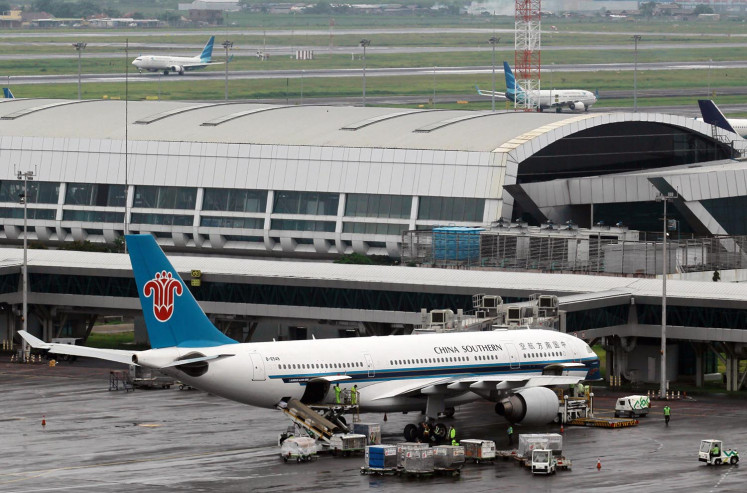
Three major Chinese airlines – Air China, China Eastern, and China Southern – reported hefty first-half losses for the seventh year in a row, owing to soaring jet fuel prices and a lacklustre summer season. Their combined first-half net losses amounted to approximately 8.2 billion yuan ($1.55 billion), a stark contrast to their first-quarter profit of 4.82 billion yuan, driven by robust Chinese New Year demand.
This slide in profitability sent their shares tumbling in the mainland Chinese and Hong Kong markets on August 31, 2026.
Air China posted a net loss of 2.3 billion yuan, a sharp increase from 1.81 billion yuan in August 2025. China Eastern reported a loss of 2.2 billion yuan, while China Southern suffered a loss of 3.7 billion yuan, compared to a loss of 1.53 billion yuan in 2025. The weak performance highlighted the vulnerability of China's aviation sector post-pandemic, with the trio facing a profit environment "severely undermined" by disrupted international routes and persistently high jet fuel prices, exacerbated by the Middle East conflict.
Fuel costs surged by 35% to 38% in the first half of 2026, leaving Chinese airlines particularly exposed to oil price swings, as they hedge little of their fuel purchases.
Revenue growth was strong for the carriers, with Air China up 10.5%, China Eastern up 11.1%, and China Southern up 9.7%, mainly due to international demand. European routes proved particularly buoyant as travelers sought alternatives to Middle Eastern hubs disrupted by the Iran war. However, economic downturns and the rise of high-speed rail and driving holidays have curtailed their ability to significantly raise domestic fares without dampening demand.
Despite a slight respite in jet fuel prices from their second-quarter peak, they remain over 50% higher than pre-war levels. The typically profitable third quarter has so far offered little solace, with an unusually strong typhoon season disrupting domestic routes during peak summer travel.
According to aviation data firm Flight Master, traffic carried by Chinese airlines on domestic and international routes is expected to fall by 3.6% year on year to 142 million passengers in July and August, marking the first contraction in the peak season since 2022, when much of China was under lockdown during the pandemic. HSBC analysts forecast the three airlines to post a combined loss of about 16.8 billion yuan in 2026, a far cry from the market's expectation of a combined profit of 1.3 billion yuan.
Shares of all three carriers on the Shanghai Stock Exchange have plummeted by at least 36% so far in 2026, as weaker domestic travel demand continues to weigh on their profit outlooks. None of the airlines declared an interim dividend. They did, however, expand their fleets of domestically made COMAC jets, with China Eastern adding three narrow-body planes to its fleet, bringing it to 17, and China Eastern and China Southern each adding 11 C919 planes to their fleets.
Written by urgent.news from Straits Times Business's reporting — not their text. Machine-written — may contain errors; check the original before relying on it.
This story
This is one outlet's version. Read the fullest account.
- China’s three biggest airlines lose US$1.22 billion in first half as jet fuel costs surge businesstimes.com.sg
- China’s three biggest airlines post heavy first-half losses as fuel shock bites freemalaysiatoday.com
- China's three biggest airlines post heavy first-half losses as fuel shock bites nst.com.my
- China’s three biggest airlines post heavy first-half losses as fuel shock bites straitstimes.com
- China’s three biggest airlines post heavy first-half losses as fuel shock bites investing.com
- BYD shares slide as fierce China competition dents first-half earnings cnbc.com