China imposes a wall of silence in Tibet after the Himalayan disaster
Extreme terrain, disrupted communications and a lack of firsthand accounts have made it difficult to piece together what happened on the Tibetan side of the border
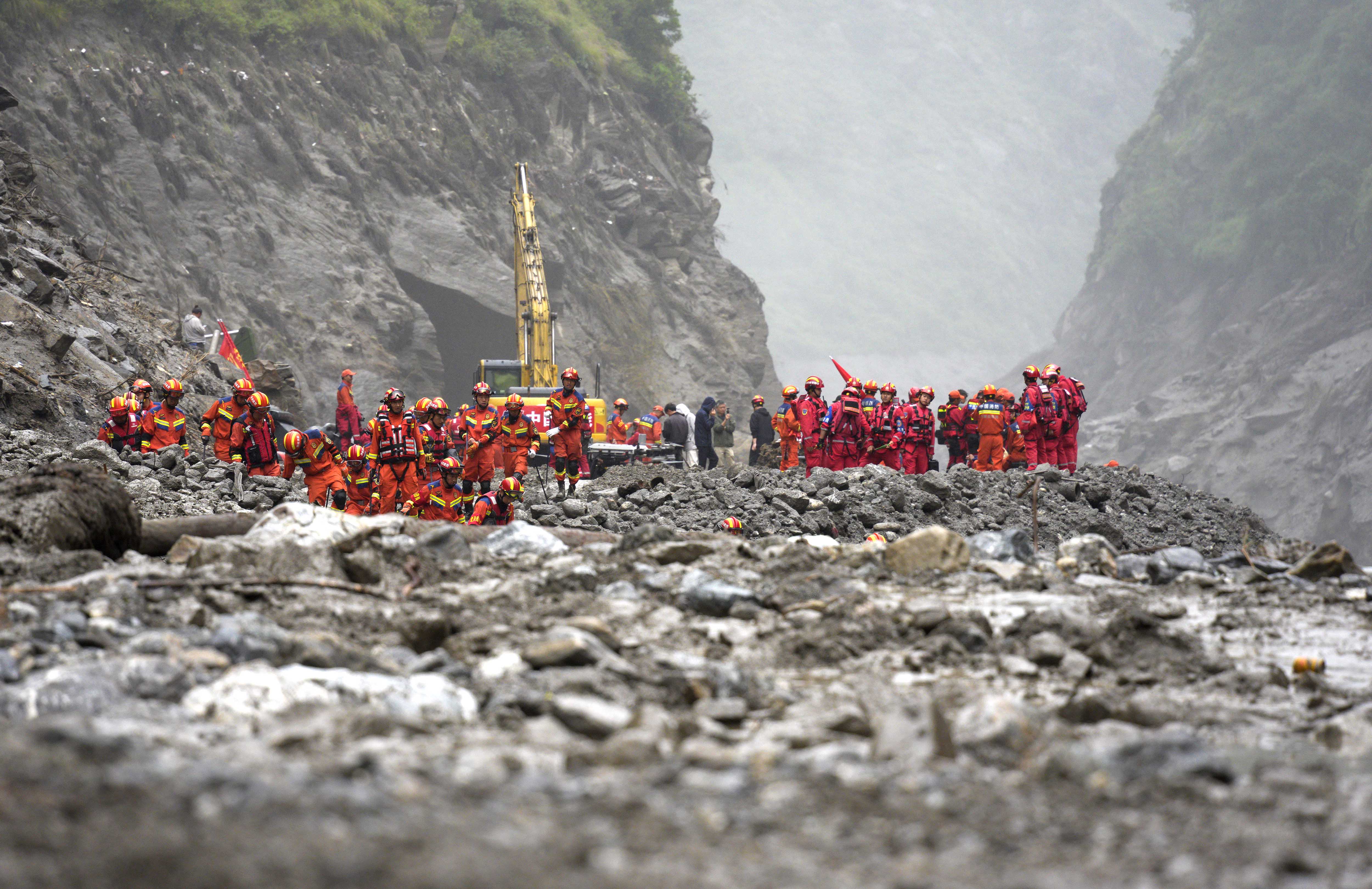
On the heels of the devastating flood in Gyirong, also known as Kyirong in Tibetan, China has, for the first time, disclosed details on the nationalities of the 546 missing individuals. Of these, 261 are foreigners from 23 different countries. The death toll in Tibet has been revised upwards from seven to 16. Nepal, the birthplace of the ice collapse that initiated the disaster, now reports 781 fatalities and 2,502 missing persons.
The disaster has posed unprecedented challenges for both rescue efforts and media coverage in one of China's most difficult and politically sensitive regions. The treacherous Himalayan terrain and Tibet's heightened political sensitivity make the area a veritable fortress of silence, subject to stringent surveillance and tightly controlled access.
A police advance team reached the most affected area near the Kyirong border crossing on Thursday, but the initial professional firefighting and rescue teams did not arrive at the disaster zone until Friday, after a grueling journey of over 12 miles through rugged mountains and navigating perilous ravines. The ongoing threat of further glacier collapses adds to the urgency of the situation.
Even if the roads were intact, independent verification of the events would be almost impossible due to the region's strict travel restrictions. Foreign journalists need special authorization to enter Tibet, a permission seldom granted outside of government-organized visits. Tourists must obtain separate permits and travel on pre-arranged itineraries.
Consequently, the only way for foreign journalists, diplomats, and observers to enter Tibet is under the watchful eyes of the authorities, with pre-set schedules and official oversight of interactions with locals. Lhadon Tethong, executive director of the Tibet Action Institute, laments that her network of contacts in Tibet is hearing an eerie silence, a deafening absence of information.
In 1959, the year that marked a turning point in Tibetan history, PLA troops crossed the Tibetan border, leading to the signing of the Seventeen Point Agreement in 1951. In practice, this agreement paved the way for a permanent Chinese military presence and the gradual establishment of Chinese-controlled administrative structures on the plateau.
The Chinese government asserts this as a "peaceful liberation," while the Tibetan movement views it as an annexation. The 1959 uprising culminated in the Dalai Lama's flight to India and the subsequent exodus of tens of thousands of Tibetans, establishing a diaspora that continues to advocate for genuine autonomy. In 1965, Tibet was designated as an autonomous region, an administrative division allowing ethnic minorities a measure of self-governance.
However, the Chinese government regards any political, religious, or cultural demands as potential separatist threats. The 2008 protests in Lhasa and other Tibetan areas marked a significant escalation, with over 100 Tibetans setting themselves on fire in protest against Beijing's policies and demanding the return of the Dalai Lama, whom China labels as a "separatist who uses religion as a cloak."
Since then, surveillance and controls over monasteries and the region as a whole have been tightened. "I understand that communications and networks have been affected and that there are outages due to the flood," Lhadon admits. "But is it possible that everything is so silent? No." Another Tibetan exile, identified as Dawa for security reasons, confirms reports of "people unable to share information."
Social media and WeChat groups are reportedly censoring updates on the disaster, with published content both abroad and within China heavily edited or removed altogether. The horrifying video captured by a security camera, depicting the destructive force of the flood, has spread globally in minutes but has since vanished from China's internet landscape.
The extent of the destruction remains largely unknown, as the only images and data being disseminated by Chinese authorities are carefully curated and heavily censored. "It is censorship in real time," Lhadon asserts. Both Tibetans and Chinese journalists take great care to avoid contradicting the official narrative, which emphasizes ongoing search operations and the priority of rescue efforts under the leadership of Xi Jinping and Li Qiang.
For Beijing, Tibet is a region of immense political and strategic importance, a fortress that remains largely shrouded in secrecy.
Written by urgent.news from El Pais English's reporting — not their text. Machine-written — may contain errors; check the original before relying on it.