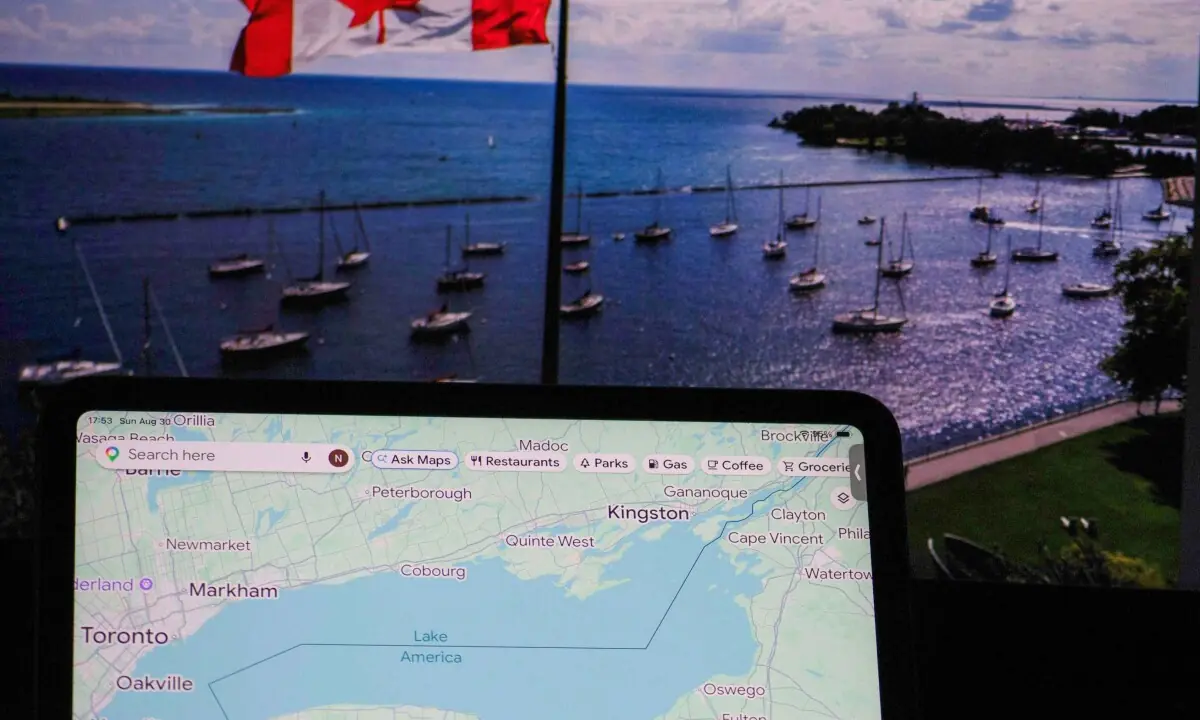
Canadian sites display 'Lake America' despite Google’s US-only change
Several Canadian websites mistakenly display “Lake America" after Google renames Lake Ontario in the US in accordance with Trump executive order.

If you reside in the United States and consult Google Maps to locate Lake Ontario, you may notice a curious change. The once familiar name has been replaced with "Lake America." This alteration came about after the United States Geographic Names Information System implemented a new name following an executive order issued by President Donald Trump.
Google adheres to its longstanding policy of mirroring official government name sources. Consequently, users in the US now encounter Lake America, whereas Canadians continue to view Lake Ontario. Interestingly, individuals outside these two countries are presented with both names, displayed side by side as Lake Ontario (Lake America).
This situation echoes a similar occurrence involving the Gulf of Mexico earlier this year, when the US government modified its domestic designation to "Gulf of America." Google promptly updated its maps, displaying "Gulf of America" to US users, while Mexican users retained the original name, and the majority of the world saw both names.
According to Google, the decision to adopt such changes is based on the official government naming databases when there are discrepancies between regional names. The Lake Ontario case is unique, however, as it lies along the international border between the US and Canada. Canadians officially refer to the lake as Lake Ontario, and the US name change does not alter Canada's official designation nor determine the internationally accepted name.
For the majority of Google Maps users, it is natural to assume that the names in the app are static geographical features. Nevertheless, Google has increasingly had to present different versions of the same map based on local government designations and contentious naming conventions. This phenomenon is not uncommon, as demonstrated by the Gulf of Mexico example.
Now, a single individual using Google Maps from New York may observe Lake America, while someone directly across the water in Ontario will see Lake Ontario. Rather than taking sides and deleting one name, Google localizes the map according to official naming sources in each country. The situation, though challenging, is a testament to Google's commitment to presenting accurate and region-specific information.
Written by urgent.news from Digital Trends's reporting — not their text. Machine-written — may contain errors; check the original before relying on it.
This story
This is one outlet's version. Read the fullest account.
- Google Maps Renamed Lake Ontario to 'Lake America' - But Only for U.S. Users tech.slashdot.org
- MapQuest's App Surges to No. 1 In Navigation After Refusing to Rename Lake Ontario news.slashdot.org
- Apple Maps still shows Lake Ontario as Google Maps changes name 9to5mac.com
- Google Maps has another “America” on the map, and Canadians aren’t amused digitaltrends.com
- Google Maps will show ‘Lake America’ in US, not ‘Lake Ontario’ freemalaysiatoday.com
- MapQuest’s app surges to No. 1 in Navigation after refusing to rename Lake Ontario techcrunch.com
- Google renames Lake Ontario as 'Lake America' after Trump order news.sky.com
- Lake Ontario is now ‘Lake America’ on Google Maps, but not for everyone androidauthority.com