Andrew Crommelin and Charles Davidson took the photograph that proved Einstein right about the universe in 1919. So why does history only remember Arthur Eddington's name?
The photographer who gets the credit isn't always the one who took the decisive shot
Andrew Crommelin and Charles Davidson captured the photograph that provided the crucial evidence confirming Einstein's theory of relativity in 1919. So why does history only honor Arthur Eddington's name for this monumental discovery?
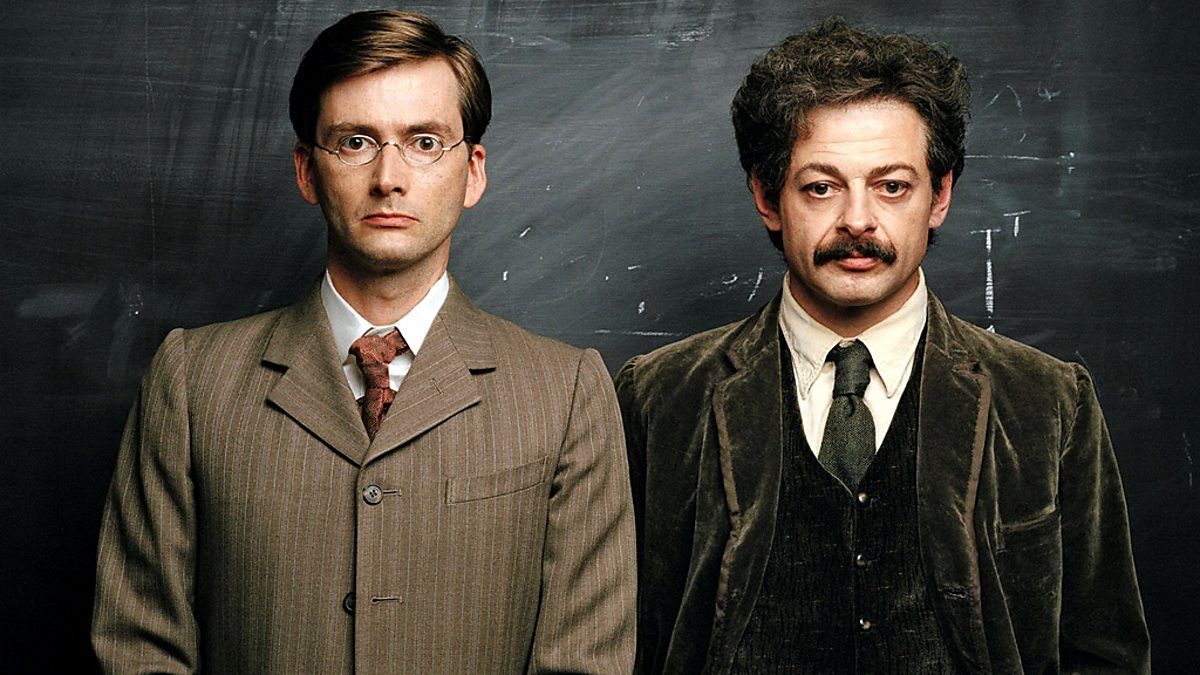
The original story, recounted in the 2008 BBC film, painted a picture of two brilliant minds working together. However, the actual photograph that clinched the argument was not taken by either Eddington or himself.
Eddington ventured to Príncipe, an African island, to photograph the total solar eclipse on May 29, 1919. Despite facing a tropical storm and the subsequent difficulty in obtaining usable images, he managed to get two decent plates. Yet, these results were inconclusive, leaving room for doubt.
Meanwhile, the Royal Greenwich Observatory teams of Andrew Crommelin and Charles Davidson were part of a backup plan. Their journey was fraught with challenges too, including damaged equipment. Yet, their backup instrument yielded the sharpest images of the entire project, showing a deflection of 1.98 arcseconds, significantly more precise than Eddington's measurements.
Despite this, the entire expedition came to be known as "The Eddington experiment". Technically, this wasn't entirely inaccurate. Eddington, along with astronomer Frank Dyson, conceptualized the test and orchestrated both expeditions. Eddington was the one who boldly presented the findings to the Royal Society in November 1919, proclaiming that the numbers confirmed Einstein's theory. He also authored the popular accounts of the event.
Eddington, a Quaker who had risked prosecution as a conscientious objector during WWI, had a compelling personal narrative. He had also self-taught himself about Einstein's theory, which was largely disregarded in Britain at the time. On the other hand, Crommelin and Davidson were simply Observatory staff, performing their duties. They are not depicted in the BBC drama, which may seem unfair, but it likely simplified the script for viewers.
While Eddington unquestionably deserves recognition for his vision and courage in executing this groundbreaking experiment, the photograph that validated Einstein's theory came from the backup telescope in Brazil, operated by two men who are less well-known. It's time to remember Andrew Crommelin and Charles Davidson for their significant contribution to this landmark scientific achievement.
Written by urgent.news from Digital Camera World's reporting — not their text. Machine-written — may contain errors; check the original before relying on it.
Also reported by 1 other outlet
- How Andrew Scott Took on the Role of a Lifetime in ‘Elsinore’ hollywoodreporter.com