What Wearables Miss When They Measure “Stress”
Wearables can detect physiological thrill, but they can't tell if it's caused by stress, exercise, or excitement. Here's why context matters more than sensors.
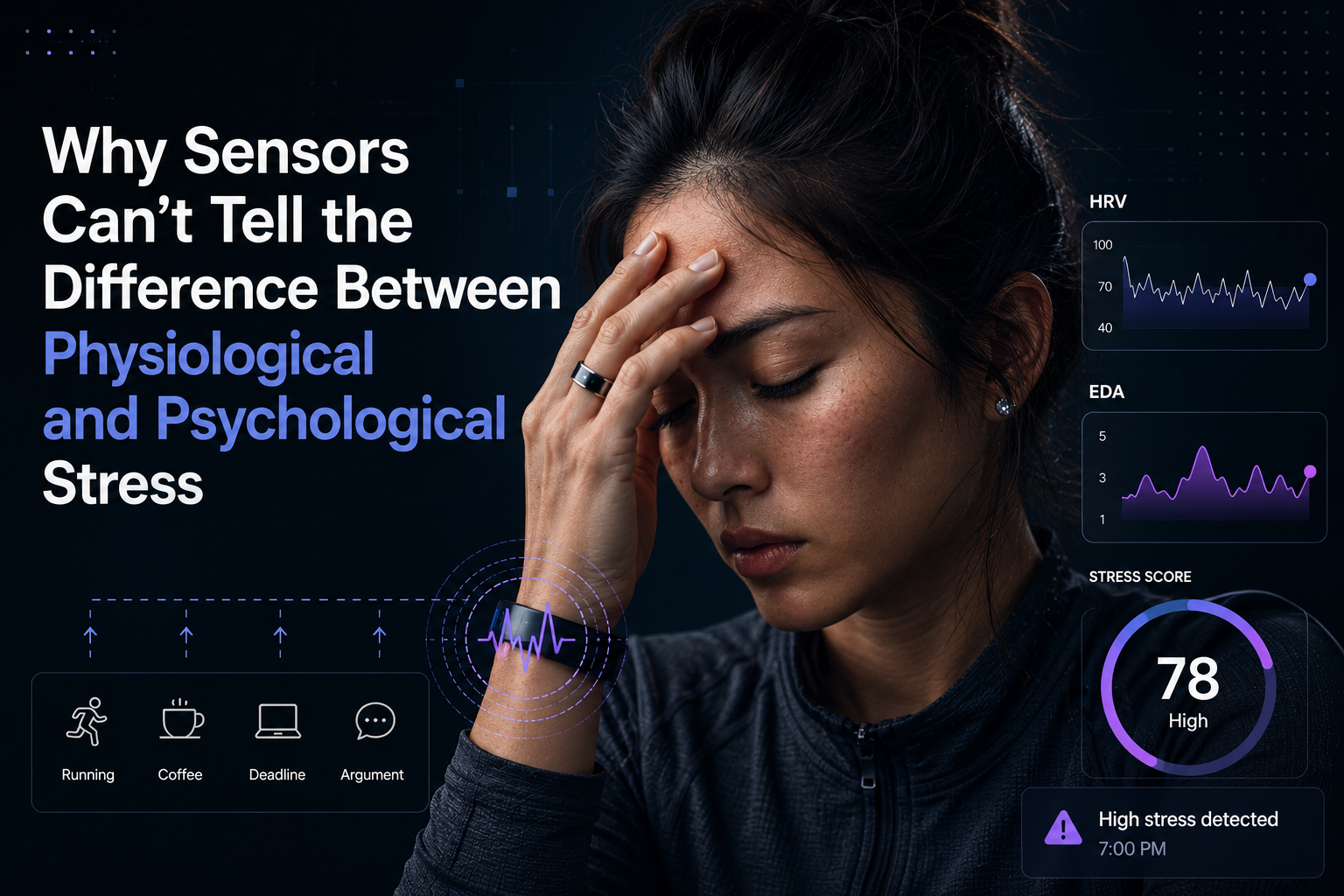
Smart wearable devices often claim to measure stress using heart rate variability (HRV) and electrodermal activity (EDA). However, these metrics are not distinguishing between different types of stress. Both HRV and EDA primarily reflect autonomic nervous system activity, which responds similarly to various stressors like deadlines, arguments, or physical exertion.
Researchers have long known that autonomic signals indicate overall excitement, affected by physical activity, stress, caffeine, or even watching a horror film. A 2026 study revealed that differentiating types of stress is a challenge for wearables, often merging physiological states into a single stress measurement. Consequently, a red alert on a smartwatch during a heavy lift isn't a malfunction but a correct reading of general excitement.
While machine learning algorithms show impressive accuracy in lab settings, they largely rely on controlled conditions and pre-planned stress-inducing activities. Real-world scenarios, like receiving an unexpected Slack message while hungover, are much more complex. Cortisol, the hormone most strongly linked to actual stress, remains undetectable through wearables.
Therefore, the technology can effectively recognize excitement but struggles to determine its cause. To improve accuracy, future wearables must incorporate additional context such as motion data, time and location, and user inputs.
Written by urgent.news from HackerNoon's reporting — not their text. Machine-written — may contain errors; check the original before relying on it.