Uzbekistan confirmed as second country to buy China’s J-10CE fighter
Uzbekistan confirmed that it has become the second foreign country to acquire the J-10CE fighter, as Beijing makes inroads into a Central Asian market previously dominated by Russian warplanes. Reports had previously suggested Uzbekistan had ordered 24 J-10CEs, although neither country has confirmed the deal. However, at least six of the jets were shown in footage released by the Uzbek…
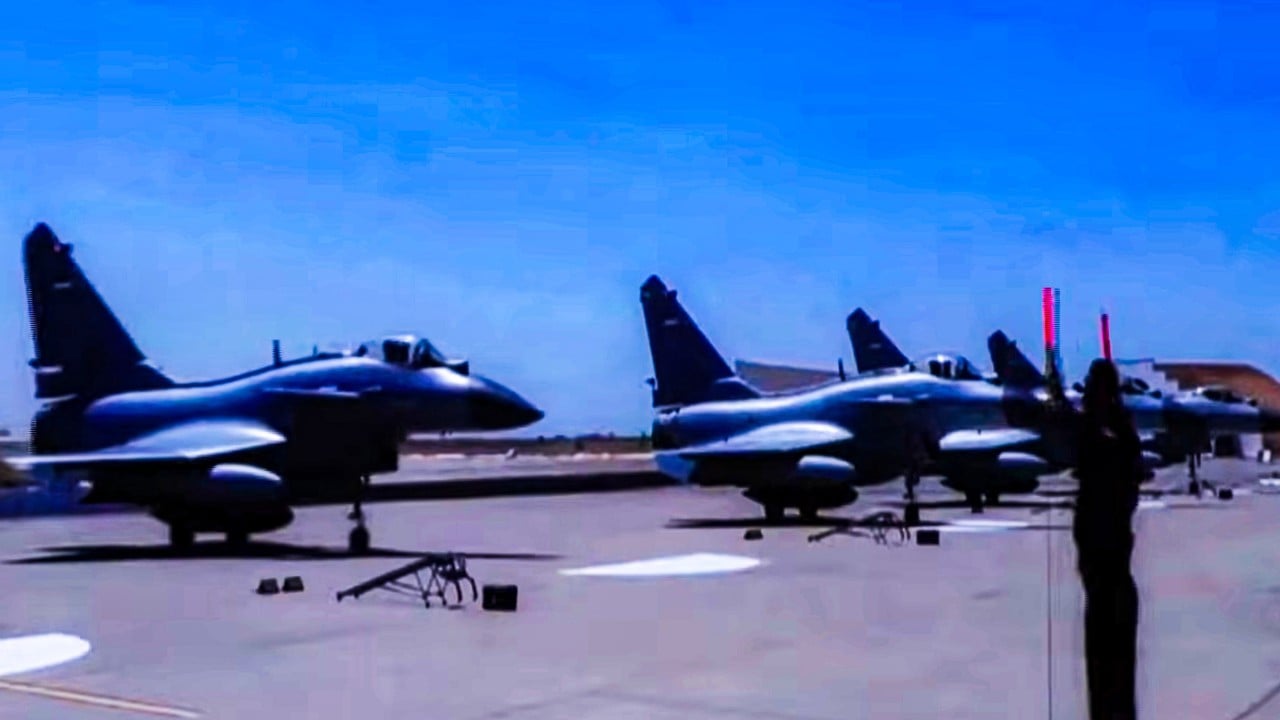
Uzbekistan has become the second country to purchase the Chinese J-10CE fighter jet, marking a significant shift in Central Asia's military landscape, which had previously been dominated by Russian warplanes. While reports suggested Uzbekistan had ordered 24 J-10CEs, neither country has officially confirmed the deal. However, footage released by the Uzbek president’s office on Friday showed at least six of these jets showcasing their capabilities during the country's independence day celebrations.
The footage depicted the Uzbek air force warplanes on the runway, flying in formation, and receiving a water-cannon salute, a tradition typically reserved for significant arrivals. China has been actively promoting international sales of the J-10CE, a single-engine, multirole fighter jet, with Bangladesh recently expressing interest in acquiring the planes.
Pakistan was the first foreign buyer of the J-10CE, with 20 jets delivered in May last year following a brief conflict with India. Indonesia, Iran, and Egypt have also shown interest in purchasing the aircraft. Brendan Mulvaney, director of the US Air Force’s China Aerospace Studies Institute, emphasized that Uzbekistan's decision is notable as it represents a small market but its choice to buy Chinese jets over Russian, French, or other alternatives is significant.
The J-10CE, an export version of the fourth-generation warplane, signifies China's entry into the higher-end international fighter market. The People’s Liberation Army Air Force currently operates over 300 J-10Cs, equipped with advanced radars, electronic warfare systems, and data-link capabilities for both air-to-air combat and strike missions.
Notably, the J-10CE's international profile surged after Pakistan used them during their conflict with India in May last year, claiming to have shot down several Indian aircraft, including a French-made Rafale. While the exact number of downed Indian planes remains disputed, US officials have confirmed that Pakistan downed at least two military aircraft, including a Rafale.
Analysts view these engagements as an opportunity to assess the J-10CE's performance against Western-made aircraft, though comparisons are not straightforward due to differences in the warplanes involved. Bangladesh cites the conflict as a factor in its decision to buy the J-10CE, while Mulvaney asserts that it is a crucial element, although not the sole reason.
He believes that the J-10CE's advanced features, such as its active electronically scanned array radar and PL-15E missiles with a longer range than those of many Russian fighters or French Rafales, make it an attractive option. He also points out that the J-10CE is cheaper than Western fighters like the Typhoon or Rafale and can be delivered more quickly due to fewer backlogs or the impact of sanctions on Russian exports.
Uzbekistan's decision to acquire the J-10CE indicates that China is gaining a foothold in a market traditionally controlled by Russian fighter jets. Mulvaney suggests that the sales could mark the beginning of China's efforts to expand its customer base to countries typically served by the United States or other suppliers.
Written by urgent.news from Reuters Business via SCMP's reporting — not their text. Machine-written — may contain errors; check the original before relying on it.
This story
This is one outlet's version. Read the fullest account.