The stormy maritime history of Baltimore's 'rocket car'
Every St Patrick's Day in Baltimore, west Cork, a little piece of maritime history emerges from the darkness of the cove boathouse for a celebrated jaunt around the village.
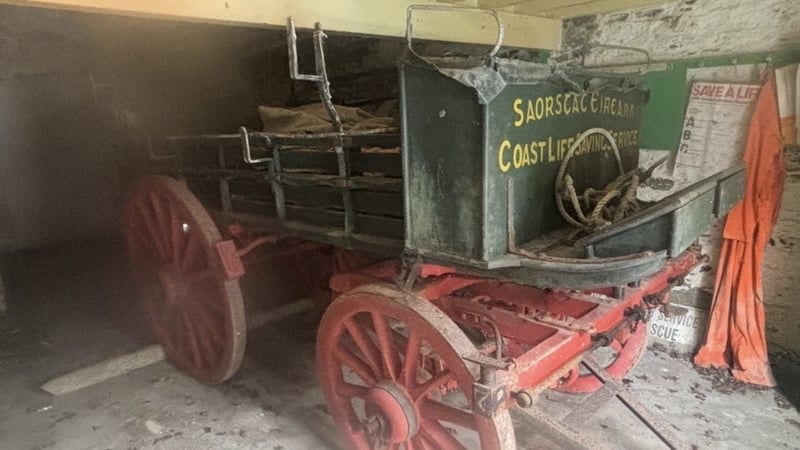
Every St Patrick's Day in Baltimore, West Cork, a historic vehicle emerges from its resting place for a festive journey around the village. The four-wheeled carriage, known as the "rocket car" or "rocket rescue," played a crucial role in maritime rescue operations for over a century. Its primary function was to deploy a gunpowder charge that fired a rope to a distressed vessel, allowing sailors to be safely retrieved via a pulley system called a breeches buoy.
The rocket car was invented by Captain George William Manby, who was inspired by the sinking of the HMS Snipe off Great Yarmouth in 1807.
Ted O Driscoll, a volunteer member of the rocket car crew in the 1970s, is a custodian of the village's maritime history. He notes that the rocket car was last painted in 1922 and is currently housed in a shed, away from sunlight, which has helped preserve it. The car originally had a green exterior with "Saorstát Éireann" painted in gold letters, though the original color was blue and red, a design instituted by the British Coast Guard prior to 1880. There were around 52 to 53 rocket cars stationed along the Irish coast.
The rocket car still possesses its 200-meter rope, a rope ladder, and the explosive rocket used to propel the line from shore to sea. Ted O Driscoll handled the rockets regularly, describing them as large, about two feet long and four inches in diameter, with a tripod mechanism to support the three legs. The firing mechanism involved launching the line from a small cannon-like device attached to the rocket, aiming at the target ship, and pulling the trigger to launch the line.
The line would then be caught by the vessel's mast, enabling the sailor to be brought back to shore safely.
The rocket car's ladder was utilized when volunteers needed to scale down cliffs, particularly in situations where helicopters could not operate due to down drafts caused by cliff faces. The service was staffed by local volunteers, as Ted O Driscoll explained, with quarterly exercises involving an inspector, often a retired sea captain or maritime surveyor.
The rocket car saved numerous lives, including preventing a significant election interference on May Day in 1954. The device was deployed to bring a ballot box to Dursey Island, where weather conditions had prevented ferries from reaching the island. This intervention was crucial, as the election outcome could have been significantly impacted if the votes had not been successfully transported.
Written by urgent.news from RTE News's reporting — not their text. Machine-written — may contain errors; check the original before relying on it.