Pigeonholing Youth Into Various Generations Has Become A National Pastime
Generation X, Generation Y (Millennials), and Generation Z are sequential demographic cohorts following the Baby Boomers. Gen X spans birth years 1965–1980, Gen Y covers 1981–1996, and Gen Z includes 1997–2012. Each group is defined by distinct social, economic, and technological milestones during their formative years. In addition, we have Generation Alpha spanning the years 2010 to 2024.…
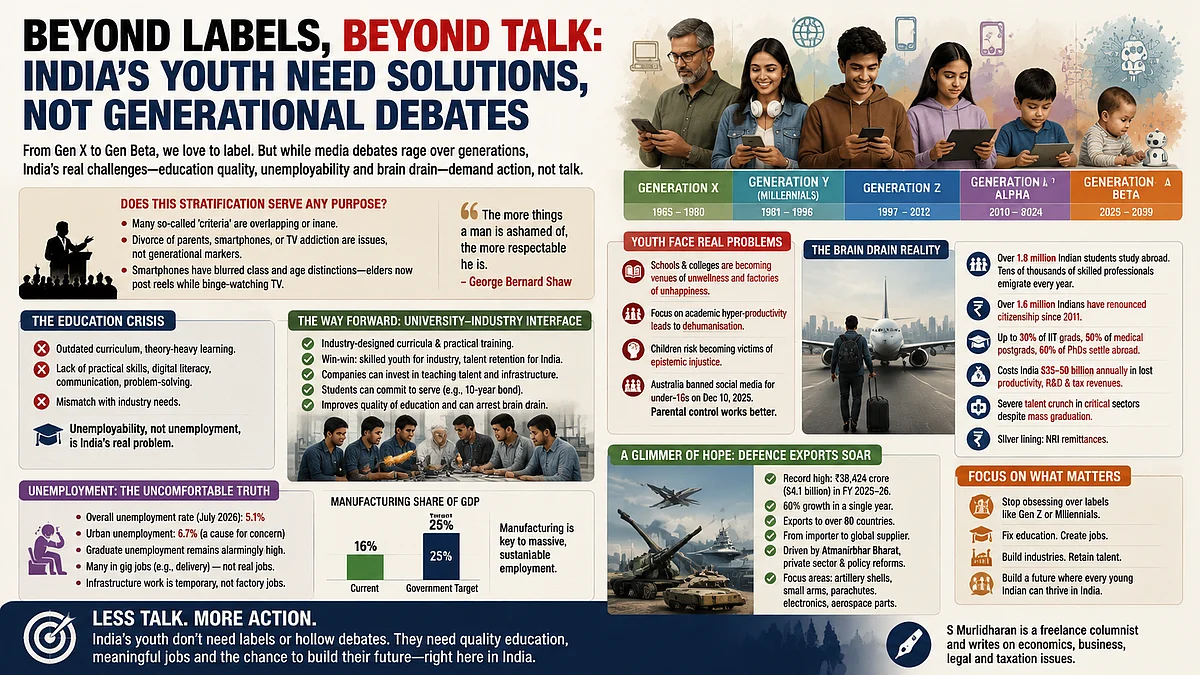
The act of categorizing young people into generations, such as Generation X, Y, Z, Alpha, and Beta, has become a common pastime in many countries, including Australia and India. These groups are defined by various social, economic, and technological aspects from their formative years, with each cohort having its unique characteristics.
However, one might question the relevance of such distinctions in a world where technology and social norms are constantly evolving. Critics argue that these arbitrary divisions often lack substance and are simply fueling superficial debates in the media.
The overlapping and sometimes arbitrary criteria used to define these groups further question their validity. For instance, factors such as divorce rates, parental upbringing, and technological advancements, like the rise of smartphones, blur the lines between generations. In today's digital age, it's increasingly challenging to neatly fit individuals into predefined categories.
Young people today face their own set of challenges, ranging from academic pressures to navigating the job market. Parents and educators play a vital role in ensuring a nurturing learning environment for the next generation. In countries like India, addressing youth unemployment is a pressing issue that requires attention. Structural problems, such as outdated curricula, a mismatch between skill requirements and industry needs, and a lack of practical training, contribute to the crisis.
Universities and corporations must collaborate to provide industry-relevant education, creating a mutually beneficial arrangement.
However, the issue of youth unemployment is just one aspect of the larger problem of brain drain in India. Every year, thousands of skilled professionals, including doctors, scientists, and engineers, leave the country in search of better opportunities abroad. This exodus of human capital not only deprives India of valuable resources but also results in substantial economic losses.
The government has attempted to tackle this issue by subsidizing training at institutions like IITs, IIMs, and AIIMS, but the negative impact of brain drain remains significant.
Despite this, India does see some positive outcomes, such as remittances from Non-Resident Indians (NRIs), which contribute to the nation's economy. However, the unemployment rate among educated youth and urban jobseekers remains a cause for concern. Despite efforts to promote infrastructure development and increase the manufacturing sector's share in GDP, the nation continues to struggle with a low manufacturing output and high unemployment rates.
In conclusion, while categorizing generations may provide a framework for discussion, it ultimately lacks practical value in addressing the complex issues faced by young people today. Instead, focusing on practical solutions, such as improving education systems, bridging the gap between industry and academia, and addressing the root causes of brain drain, would be more effective in tackling the challenges that young Indians face.
Written by urgent.news from Free Press Journal's reporting — not their text. Machine-written — may contain errors; check the original before relying on it.