'Peace didn't come free': Two veterans on the Malaysia they fought for
UNDER the dim studio lights at Balai Berita in Bangsar, Kuala Lumpur, the citation ribbons on Datuk Paul Kiong’s suit catch the light.
Under the soft studio lighting at Balai Berita in Bangsar, Kuala Lumpur, Datuk Paul Kiong, now 82, and Lt-Col Datuk Zarazilah Mohamed Ali, 86, sit together. The citation ribbons adorning Kiong's suit catch the light, while Zarazilah's broad smile and broad-brimmed hat suggest a man comfortable in his own skin. Both men were present at Stadium Merdeka on August 31, 1957, when Malaya gained independence—Zarazilah was just 17 and Kiong 13. Kiong recalls the excitement with a soft smile, while Zarazilah is more somber.
When asked if he is happy with the Malaysia he helped secure, Kiong expresses pride but without complacency. He believes the country has progressed. Zarazilah, on the other hand, is less content. He asserts that he is not happy, and his discontent stems from his fear that young Malaysians may take their peace for granted.
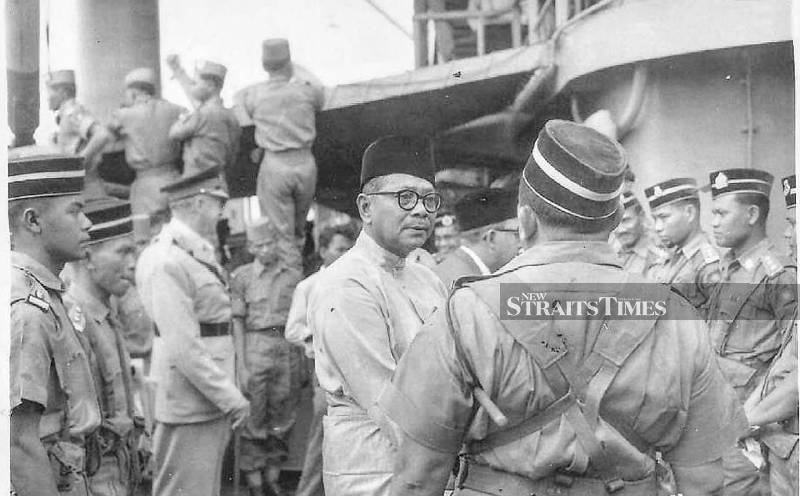
For Zarazilah, the past is not just a story of history. He still experiences echoes of it in his dreams. Born in Penang in 1940, Zarazilah witnessed World War 2, the Japanese occupation, and the tumultuous years that followed. At 15, he joined the Federation Military College in Port Dickson and pursued officer training, eventually being commissioned as a second lieutenant. He joined the Royal Malay Regiment the following year.
Zarazilah's military career was marked by the struggle against the Communist Party of Malaya (CPM). He spent most of his time in the jungle, away from home, conducting operations to combat the insurgents. His service also took him to Africa, where he served under the United Nations in the Democratic Republic of the Congo during the Congo Crisis, and later during the Indonesian Confrontation in Borneo.
One of the most haunting memories from his time in Africa was witnessing the violence in the May 13 riots of 1969 in Kuala Lumpur, where he saw bodies in the drains, bodies with smashed faces from broken bottles. Those images still haunt him, and they shape his perspective on Malaysia's current state.
Kiong's journey to service was different. Growing up in Ipoh, he loved the outdoors and aspired to become a game ranger in Nairobi. When the police force called, he answered, joining the Royal Malaysian Police in Singapore in 1964, before returning to Johor in 1967. He later became involved in a covert operation against the CPM's Fifth Assault Unit. As a Special Branch officer, his survival depended on convincing the insurgents that he was one of them.
Written by urgent.news from New Straits Times's reporting — not their text. Machine-written — may contain errors; check the original before relying on it.
Also reported by 1 other outlet
- The hidden price and unseen scars behind Malaysia’s peace freemalaysiatoday.com