DLSS 5 mod brings next-gen tech to old Ampere GPUs, but frame rates are horrible — most games tank to single digits, high-end GPUs can hit up to 40 FPS in some cases
DLSS 5 now runs on Ampere GPUs thanks to a patched DLL, but performance is expectedly poor for the most part. You can get up to 30-40 FPS in edge cases with minimum in-game settings, but newer titles can tank FPS to single digits.
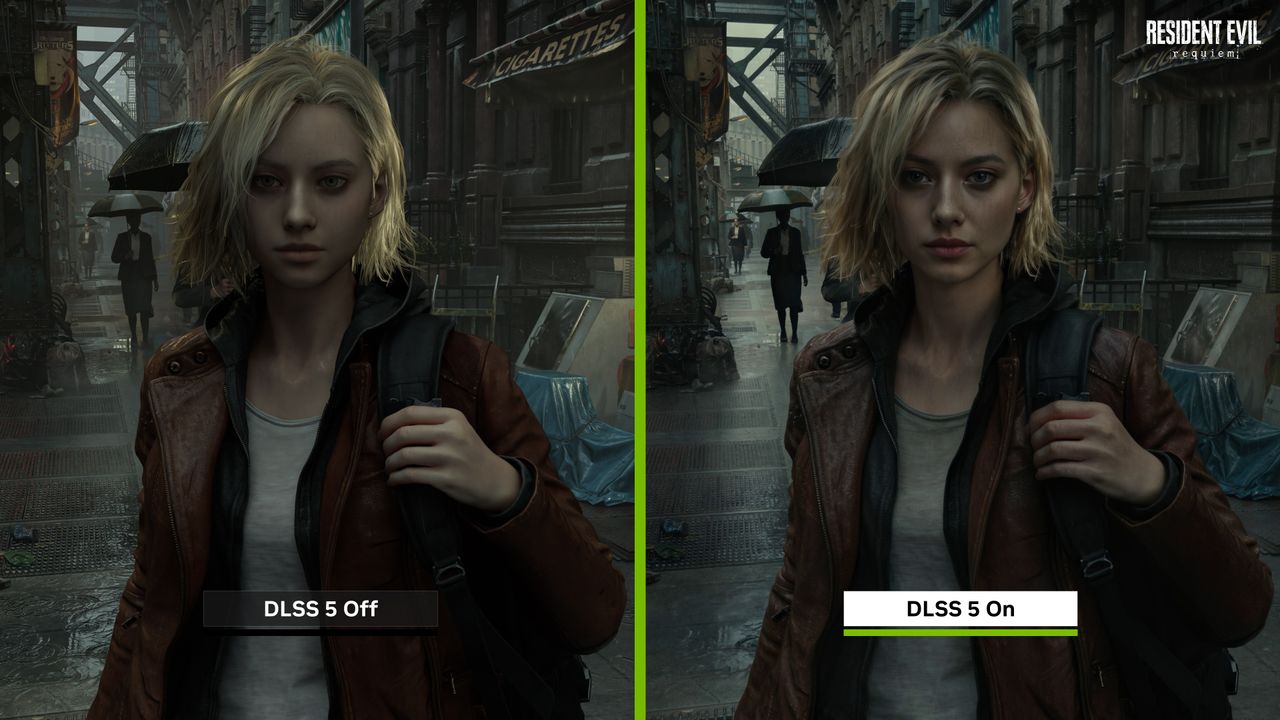
Nvidia's forthcoming DLSS 5 neural rendering technology was unveiled through a pre-release DLL within NBA 2K27, which is currently available in early access. Enthusiasts swiftly adapted the DLL for use on RTX 50-series GPUs, the top-of-the-line graphics cards, but modders subsequently expanded its compatibility to RTX 40-series GPUs as well. Following a quick turnaround in development by the RenoDX Discord server, the DLL is now functional on RTX 30-series GPUs too.
Despite the excitement surrounding DLSS 5, community feedback on its performance is largely negative. While the technology works on Ampere cards, it typically results in significantly reduced frame rates. When the visual quality is improved through DLSS 5, users must often lower their in-game settings to close the gap between the new and native rendering. This creates a trade-off between realism and performance, as users often have to sacrifice visual fidelity for faster frame rates.
In some scenarios, DLSS 5 has led to frame rates plummeting to single digits in games typically capable of higher performance on RTX 40-series GPUs. For instance, Grand Theft Auto V only achieved around 20-30 FPS on an RTX 3080 Ti at 1440p, while Hogwarts Legacy ran at 30 FPS on an RTX 3090. On the other hand, only a few users reported modestly improved frame rates, such as Dying Light 2 at approximately 40 FPS on an RTX 3080 and Mortal Shell 2 at 34 FPS on an RTX 3080 Ti.
The most impressive DLSS 5 result came from a user who managed to reach 41 FPS in Cyberpunk 2077, but this was only possible by dropping the resolution to 720p and employing the ultra-performance upscaling preset. In summary, while DLSS 5 represents a substantial improvement in AI capabilities for Nvidia GPUs, its impact on frame rates remains largely disappointing for many users.
Written by urgent.news from Tom's Hardware's reporting — not their text. Machine-written — may contain errors; check the original before relying on it.