DDA launches Delhi’s MPD-2047: From property rules to development norms, 10 key FAQs
The Delhi Development Authority has unveiled a set of FAQs regarding the Master Plan Delhi 2047, effective from August 20, 2026, and replacing the prior version. This comprehensive plan outlines regulations pertaining to land use, construction, and redevelopment in distinct areas. Additionally, it provides insights on land pooling and transit-oriented development strategies. An online portal is…
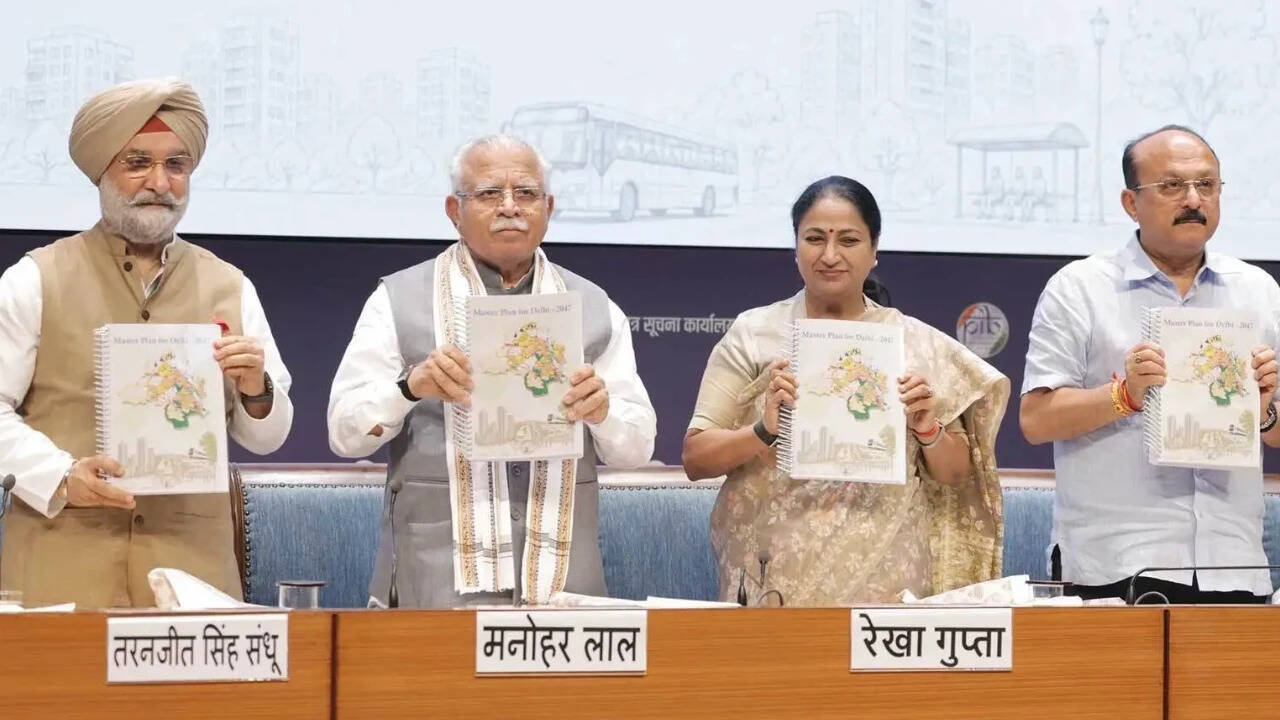
Delhi's Development Authority (DDA) has unveiled FAQs on the Master Plan for Delhi 2047 (MPD-2047), aimed at clarifying provisions for citizens, property owners, developers and other stakeholders. MPD-2047 is the city's new long-term land-use and development framework, supplanting the existing MPD-2021 with effect from August 20, 2026.
Q1. When did MPD-2047 come into effect? The plan has been in force since its notification in the Official Gazette on August 20, 2026.
Q2. Do all existing developments need immediate compliance? Existing plans approved prior to MPD-2047's notification continue under previous norms. New norms apply when additional Floor Area Ratio (FAR) is availed or when a revised plan is sanctioned.
Q3. What redevelopment provisions are available under different land uses? The plan allows redevelopment on plots meeting minimum size requirements. Residential redevelopment is limited to Government and Employer Housing, CGHS/DDA Housing. Commercial redevelopment is possible for District Centres, Community Centres, Local Shopping Centres and Convenience Shopping Centres.
Industrial redevelopment applies to plotted and flatted industrial areas, while PSP redevelopment is allowed at both scheme level and individual plot. Special development areas permit heritage-sensitive regeneration.
Q4. Can residential plots be partially or fully redeveloped? Only reconstruction is permitted on residential plots in accordance with the prescribed FAR, unless otherwise specified. Full redevelopment is not allowed.
Q5. What is the maximum permissible Floor Area Ratio (FAR) for group housing? The maximum FAR for Group Housing is 200, with a minimum plot area of 3,000 sq m. In Lal Dora/Extended Lal Dora areas, the minimum plot area is reduced to 2,000 sq m.
Q6. What is the maximum FAR under the Transit-Oriented Development (TOD) policy? The base FAR is 400, subject to payment of TOD charges. The maximum permissible FAR is 500, subject to payment of additional FAR charges.
Q7. Is participation in the TOD policy mandatory? No, participation in the TOD policy is voluntary. Those unwilling to participate can continue with existing uses as per Master Plan provisions.
Q8. What is the Land Pooling Policy? This new framework enables private entities or groups of landowners to actively participate in urban development through land assembly, Town Planning Schemes or other models. Landowners or groups may develop their land parcels as per prescribed norms and regulations.
Q9. What land retention percentage is allowed under the Land Pooling Policy? The distribution of land use in a pooled scheme is determined by the development model. Up to 60% of the pooled land in each scheme may be retained by landowners for development, while the remaining 40% is surrendered to DDA for city-level commercial, services, recreational, PSP, roads and circulation infrastructure, and saleable components.
Q10. What are Transferable Development Rights (TDR) and where can they be used? TDR represents unutilized FAR on a plot/land that can be sold or transferred to another site as specified by the Master Plan. Generated TDR can originate from heritage building conservation, walled city regeneration, in-situ slum rehabilitation, and can be utilized in designated TDR receiving areas across the city. DDA has developed a dedicated portal for TDR trading.
Written by urgent.news from Times of India's reporting — not their text. Machine-written — may contain errors; check the original before relying on it.