Breaking Down Colombia’s Surprisingly High Budget for 2027
Colombia’s $634.9 trillion COP General State Budget for 2027 has generated significant surprise among economic analysts, industry guilds, and the public. Given the newly inaugurated administration of President Abelardo De La Espriella’s insistence on austerity and containing public spending, there was a widespread expectation that the proposed budget would be substantially smaller. However, the…
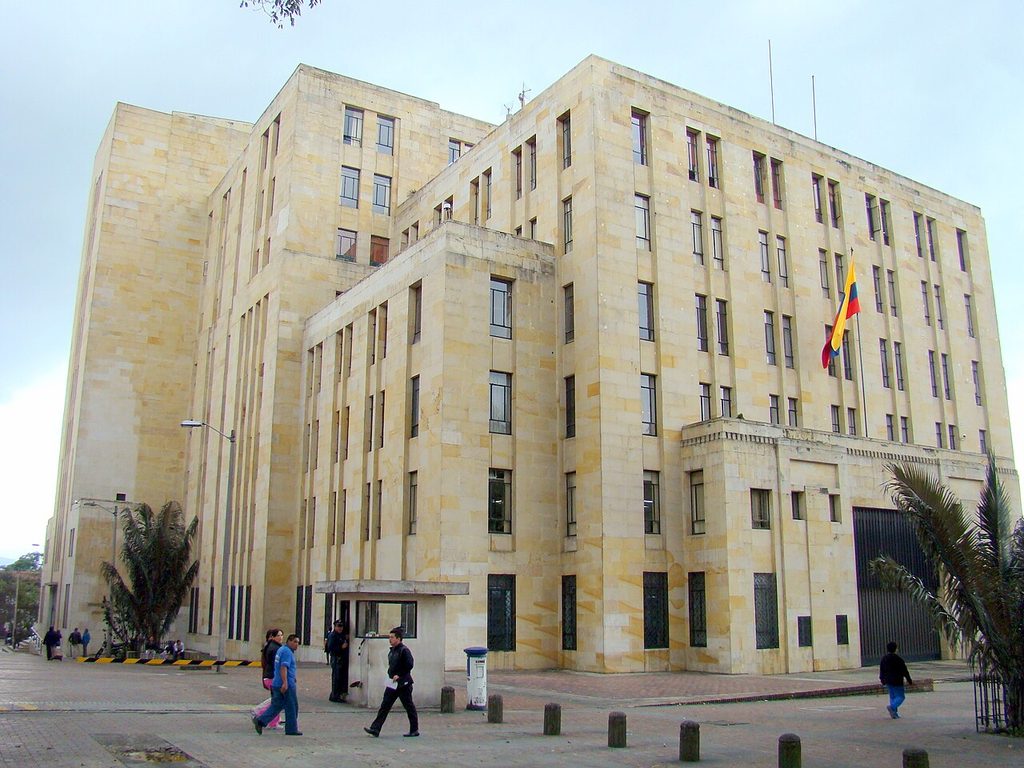
Colombia's General State Budget for 2027 has sparked astonishment among economic experts, industry groups, and the general public. This $634.9 trillion COP budget, announced under President Abelardo De La Espriella's administration, has defied expectations given the administration's previous commitment to fiscal austerity and spending restraint. The budget's enormity becomes even more conspicuous when viewed through the lens of Colombia's staggering 7.2% fiscal deficit, which could escalate to 9.4% without intervention.
A significant contributor to this year's budget expansion is a sharp rise in debt service obligations. The Ministry of Finance's technical review compelled the current administration to elevate the anticipated debt payments from an estimated $118 trillion COP to $155.4 trillion COP, effectively augmenting the budget by $59.3 trillion COP. This accounts for 63% of the overall budget escalation.
The President of the National Association of Financial Institutions, Jose Ignacio Lopez, labeled this omission as "irresponsible," highlighting that the concealed $37.4 trillion COP is roughly on par with the funds necessary for rebuilding the nation following the August 10 earthquake.
Beyond these significant debt-related adjustments, the Ministry of Finance also identified numerous underfunded obligations in the original budget, including $4.5 trillion COP in payroll liabilities, $6.5 trillion COP in pension expenses, $2 trillion COP in public health services, and $700 billion COP for public universities. Furthermore, the initial budget neglected a $9.6 trillion COP deficit in electricity and gas subsidies, along with outstanding commitments to the Fuel Price Stabilization Fund (FEPC).
Former Finance Minister Juan Camilo Restrepo lauded the De La Espriella administration for exposing these concealed liabilities, referring to the previous proposal as a "poisoned legacy."
To fund this expanded budget without resorting to new taxes—a move the government deems would abruptly halt economic activity—the state plans to rely primarily on accruing fresh debt and implementing extensive public spending rationalization. The Minister of Finance has already proposed trimming $21.9 trillion COP from 2026 public expenditures as part of this austerity strategy.
While industry leaders acknowledge that this "fiscal truth-telling" uncovers a more intricate reality than initially perceived, they maintain that enduring recovery will demand more than mere cuts; it will require a judicious financing strategy, efficient public spending, and robust partnerships with international development organizations.
Written by urgent.news from Colombia One's reporting — not their text. Machine-written — may contain errors; check the original before relying on it.