ASEAN and Japan’s Updated Free and Open Indo-Pacific Initiative
Protecting a shared foundation, not a bloc
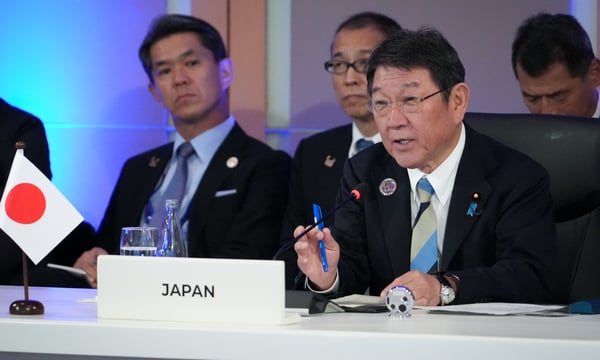
In May 2026, Japan unveiled an updated version of the Free and Open Indo-Pacific (FOIP) initiative, building upon its original philosophy while incorporating new priorities. These new areas encompass AI and data infrastructure, energy and critical goods supply chains, public-private sector market collaboration, and regional security cooperation.
The updated FOIP signifies a shift from abstract principles to practical efforts aimed at enhancing regional resilience. While Asian economies have prospered through interdependence, this same interconnectedness has also exposed vulnerabilities. Disruptions in the Strait of Hormuz and the Bab el-Mandeb Strait in the Red Sea can have far-reaching consequences for Japan and ASEAN, impacting energy prices, shipping costs, insurance rates, and the supply of essential components.
Economic security is about more than just preparing for potential great-power confrontations; it involves safeguarding the foundational elements of sea lanes, energy, resources, and digital infrastructure against various threats, including armed conflict, natural disasters, cyberattacks, and economic coercion. Japan, as a close ally of the United States, is not pushing ASEAN countries to opt for either Washington or Beijing.
Instead, Japan aims to bolster each nation's ability to make its own choices and broaden the alternatives available to them in times of crisis. Japanese corporations have been investing in ASEAN for decades, establishing factories, logistics networks, and fostering technological and human capital development. The success of the FOIP and the ASEAN Outlook on the Indo-Pacific (AOIP) hinges on their complementary nature.
If pursued independently, the AOIP's priorities might not be fully realized, while the FOIP might be perceived merely as a tool for advancing Japanese interests. The AOIP outlines ASEAN's priorities, while the FOIP connects funding, technology, and business resources to facilitate implementation. This arrangement empowers ASEAN to select the cooperation projects and ensures their implementation aligns with regional needs.
Three forms of concrete cooperation are identified. The first involves joint efforts to maintain the integrity of maritime routes. The Strait of Hormuz, the Bab el-Mandeb Strait, and the Malacca and Singapore Straits form a unified maritime logistics network. Japan, ASEAN, China, and South Korea, despite their differing political perspectives, share a common interest in ensuring safe and stable navigation.
This necessitates navigation safety, anti-piracy measures, search and rescue operations, and responses to accidents and disasters, all while respecting the sovereignty and autonomy of coastal states. Japan has already taken steps in this direction by enhancing navigational safety through hydrographic surveys, navigation aids, information-sharing on maritime security, and training initiatives.
Japan can extend these mechanisms to port and submarine cable protection, information-sharing on alternative routes, and rescue cooperation, with countries like China also participating. The second area of collaboration focuses on critical minerals supply chains. In 2026, Japan successfully conducted a demonstration of extracting rare earth mud from a depth of 6,000 meters in its Exclusive Economic Zone (EEZ) around Minamitorishima Island.
Although still in the demonstration phase, this marks progress towards diversifying supply sources. Japan should work with ASEAN on refining and purifying these minerals, monitoring environmental impacts, processing them into products like magnets and motors, and recovering waste materials. Combining future Minamitorishima output with ASEAN's mineral and processing capabilities could help reduce reliance on a single source.
The third aspect is energy mutual aid. In 2025, ASEAN refreshed the ASEAN Petroleum Security Agreement (APSA), which governs emergency oil supply cooperation. Similar arrangements will likely be needed for natural gas disruptions. Japan and ASEAN could consider joint stockpiling of crude oil and petroleum products, shared use of regional storage facilities, emergency mutual assistance, and coordination on LNG vessel scheduling.
Accelerating crisis response could be achieved by integrating Japan's stockpiling system with ASEAN's emergency mechanisms. The timing is ripe to expand cooperation with additional nations such as Australia, South Korea, India, and the European Union, building upon the existing Japan-ASEAN relationship. This expansion does not necessitate the formation of an entirely new bloc.
Maritime routes should involve user countries like China, critical minerals should attract reliable supply-chain partners, and energy cooperation should engage both consumer countries and oil- and gas-producing states. A pragmatic approach to open collaboration is feasible, with membership varying depending on the issue at hand and no single grouping required for all cooperation areas.
There is no need to start from scratch. The ASEAN-Japan Comprehensive Strategic Partnership and ASEAN Plus 3, along with the Indo-Pacific Economic Framework for Prosperity (IPEF) supply-chain agreement involving seven ASEAN countries, can support the FOIP. The IPEF enables participating nations to share risks associated with critical-mineral supply disruptions, explore alternative sourcing options, and coordinate emergency response procedures.
These experiences can inform broader ASEAN-wide cooperation under the AOIP. Ultimately, the Indo-Pacific region requires more than exclusive blocs; it requires a system of collective stability across sea lanes, resources, and energy. The updated FOIP can only thrive if it works in tandem with the AOIP and helps ASEAN countries expand their options.
Japan and ASEAN should strive for "collective self-reliance," achieving resilience to withstand pressures from any major power or disruptions to supply routes outside the region.
Written by urgent.news from The Diplomat's reporting — not their text. Machine-written — may contain errors; check the original before relying on it.