As forests fragment, arboreal bridges offer orangutans a lifeline
Habitat fragmentation limits orangutan movement between populations, potentially reducing genetic exchange and raising the risk of inbreeding, with implications for the species’ long-term survival.
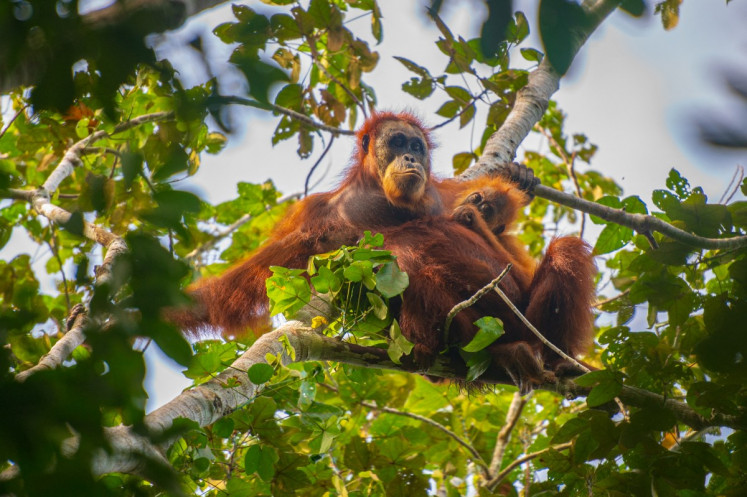
Habitat fragmentation is a serious threat to orangutan populations, limiting their movement between groups and increasing the risk of inbreeding. To address this issue, conservationists are exploring the use of "arboreal bridges" to reconnect fragmented habitats for orangutans. These bridges, which are essentially canopies suspended between trees, provide a lifeline for the critically endangered great apes as they navigate increasingly isolated populations.
The need for such ecological corridors has been emphasized at a recent discussion hosted by the National University in Jakarta. Didik Prasetyo, director of the university's Center for Forest and Wildlife Management Studies, stated that wildlife rescue efforts must go beyond protecting conservation areas and include restoring connectivity between habitats through these bridges.
The Batang Toru forest in North Sumatra serves as a prime example, where the Batang Toru river bisects the forest and settlements and roads have cut through the landscape, leading to reduced forest cover and fragmentation of wildlife populations.
Written by urgent.news from The Jakarta Post's reporting — not their text. Machine-written — may contain errors; check the original before relying on it.