‘A warning saved my life’: can Hongkongers trust smartwatches, or are they being misled?
In the third instalment of a five-part Health Matters wellness series on Hong Kong’s growing wellness trends, Victor Ting examines how wearable devices are reshaping personal healthcare in the city, as experts caution that they should not replace professional medical advice. Alice Wong had little idea how seriously ill she might become until unusual patterns on her smartwatch prompted her to seek…
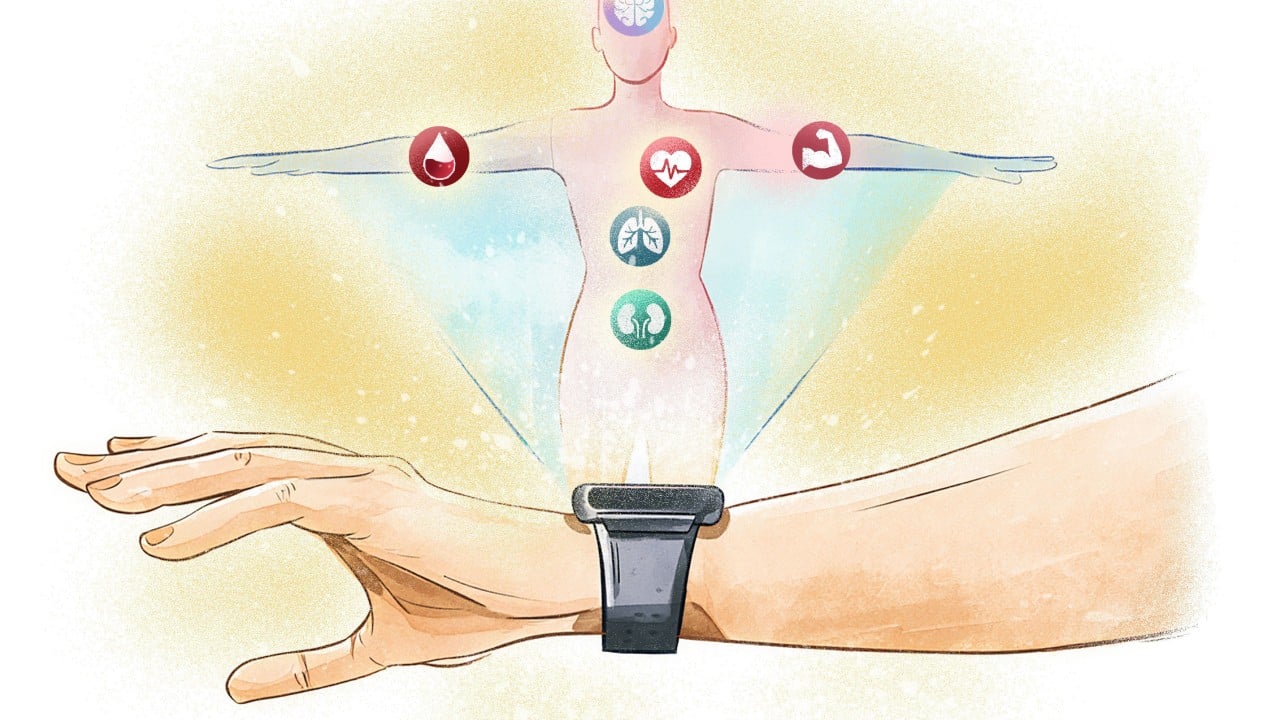
A smartwatch alert helped save Alice Wong's life when it detected an irregular heart rhythm and prompted her to seek medical attention. Despite being young and fit, Wong was unaware of the severity of her condition, atrial fibrillation, until the notification. Wong emphasizes that the device's early warning may have prevented a more serious health event.
While experts acknowledge wearable devices' potential to aid personalized and proactive healthcare, they also caution against relying solely on wearables instead of professional medical advice. In Hong Kong, the market for commercial wearables is expanding, with an estimated 63 percent of residents owning such devices. The multi-billion-dollar sector has seen rapid growth due to advancements in real-time data collection and AI.
One local manufacturer, Dayton Industrial, recently released Link2Care, an AI-powered smartwatch that integrates traditional Chinese medicine with modern biosensors to monitor 38 physiological metrics and provide wellness recommendations. The smartwatch's AI system detects when an organ's score falls below 60 on a scale of 100 and suggests TCM-based remedies or lifestyle changes.
Another example is a smart dental appliance designed to monitor oral health and sleep patterns through wearable technology, allowing for more accurate diagnosis and treatment. However, the industry also raises concerns about the accuracy and reliability of wearable data and the potential for misinterpretation of health information.
Written by urgent.news from South China Morning Post's reporting — not their text. Machine-written — may contain errors; check the original before relying on it.