골드타임 지난 네팔 홍수…사망 750명, 실종 3천명 이상
Last year's severe flooding in Nepal and Tibet (Tibetan: 시짱) has finally reached its peak in rescuing efforts, but over 3,000 people remain missing. Harsh weather conditions and the threat of another lake overflow have slowed down rescue operations. The National Disaster Risk Management Authority of Nepal reported that by 30th morning, 734 rescue teams had confirmed 7,734 individuals as found in affected regions, while 2,498 were still unaccounted for.
Meanwhile, 16 people in China and 546 in Nepal had been confirmed dead, and 546 were also missing. In total, at least 750 people have perished and more than 3,000 are missing. According to Nepal's disaster management authority, 933 of the missing individuals were construction workers on a hydroelectric power plant site, with up to 100 people trapped in a tunnel at one location.
Foreign nationals, including trekkers searching for the Himalayas, accounted for 517 missing persons. Nepal has deployed over 18,000 soldiers and police for rescue operations. The Nepalese government has airlifted 227 foreigners and 8,186 people to safe areas using 16 helicopters by 30th morning. China has also deployed 2,141 rescue workers and 86 geological experts in the Tibetan region.
However, with the 72-hour window for saving survivors closing, the chances of rescuing the missing continue to dwindle. The affected areas are buried under thick mud, making rescue operations slow. Nepal's disaster response team, Kawan Koirala, reported after 18 hours of rescue work in 29th, "I got stuck in mud so deep it felt like I was crushed by a bridge.
Look at this mud." Chinese rescue teams faced similar difficulties, arriving in the affected areas only on the third day, 28th. The Chinese Central Television reported Chinese rescue workers using drones to cross rivers and floating boats to navigate raging currents. Unfavorable weather conditions could further complicate rescue efforts.
The Chinese Meteorological Administration forecasts rainfall throughout most of Tibet and thunderstorms in some areas on 30th. Nepal's Prime Minister's office warned that rescue operations have become "extremely difficult" due to unfavorable weather and the possibility of additional flooding from nearby lakes. The International Centre for Integrated Mountain Development (ICIMOD) warned that debris from the previous flood could block river currents, leading to secondary flooding within days.
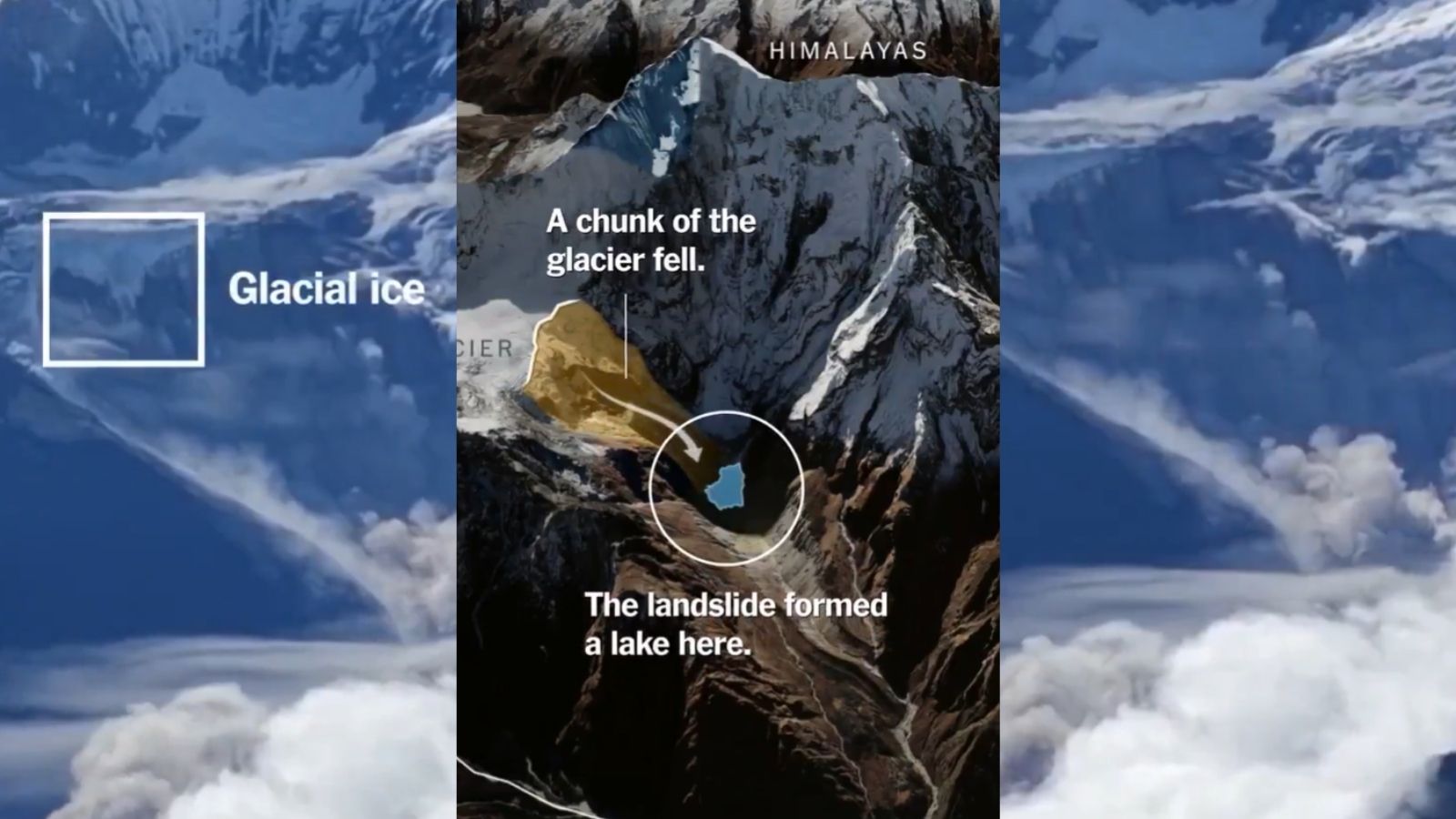
Chinese geological experts cautioned that over 100 glacial lakes are scattered across the region, formed either by blocked waterways or erosion in valleys. Internationally, the U.S. Department of State pledged $3.6 million (around 50 billion won) to provide up to three months' worth of food and other supplies to 10,000 affected households.
Canada and the European Union had previously announced $5 million (50 billion won) and 200 million euros (32 billion won) in support, respectively. Nepal's Interior Ministry estimated the cost of rebuilding from this disaster would be between 40-50 billion dollars (5.5-6.9 trillion won).
Written by urgent.news from Hankyoreh's reporting — not their text. Machine-written — may contain errors; check the original before relying on it.