400 Vessels And Around 6,000 Sailors Stranded In Persian Gulf Since Start Of Middle East Conflict — IMO
Six months after the start of the conflict in the Middle East, the situation in the Strait of Hormuz remains unresolved, with 400 vessels and around 6,000 sailors still forced to remain in the Persian Gulf. This was stated by Secretary-General of the UN's International Maritime Organization (IMO) Arsenio Dominguez, UATV English reports. According to the head of the IMO, six months after the start…
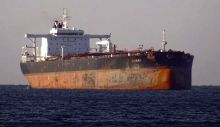
Six months into the Middle Eastern conflict, the International Maritime Organization (IMO) reports that 400 vessels and approximately 6,000 sailors remain stranded in the Persian Gulf. This situation, stated by IMO Secretary-General Arsenio Dominguez, has created a precarious environment for thousands of seafarers. Despite some vessels successfully departing, the majority of the 400 ships carrying around 6,000 crew members have been unable to leave the Persian Gulf since the onset of the conflict.
The IMO head emphasized that these circumstances pose significant risks and uncertainties for the affected seafarers. The disruption of essential supply chains, including fuel, fertilizers, and other goods, could have global repercussions for communities and economies. In July, the IMO Council adopted a resolution to protect vital maritime routes, reinforcing the importance of not threatening or restricting transit passages through straits used for international navigation.
Dominguez urged all member states and the shipping industry to collaborate with the IMO and the United Nations system to find practical solutions to restore freedom of navigation through the strait. He highlighted that the worsening maritime security in various global regions, from the Black Sea to the Red Sea and the Gulf of Aden, negatively impacts everyone.
This issue particularly distresses the stranded seafarers, whose lives and livelihoods are directly affected by the crisis.
Written by urgent.news from UATV English's reporting — not their text. Machine-written — may contain errors; check the original before relying on it.