This shirt is like an AI invisibility cloak
To the human eye, the Digital Camouflage shirt has an abstract colorful pattern showing green, pink, and orange shapes. To robots, it hides the human wearing it. German designer Simon Weckert created the button-up shirt to confuse AI surveillance systems following Berlin’s installation of surveillance cameras earlier this year. The garment is part of an emerging trend of adversarial clothing…
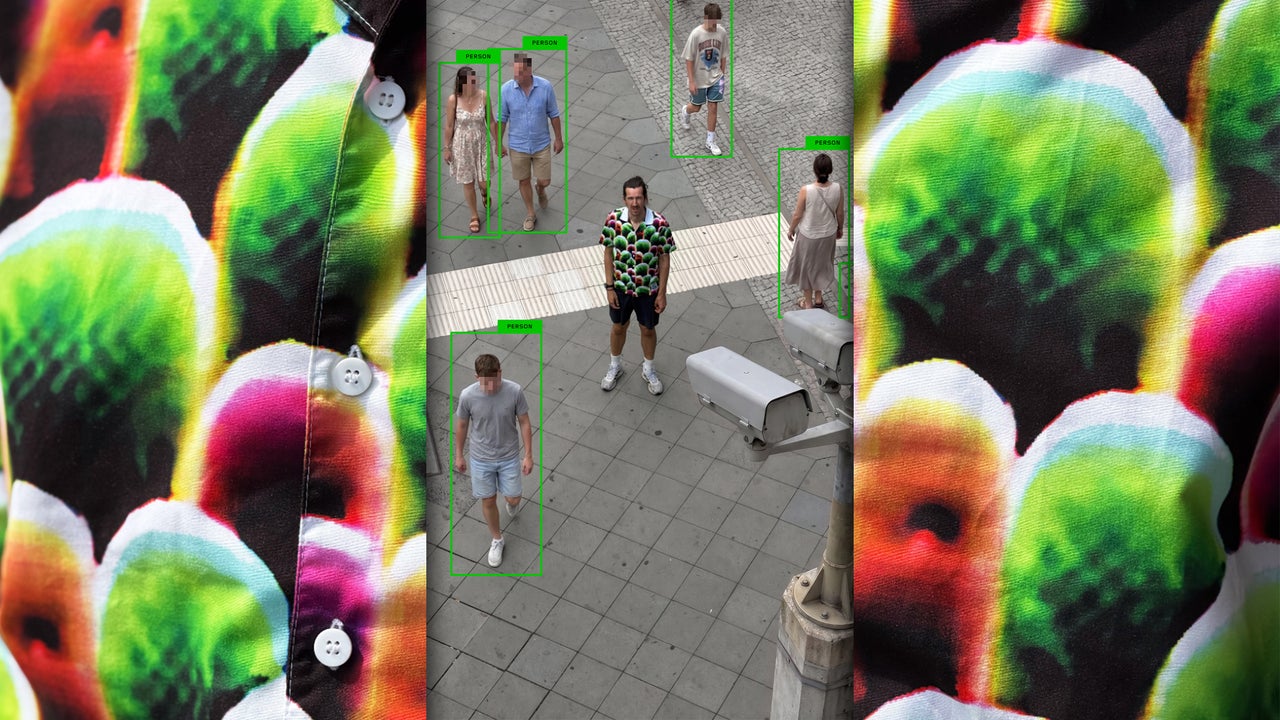
The Digital Camouflage shirt, designed by German artist Simon Weckert, appears as a colorful abstract pattern to the human eye - a green, pink, and orange design. However, to AI surveillance systems, it conceals the wearer. This unique shirt emerged in response to Berlin's recent surveillance camera installations.
Weckert explains that object detection systems don't perceive the world as humans do. They analyze images for statistical patterns of edges, textures, and colors associated with the "person" category.
His shirt's pattern is mathematically optimized to send misleading signals to these networks. Despite being inexpensive at around $88, the shirt serves a dual purpose - confusing AI while remaining wearable. The final design is a compromise between the algorithm's requirements and human aesthetics, creating a visually ambiguous garment. Weckert finds this duality conceptually significant, as it is intended for two distinct types of viewers.
Weckert tested his shirt against YOLO, an open-source detection system used in many commercial surveillance tools. He emphasizes that the shirt wasn't specifically designed to thwart a particular system, but rather aims to question the trust placed in technology when a simple fabric can undermine it. "I make no claims about specific proprietary systems," he clarifies. The shirt's goal is not to defeat one product, but to reveal the structural vulnerabilities within this entire class of technology.
Written by urgent.news from Fast Company's reporting — not their text. Machine-written — may contain errors; check the original before relying on it.