The Soldier Shortage: Europe Conscripts, Russia Imports, Ukraine Automates
While the enemy measures armies by headcount, Ukraine's experience shows that what matters on the battlefield is the output of each individual soldier Europe, Russia and Ukraine are responding to the same strategic problem in very different ways: a shortage of military personnel. Europe is returning to conscription, Russia is increasingly recruiting foreigners, while Ukraine is trying to reduce…
Europe, Russia and Ukraine are confronting a shared problem of a dwindling military workforce. The three nations are addressing this issue through distinct strategies. Europe is reverting to compulsory military service, Russia is ramping up the recruitment of foreign nationals, while Ukraine is focusing on downsizing the number of personnel needed for frontline operations through the use of drones and automation technology.
This divergence in approach is pivotal, with the first two methods augmenting manpower, whereas Ukraine's strategy aims to boost the efficiency of each soldier.
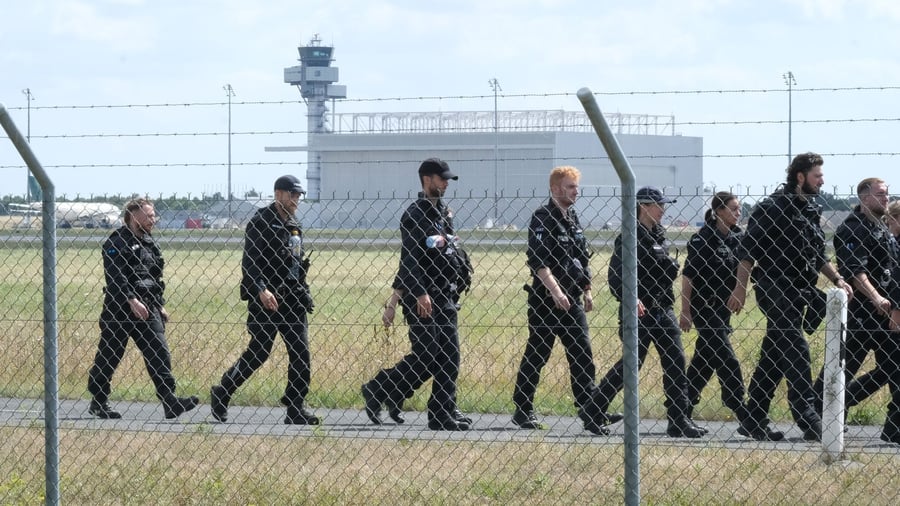
Despite concerted efforts, European armies have not been able to meet the required personnel numbers. In 2025, the Czech Republic witnessed its highest enlistment since conscription was abolished, while the United Kingdom also managed a modest increase in personnel. However, the overall situation remains challenging. European military forces have significantly contracted between 2010 and 2020, and reinstating potential cuts to US troop presence would necessitate adding several more European divisions.
By 2025, European allies, along with Canada, had collectively spent more than $90 billion, resulting in total defense spending surpassing $571 billion, with headcount increasing by a mere single-digit percentage. Money can expedite the acquisition of equipment, but it cannot swiftly generate trained personnel. Germany's experiment with voluntary military service offers a specific illustration.
By August 2026, the Bundeswehr had reached 186,700 active personnel, fulfilling its short-term objective. Recruitment and volunteer applications were also on the rise. Nonetheless, Germany aspires to maintain around 260,000 active troops and 200,000 reservists by the mid-2030s. If volunteer enlistments do not meet the long-term targets, a lottery-based compulsory service could be introduced.
Nine EU countries currently maintain compulsory military service, employing various models, from universal service to lottery-based recruitment. Proponents contend that compulsory service can replenish reserves and augment the pool of defense personnel. However, a crucial limitation exists: conscription addresses the question of "how many people" available for defense but does not inherently ensure that these individuals will possess superior combat capabilities.
Russia addresses its personnel shortfall through alternative means. While contract recruitment has slowed, financial incentives for new soldiers have increased. Moscow is also augmenting its manpower by recruiting foreigners. As of March 2026, Ukrainian intelligence had identified over 27,000 foreign citizens serving in the Russian military from at least 135 countries.
This approach allows Russia to compensate for domestic demographic constraints, albeit remaining dependent on financial resources, recruitment opportunities abroad, and the receptiveness of other nations to provide personnel. The recruitment of 30,000 to 50,000 North Koreans from Russia exemplifies this method. For Russia, this signifies an imported resource that can be replenished as long as there are potential buyers and sufficient funds.
This arrangement benefits North Korea as well, providing its personnel with combat experience and an opportunity to test weaponry, transforming the arrangement into more than just a manpower deal.
Ukraine, similarly facing the same personnel crisis under more adverse circumstances, has opted for a different strategy. Instead of focusing solely on increasing the number of soldiers, Kyiv has increasingly sought to minimize the number of individuals required to execute specific battlefield tasks. In April 2026, the Ukrainian Defense Ministry opened 15,000 positions under the "Drone Line" project, recruiting UAV operators, engineers, medics, drivers, and IT specialists.
The objective is to establish a 10-15 km deep kill zone where Russian forces cannot operate without enduring losses. According to Ukrainian commanders, these unmanned systems account for approximately 2.5% of defense personnel and 2% of funding, while contributing to about 35% of kills along the frontline. A key metric absent from European discourse is the impact of drones on combat effectiveness.
The question is not merely how many soldiers conscription can generate, but rather how many infantry positions a squadron of drones can free up and at what cost. This shifts the focus from the quantity of soldiers that can be recruited through conscription to the potential reduction in human resources through technological systems.
While Ukraine's experience does not imply that soldiers can be entirely substituted by machines, the Third Army Corps has contemplated replacing significant portions of infantry duties with ground robotic systems. However, most of these systems focus on logistical and casualty evacuation functions rather than direct combat operations.
The substitution ratio serves as a means to reduce the human toll of maintaining the frontline. Nonetheless, technology cannot fully replace infantry in every task, especially when it comes to physically holding territory. Russia is also beginning to emulate Ukraine's approach.
Written by urgent.news from UATV English's reporting — not their text. Machine-written — may contain errors; check the original before relying on it.