The Kennedy Center’s Purgatory
A board of Trump loyalists keeps dragging out a legal fight over the center’s future.
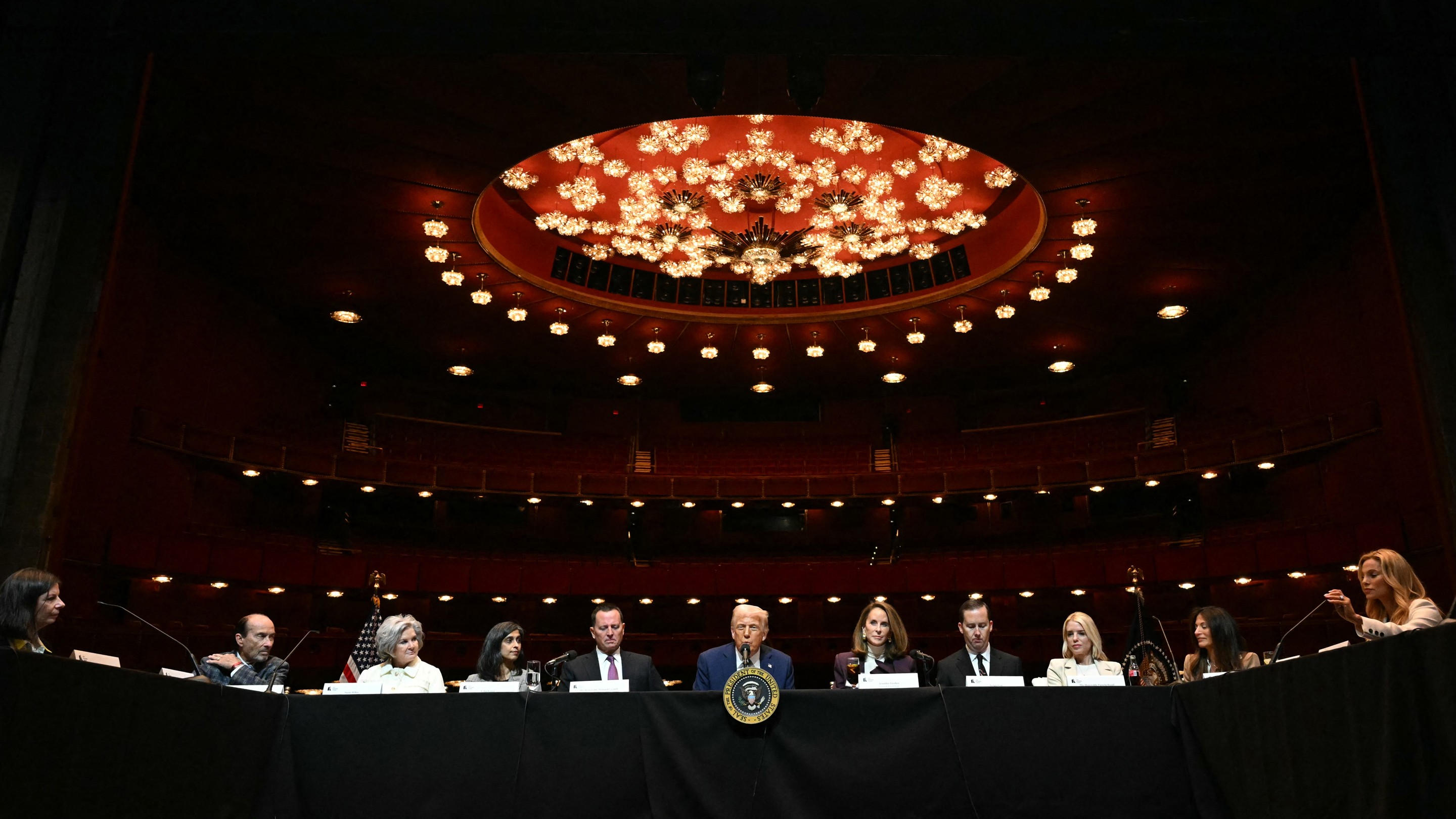
The legal battle surrounding the Kennedy Center has reached a level reminiscent of Wagnerian operas. After yet another hearing on an attempt to add Donald Trump's name to its façade, the cultural center's fate remains uncertain, with no clear solution in sight. The defendant in the lengthy lawsuit—the Kennedy Center's board of trustees—continues to make decisions that prolong the ordeal.
A judge can restrain the board, but cannot replace it. Congress can replace the board through legislative action, which Trump could veto. Meanwhile, Trump's board remains active, capable of making further decisions that can lead to new challenges that bring the parties back to the same judge. In December, Trump's allies on the board voted to add the president's name to the building, and in March, they approved his plan to shut down the center for renovations.
However, both actions were halted in May: U.S. District Judge Christopher Cooper ruled that the board exceeded its authority by renaming the Kennedy Center and criticized the decision to shut down it as a breach of the trustees' fiduciary duties. Consequently, they held a second vote in June to close the center and approved a different plan to add Trump's name to its exterior in three places, despite the federal statute stating "no additional memorials or plaques in the nature of memorials shall be designated or installed in the public areas" of the complex.
Whatever the merits of the renovation plan, the Kennedy Center is in a crisis. Trump's takeover has alienated artists, donors, and audiences; staff purges have diminished its institutional memory. While there is an argument that the Kennedy Center might as well close temporarily for tenants like the National Symphony Orchestra to recover beyond its walls, ongoing litigation has exposed other concerns about the institution's leadership.
The board, chaired by Trump, has largely rubber-stamped proposals brought before it. Judge Cooper has ordered the board to take a more detailed look at the renovation proposal and commissioned a new report from a commercial real-estate firm. The Justice Department lawyers representing the board suggested that the entire Kennedy Center complex might need to be "taken down" if the renovation plans are thwarted.
The board argues that removing Trump's name threatens "hundreds of millions of dollars" in donations. However, the board has not provided a detailed accounting of how a two-year closure would impact ticket sales, fundraising, or artist relationships. The Kennedy Center's actions have become central to the lawsuit brought by Democratic Congresswoman Joyce Beatty, who has criticized the Trump-appointed trustees for negligence.
Cooper questioned why the Justice Department was rushing to reinstall the president's name, and expressed doubts about his ability to stop the board. As the hearing concluded, a tarp still hung over the façade where Trump's name was once displayed, a move criticized as an act of vanity by the president. The board claims that removing Trump's name could jeopardize donations, but has not provided a detailed explanation of how a closure would affect revenue.
The ongoing developments highlight a fundamental problem: a judge can restrain the board's actions repeatedly, but a court cannot solve governance issues. Law professor John Harrison noted that the Kennedy Center's governing body is a "black box" from a court's perspective. While there may be hope through Congress, which established the Kennedy Center and the governing board, Harrison described the institution's leadership as a "black box."
Written by urgent.news from The Atlantic's reporting — not their text. Machine-written — may contain errors; check the original before relying on it.