Meeting Nancy Grace Roman: What was the 'mother of Hubble' really like?
Nearly a decade ago, I found myself laughing alongside Nancy Grace Roman: one of the most iconic women in astronomy.
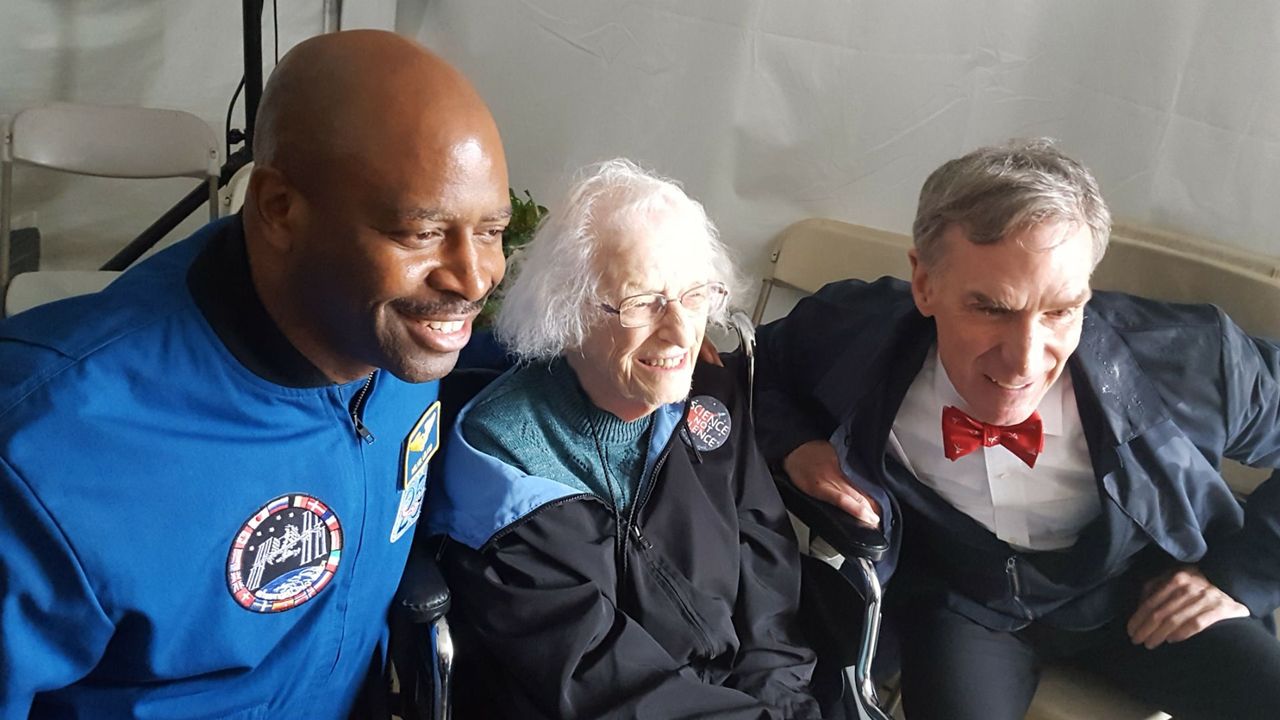
Nearly a decade ago, I encountered Nancy Grace Roman, an iconic figure in astronomy, during the inaugural March for Science in Washington D.C. amidst a group of scientists and reporters braving the rain. Standing under a tent, I recognized Roman as the "mother of Hubble," a nickname given to her for her pivotal role in the creation and leadership of NASA's astronomy program, which ultimately led to the Hubble Space Telescope.
Born in 1925, Roman was the first woman in an executive position at NASA and spent her 93 years exploring the universe.
Meeting Roman was a surreal experience for me, a science-obsessed child who had grown up watching Bill Nye's TV shows. I introduced myself to her, and she jokingly remarked that she had a "thing for stars," responding with a bright smile and a laugh. Just as our moment together ended, Bill Nye and NASA astronaut Leland Melvin approached to greet her. The two shared personal stories with Roman, each holding her hand and visibly awestruck, as they spoke with excitement about their shared passion for space and science.
Standing nearby, I felt the admiration and love for Roman, whose impact on astronomy and women in science continues to resonate today. About a year after our encounter, Nancy Grace Roman passed away at 93, leaving behind a legacy that inspired generations. Today, her memory lives on through the Nancy Grace Roman Space Telescope, named in her honor, and the trail she blazed for women in astronomy.
Written by urgent.news from Space.com's reporting — not their text. Machine-written — may contain errors; check the original before relying on it.