Man carves 2-storey home into China mountain in 7 years, makes it livable
A man in Sichuan, China, has spent seven years carving a two-storey family home directly into a sandstone mountain. Documented by YouTube channel Quantum Makers, the solo project faced water leaks, heavy storms, hidden fissures, humidity and a two-year pause. After extensive repairs and upgrades, the once-raw mountain space is now a livable home.
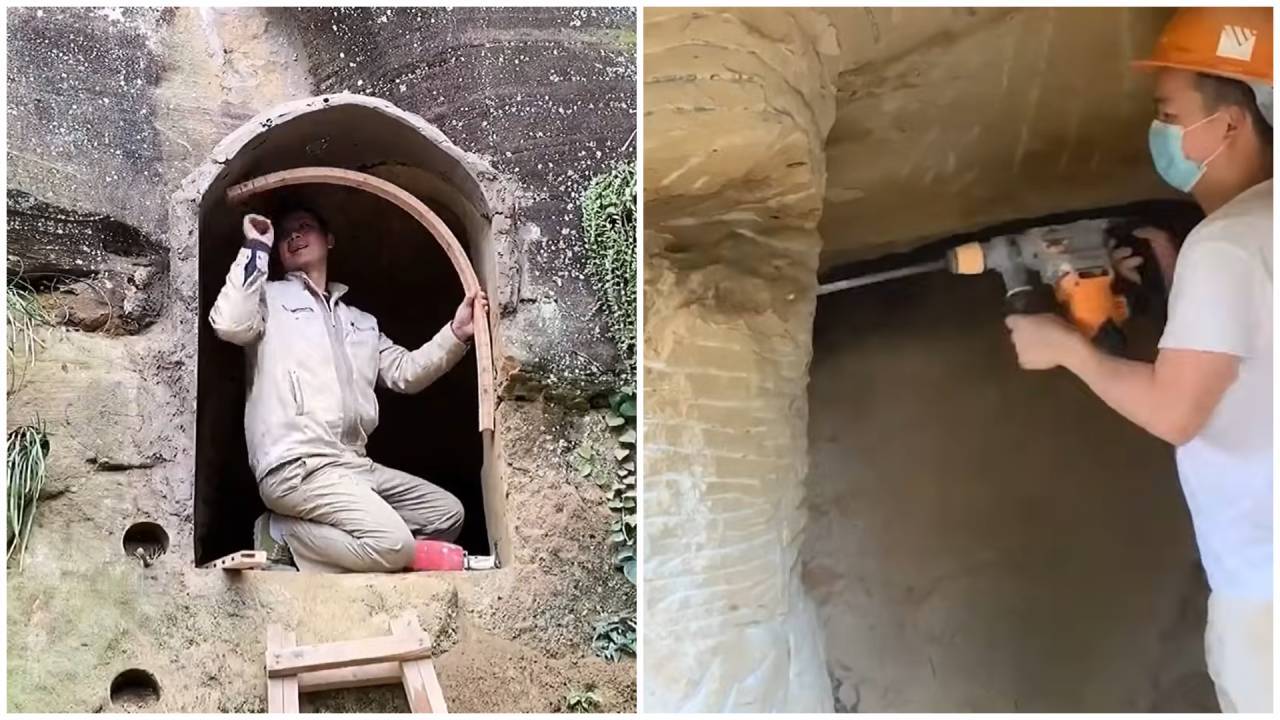
In Sichuan, China, a man named Hu Ge embarked on an ambitious project to transform a raw sandstone cliff into a two-storey home for his family over the course of seven years. Utilizing his background in coal mining and construction, Mr. Hu carved rooms, stairs, and furniture directly into the mountain, creating a unique living space unlike any conventional brick-and-mortar house.
The ambitious endeavor commenced in 2019, with Mr. Hu deciding to build his family a home unlike any other. Rather than constructing atop the mountain, he opted to carve directly into it. His plan involved fashioning a ground-floor bedroom and living area for himself and his wife, and excavating a second level for his two children, connected by an internal staircase.
With his construction experience, Mr. Hu understood the behavior of rock under pressure. However, working inside a mountain presented its own set of risks, as thousands of tonnes of sandstone loomed overhead, with the potential for hidden cracks to threaten the entire structure. To stabilize the ceiling on the lower level, he left a massive central pillar in place, creating an arch to distribute the weight towards the side walls. Once the structure became stable, he removed the pillar.
Water management emerged as one of the most significant challenges faced by Mr. Hu. During the excavation of the bedroom, he noticed a draft coming through the rock, indicating the presence of cracks. To combat this, he constructed a drainage trench to direct water towards the entrance and sealed the cracks using cement. However, heavy storms later exposed the fragility of the system, leading him to reinforce the area with additional cement and expanding foam, and adding ventilation openings to prevent trapped humidity.
Bringing electricity and water to the mountain proved to be another obstacle. Mr. Hu personally dragged electrical cable through the forest to provide power to the remote property. For water, he found a natural spring roughly a mile away and devised a system to pump water to a storage tank near the house, using pipes laid through the forest, even along a significant elevation drop.
As the lower floor took shape, Mr. Hu began creating an outdoor kitchen directly from the rock. The roof served as a terrace, providing a platform for working on the second floor. He fashioned a kitchen with separate combustion areas for cooking and boiling water, while a natural crack in the rock became a chimney.
Connecting the two floors presented the most challenging engineering task. After over two years of excavation, Mr. Hu decided to excavate the upper section first and then connect the two sections from opposite directions. This task required precise measurements to ensure the two sections would meet successfully after years of work, his efforts paid off, and the staircase connected the two floors, creating a single two-storey home.
Despite his best efforts, nature nearly claimed his work as the house neared completion. The second floor revealed a large natural fissure behind sections of the walls, posing a potential threat of water intrusion or structural compromise. Mr. Hu conducted a smoke test to assess the situation, only to find soot covering his studio when smoke escaped through an existing outlet, indicating no dangerous fractures.
To avoid further complications, he stopped expanding that section of the second floor and fashioned furniture from the mountain itself, including a desk and workspace carved directly into the sandstone.
Written by urgent.news from Times of India's reporting — not their text. Machine-written — may contain errors; check the original before relying on it.