Interstellar Travel V: Warp Drives, Wormholes, and Halo Drives
In our fifth installment, we explore the most exotic proposals for interstellar travel, including the Alcubierre Warp Metric, wormhole travel, the Halo Drive, and other truly advanced concepts.
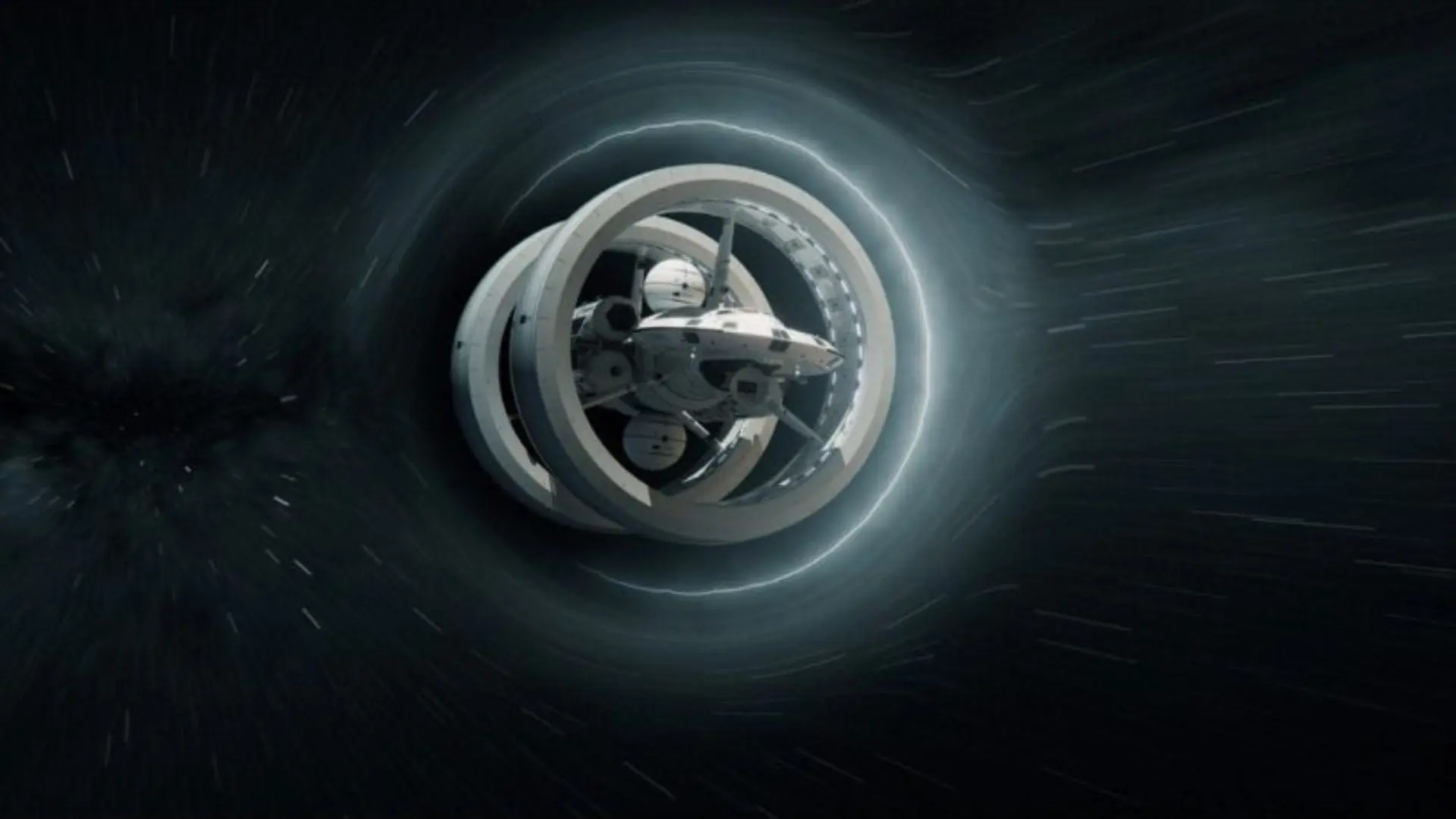
In this edition of our interstellar travel series, we delve into the realm of the most speculative propulsion concepts, including warp drives, wormhole travel, and black hole propulsion. The idea of warp drives, which involves manipulating spacetime itself to achieve faster-than-light (FTL) travel, has long captivated the imagination of science fiction enthusiasts.
However, it was only in 1994 that Mexican theoretical physicist Miguel Alcubierre proposed a plausible method for achieving FTL travel within the bounds of our current understanding of physics. Alcubierre's Alcubierre Drive, detailed in a 1994 paper, suggested that it might be possible to bend spacetime in such a way that a spacecraft could ride a wave of contracted spacetime ahead of it and expanded spacetime behind it, thereby achieving FTL speeds without violating Einstein's Special Theory of Relativity.
This theoretical concept has been met with both enthusiasm and skepticism, as the energy requirements and practicality of such a propulsion system remain immense challenges. Another intriguing possibility is the concept of wormhole travel, which involves utilizing theoretical shortcuts through spacetime to traverse vast cosmic distances in a relatively short time.
While wormholes have been a staple of science fiction, their existence and stability are still theoretical, requiring exotic forms of matter with negative energy density. Lastly, the idea of harnessing the power of black holes to achieve velocities nearing the speed of light has been proposed as a potential means of interstellar travel.
By exploiting the immense gravitational fields of black holes, spacecraft could theoretically gain the energy needed for FTL speeds, although the safety and technical feasibility of such an approach remain speculative at best. As we continue to explore the cosmos, the quest for faster-than-light travel remains a tantalizing challenge, pushing the boundaries of our scientific knowledge and imagination.
Written by urgent.news from Universe Today's reporting — not their text. Machine-written — may contain errors; check the original before relying on it.