England turns old fishing nets into a 16-metre, low-carbon footbridge
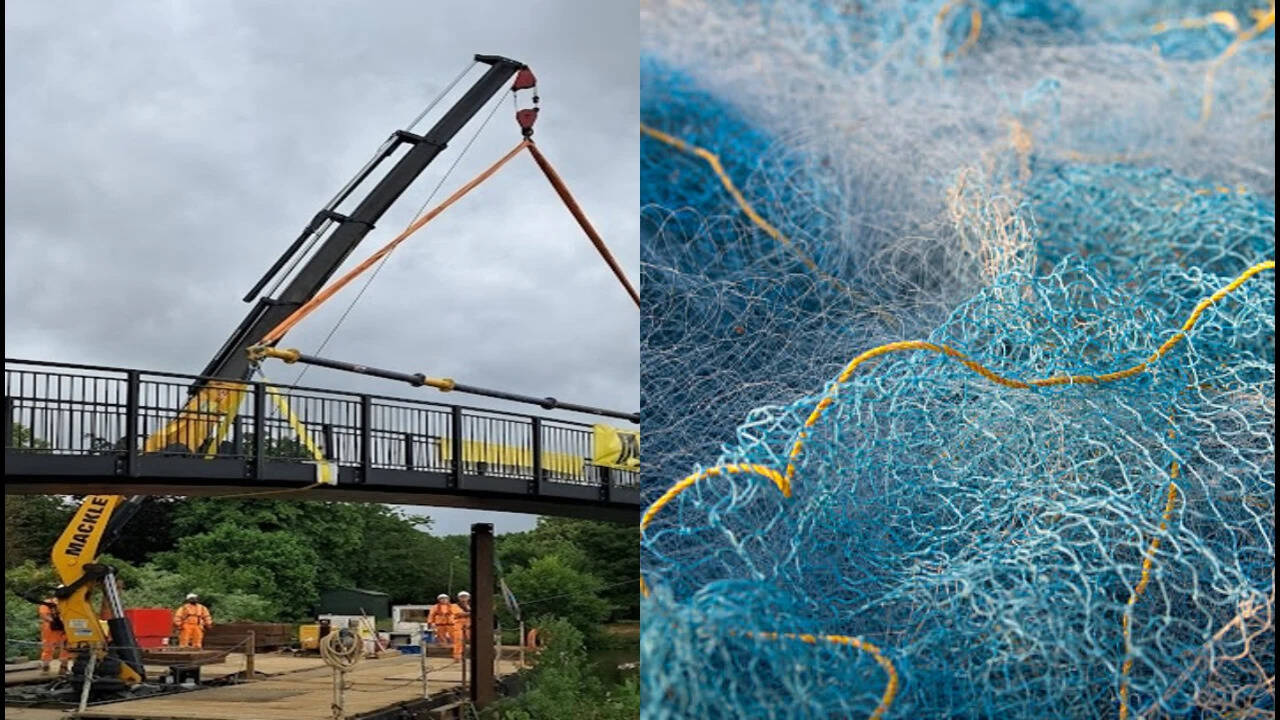
In Kent, England, old fishing nets are being repurposed to create an innovative 16-metre footbridge over a marina entrance, demonstrating minimal environmental impact during construction. Built by the Environment Agency at Twyford Marina in Yalding, the bridge uses recycled materials, lightweight engineering, and a construction method that reduces concrete usage.
The bridge's deck and main structure are made of fibre-reinforced polymer (FRP) derived from recycled fishing nets, offering strength and light weight. This results in a bridge that weighs significantly less (3.5 tons) than traditional structures, allowing for smaller support foundations. The construction method involves modular blocks that fit together like Lego bricks, minimizing the need for traditional reinforced concrete.
The bridge's unique construction journey includes building the deck in the Netherlands, shipping it to Nottinghamshire, fitting handrails, road transport to Yalding, and final placement by barge up the River Medway. The Environment Agency believes the recycled FRP structure will require less maintenance than conventional bridges, while also reducing overall emissions and construction material usage.
This project exemplifies how infrastructure development and circular economy principles can intersect, giving discarded fishing nets a second life in a durable, sustainable structure for walkers and boat users alike.
Written by urgent.news from Times of India's reporting — not their text. Machine-written — may contain errors; check the original before relying on it.