As college football coaches try to control the narrative, the truth comes out on field
The harder coaches try to keep every detail of their program a state secret, the worse it tends to go for them. Just ask TCU's Sonny Dykes, UNC's Bill Belichick or Colorado's Deion Sanders.
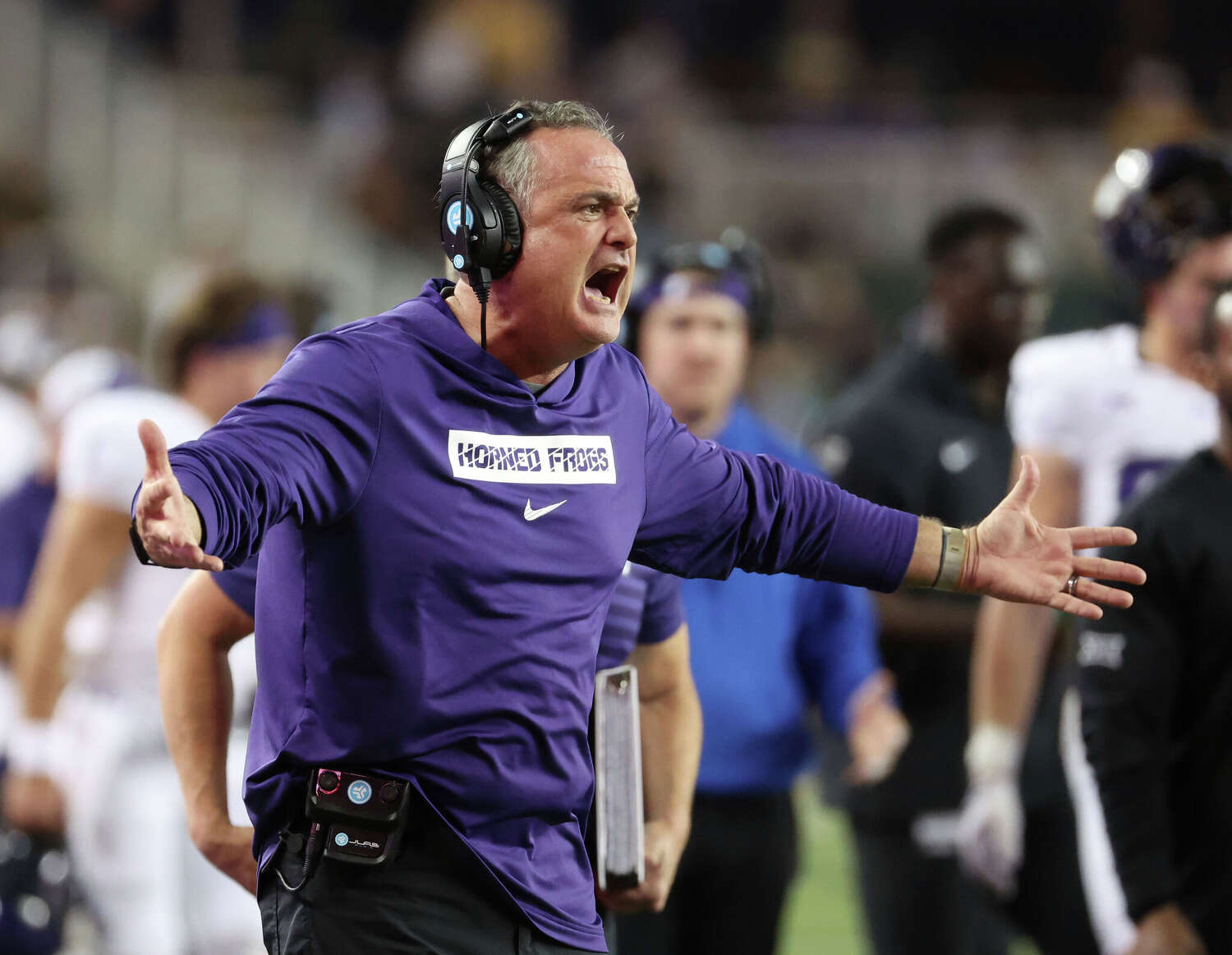
In a stormy Irish field, just before halftime of the first major college football game, TCU's ball sailed over their punter's head and out of the end zone, resulting in a safety. ESPN, as expected, aired multiple replays of the incident from different angles. Despite their natural desire to control the narrative, TCU's coach, Sonny Dykes and his team, showed restraint and did not demand ESPN to leave the stadium.
This moment demonstrated a significant improvement for TCU, contrasting with their previous reluctance to deal with unfavorable media coverage. The incident also highlighted one of the most entertaining aspects of college football, which was back in full swing with TCU's 15-10 loss to North Carolina.
Notably, both TCU and North Carolina were among the first two teams in the NCAA's top division to play this season, both with recent history of struggling to manage their public image. Earlier this year, TCU revoked the credentials of the sole publication with a full-time reporter covering their program. In contrast, North Carolina had to rescind plans for a Hulu documentary on coach Bill Belichick when they realized they would lose more games than they expected to win.
These actions reflect a common trend in college football: the more coaches attempt to keep their programs' secrets, the worse it typically turns out for them.
In another instance, an unnamed TCU parent revealed a conversation with the coach, which ultimately led to the coach pulling the credential of a reporter from the Fort Worth Star Telegram. Similar restrictions were implemented at Colorado, who held an open practice and compelled every reporter and fan present to surrender their phones, with no reporting, publishing, posting, broadcasting, or sharing of any media from the practice.
These actions demonstrate the paradoxical nature of college football, where the sport thrives on generating attention, yet the entities involved often struggle to handle the scrutiny that comes with it.
Written by urgent.news from Yahoo Sports's reporting — not their text. Machine-written — may contain errors; check the original before relying on it.