What makes a 'real' daffodil? Prospective judges learn the ropes
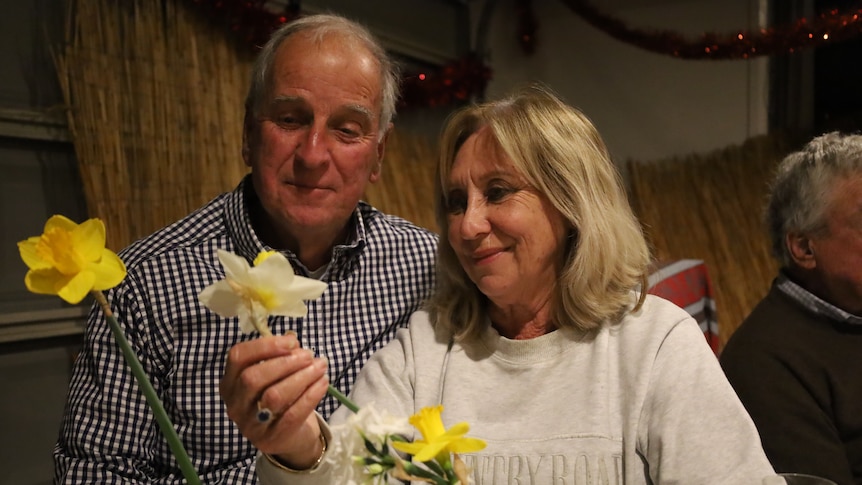
Judging daffodils at flower shows isn't something Robert and Kerrie Goudsouzian ever thought they'd do. But, as judge numbers dwindle, they are learning the finer points of judging and say it's "just lovely".
Tasmanian flower show organisers are inviting people to consider participating in daffodil judging, as a session for potential judges to learn the judging criteria was held last weekend. The Hobart early spring flower show took place today, followed by the Claremont spring flower show next weekend. Organisers recommend this period to appreciate the blossoms and learn about becoming a judge.
For Robert and Kerrie Goudsouzian, judging daffodils at flower shows was not a concept they initially contemplated. However, having "dipped their toe in the water," they have discovered they are learning a great deal.
The Goudsouzians, along with about a dozen other daffodil enthusiasts, gathered in Hobart's northern suburbs last weekend to enhance their understanding of daffodil judging. Internationally renowned daffodil breeder Rod Barwick guided them through the primary criteria for judging daffodils, including condition, form, substance and texture, pose, colour, size, and stem.
Barwick highlighted that a genuine daffodil consists of six petals, technically referred to as perianth segments. Of these, three must be positioned at the back while the remaining three are at the front. The term "corona" is used to describe the flower's central part, which is often referred to as the trumpet, cup, or crown, depending on its size.
The evening also delved into the female component of the flower, the stigma, located in the middle of the corona, with six anthers containing pollen surrounding it. Barwick emphasized that if these elements are damaged, the flower cannot be judged effectively. He likened the scenario to a Mr World contest, where the removal of the male bits would severely hinder the contestant's chances.
Organised by Barwick and his niece Janelle Noble, the president of the Claremont Flower Show Group, the session aimed to capitalise on the growing interest in flower shows. Noble expressed her hope that more individuals would engage in judging and develop a deeper appreciation for daffodils. She noted that the interest is evident, and people are eager to learn and enjoy the experience.
Mary Crowe and her husband Kevin, who have been judging daffodils for about 30 years, were among those participating in the Hobart Horticultural Society's early spring show. They started showing daffodils in the late 1980s and later became judges. Crowe recalled that Rod Barwick and the late Tasmanian daffodil breeder Harold Cross conducted a judging school involving several individuals, combining theoretical knowledge with practical lessons over three years.
With fewer judges available, Crowe expressed concern about engaging the next generation of daffodil judges, as most of them are aging. She advised prospective judges to cultivate exhibition-type daffodils obtained from specialist growers. Attending shows, observing daffodils, and contacting show organizers were recommended steps for those interested in becoming judges.
Both the Goudsouzians and Crowe found Barwick's judging session valuable, emphasizing that it goes beyond mere admiration of daffodils and requires understanding specific criteria to determine their quality.
Written by urgent.news from ABC News AU's reporting — not their text. Machine-written — may contain errors; check the original before relying on it.