These Enchanting and Colorful Photos of Seashells and the Mollusks Who Create Them Will Have You Marveling at the Natural World
Before they become sandy souvenirs, the baubles in the bubbles of the shoreline serve as a veritable fortress for creatures like clams, mussels and conchs
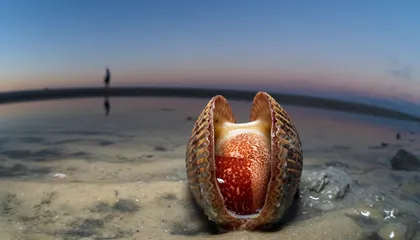
A seashell is a living creature's autobiography, written line by line. Soft-bodied mollusks protect themselves with layers of calcium carbonate, adding new ones as they grow. The patterns and shapes on these shells reveal their evolutionary journey, spanning 500 million years. While most people view shells as mere beach treasures, José Leal, the science director and curator at the Bailey-Matthews National Shell Museum on Sanibel Island, Florida, explains the fascinating processes behind their formation.
Mollusks absorb calcium and carbon from the water, fusing them together in the mantle—a body part—to create a rock-like material. Depending on their species, bivalves like clams, oysters, mussels and scallops encase themselves between two hinged shells, while sea snails build a single spiraled shell that resembles an ice cream cone.
The colors and patterns on these shells are produced by a protein matrix that binds the calcium crystals together. The specific colors emerge from pigments like porphyrins, melanins and carotenoids, with certain genes controlling their production.
Some mollusks have vibrant shells that blend in with the sand, while others boast eye-catching patterns that help them stand out. However, the colors often fade once the shell is empty, as the mollusk inside has died or been plucked by seabirds. The intricate beauty of shells persists, but their colors are lost when the life inside them is gone. The shells then weather and fade like other objects exposed to the sun and saltwater.
While exploring beaches, beachgoers might occasionally spot a living mollusk's foot emerging from its shell. This long, flexible muscle allows the creature to crawl, dig, swim or catch prey, depending on the species. Wildlife photographer Devon Matthews, who traveled to Sanibel Island to capture these captivating moments, emphasizes the importance of appreciating the wonders of these small creatures, which might otherwise go unnoticed.
Leal, who grew up in Rio de Janeiro and witnessed the natural world's vibrancy firsthand, recalls the awe-inspiring presence of these mollusks. As climate change affects the environment, mollusks face challenges in forming and maintaining their shells, making conservation efforts crucial.
Written by urgent.news from Smithsonian's reporting — not their text. Machine-written — may contain errors; check the original before relying on it.