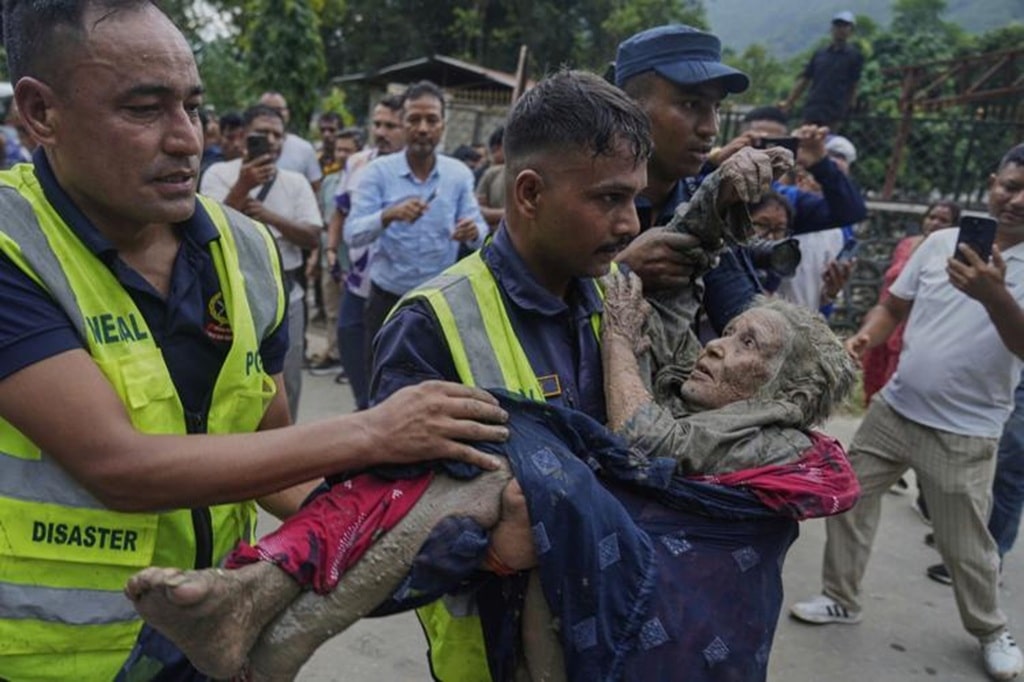
Swallowed by silt: Survivors recount Nepal flood horror
A massive wall of water and mud swept through villages and towns along Nepal's Bhote Koshi and Trishuli rivers on Wednesday, causing widespread destruction and loss of life. According to the Japan Times, hundreds of bodies have been recovered so far. The disaster is believed to have started with a massive ice-rock avalanche on the northern slopes of Nepal's Langtang Lirung peak into the Lhende Khola river on the Tibetan side, which triggered a multi-stage hazard chain across borders.
The VnExpress International reports that at least 800 foreigners are among the nearly 1,500 missing, and that climate change is thought to have played a role in the disaster by destabilizing high-mountain rock and ice. The Hindustan Times - World News states that at least 392 people have died and 1,400 others remain missing, with rescue teams continuing to search for survivors.
A fresh flood threat has also been warned by China's ministry of water resources, as a barrier lake has formed near the confluence of the Chhochen Khola and Purepu Tsangpo rivers in Nepal.
Several countries have reported citizens missing or affected by the disaster, including India, Malaysia, and Ukraine. According to the New Voice of Ukraine, 56 Ukrainian citizens were reported missing as of August 27, while the Malay Mail reports that the Malaysian Deputy Prime Minister has expressed concern over the safety and well-being of Malaysians affected by the floods. The death toll has risen to 359, according to Nepal's tourism board.
Brief written by urgent.news from Japan Times, VnExpress International, Hindustan Times - World News, Malay Mail, New Voice of Ukraine — 5 reports on this story. Machine-written — may contain errors; check the original before relying on it.
Also reported by 1 other outlet
- Death toll in Nepal flood reaches 469, police say brecorder.com